
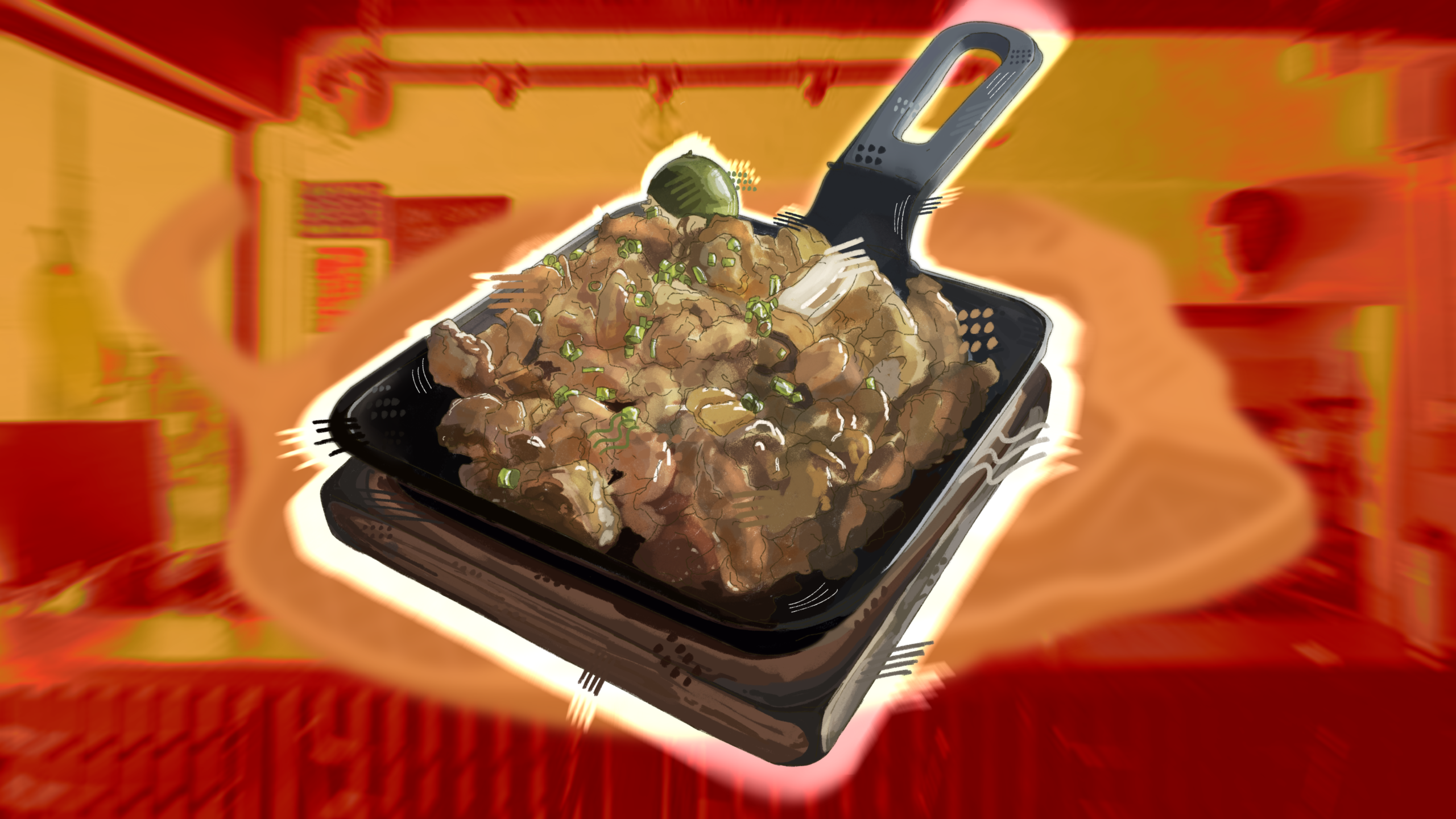
AMONG THE flickering lights of Cubao Expo lies a small, sweltering kitchen, where a dish simultaneously familiar and foreign sizzles.
The trek to Habanero Kitchen Bar is no easy feat. Wanderers must first travel not through sandy dunes, but through gravel and smoke of the urban wilderness, a territory inhabited by neon signs and confusing directions.
But as the saying goes, where there’s a will, there’s a way. Akin to a burst of life in barren desert lands, Habanero Kitchen Bar’s oyster sisig is an oasis in a seemingly mundane modern Sahara — an exotic take on a classic taste.
Instead of the pork counterparts many have come to love, the dish comes carefully crafted with the saltwater shellfish; the delicate mollusks resting in a bed of garlic and chilli, cooked and plated in a scorching hot skillet.
The first bite gives you a taste of the sea: sharp and salty. As you venture deeper into its depths, it reels you back into the burning temperatures of the surface with its mild spice and sizzling aftertaste.
It is a dish that not only takes you to another place, but travels alongside you. A flavor that seeks your senses as it is sought.
From scraps to skillet
Sisig has been a testament of the undying Filipino passion for culinary—burning, eternal and dynamic.
Before sailing its way to Cubao, the spicy dish has long been a Filipino favorite, prepared in the kitchens of homes, neighborhood carinderias and fine-dining restaurants. Though each household has made it its own, many commonly use pork as the dish’s source of protein.
While it has evolved over time, sisig is believed to have been alcohol’s partner in crime even before. The term sisig was first recorded in the 1732 Spanish-Kapampangan dictionary as, “a salad including green papaya or green guava eaten with a dressing of salt, pepper, garlic, and vinegar.” Coined by Diego Bergaño, an Augustinian friar, the word is rooted in the old Tagalog word sisigan, which means “to make it sour.” Because of its natural sourness, some used it to suppress dizziness and treat nausea and hangovers.
When the Americans occupied the country, the dish once again transformed into something else. Unused pig heads dumped by the occupants of the Clark Airbase were repurposed, with local beer joints purchasing these edible parts for a cheap price.
Much like finding sustenance in arid land, sisig thrived in heat and resilience. The Kapampangans boiled the pig heads, carved out the ears and cheeks, combining the fat with the sour dressing and adding spice to suit the tropical weather.
In a similar fashion, it was reimagined in the 1970s by Lucia Cunanan or “Aling Lucing,” who transformed scraps of meat into an iconic dish by taking pig brains, cheeks and ears over an open flame.
This modern reinvention crowned her as the ‘Sisig Queen.’
Through time, sisig has taken on several new faces: fish and chicken for those avoiding pork; tofu for those leaning toward the healthier side and searching for a vegetarian alternative. Among friends and family, these versions often split opinion; some appreciate their accessibility and novelty, while others insist they are poor substitutes that fail to replicate the umami taste found in pork.
Being a cultural staple many consider untouchable, any twist on it—like the oyster variant—is nothing short of daring. In the eyes of a native, it borders on heresy; my Kapampangan friend, squinting at the menu, muttered, “Is that even Sisig or just an appetizer?”
Fiery flavors
On our day of visit to Habanero, the 40-minute trip felt like an eternity. The sun’s glare was relentless, and I was sweating out more than the gallons of water I had tried to keep down.
However, our arrival felt like stumbling upon paradise. The heat still lingered, but there was a wave of relief as we set foot inside.
The venue was hot yet tidy; appeared tiny yet was spacious on its upper floor. Despite the 37° Manila heat, Habanero’s menu did not shy away from adding more. Enclosed in thrift shops and vintage boutiques, it has earned a reputation for heat, not just for its open-air dining but as well as in the notorious Scoville scale with its spice-induced selections.
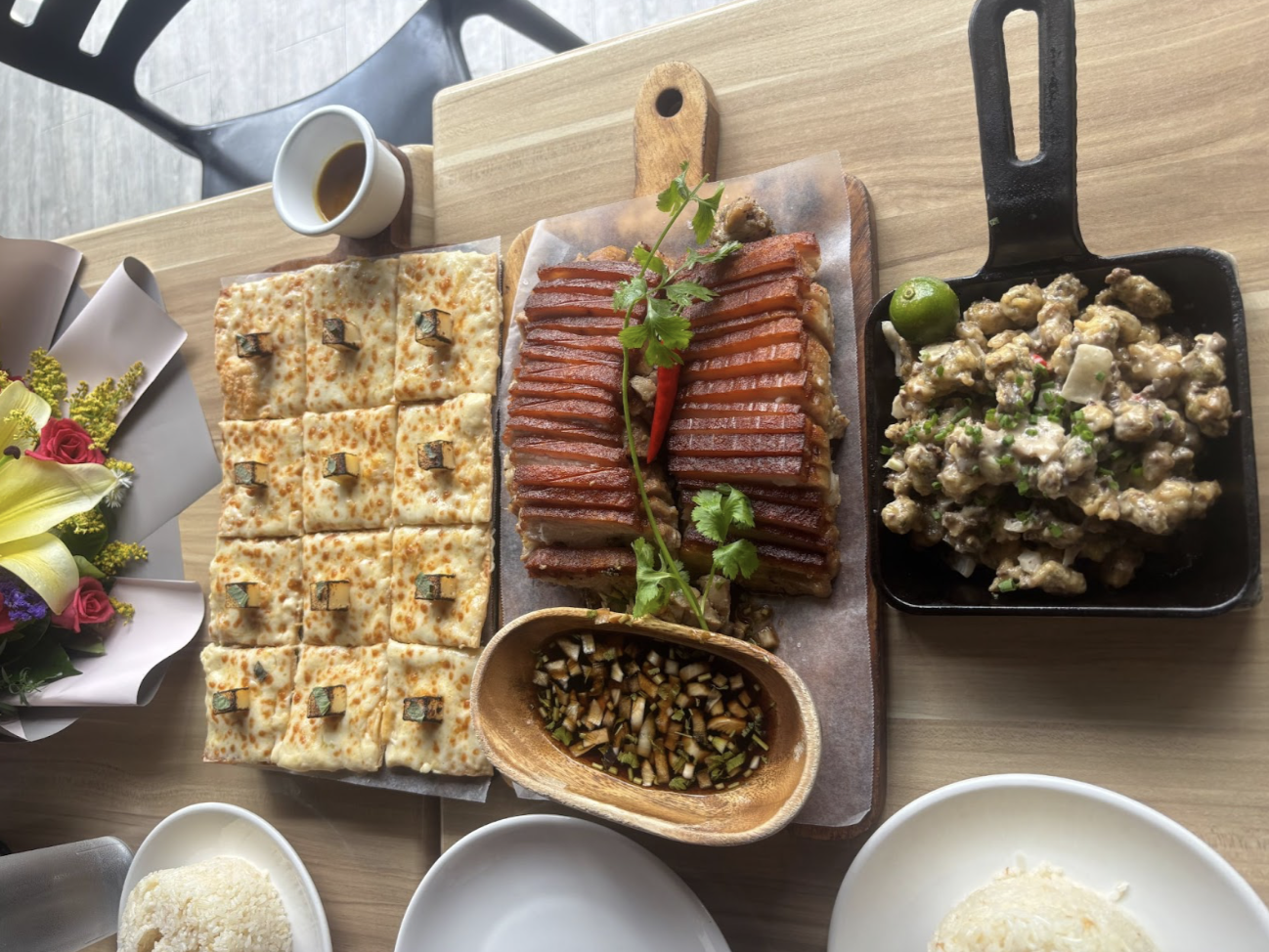
The wide array of options range from signature dishes to homages with spicy twists. The classics include the 1 kilogram of lechon kawali (P1,380 or P1,395, depending on spice) with the choice (or much rather fitting, a dare) of spice levels and the habanero lambanog made from the sap of local coconut palms, which is mixed with habanero-infused vodka and tonic (P260). Aside from these, the restaurant’s pride and joy are the iconic three-cheese pizza (P625) and oyster sisig (P525), which are both close parallels to the ones found across the sea in Boracay’s Two Seasons resort.
Pearl of the plate
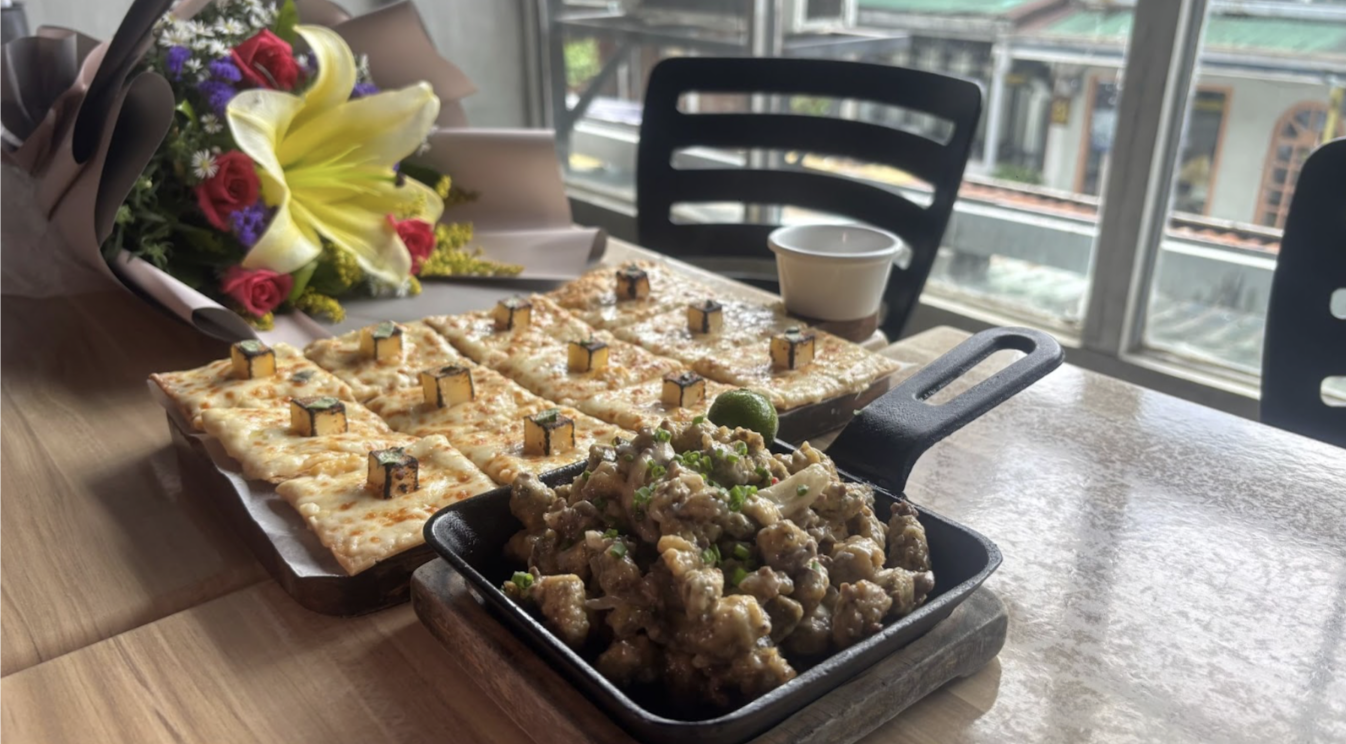
The oyster sisig does not arrive so much as erupt, served on a scalding cast-iron plate, spitting oil and salty residue into the air. Its presentation is nothing special. In fact, the serving size initially appears inadequate for two, though, it is, after all, an appetizer.
Unlike its pork counterpart, this sisig does not rest on crunch alone. The oysters, blistered just enough to tease out their depth, remain tender and lush. My mouth expected a crispy texture of slightly burnt meat, but it was met with the opposite.
The heat builds slowly, lifted now and then by the calamansi’s bright sour sting. It’s not a dish best eaten when it is well-done. It is a specialty best enjoyed as it becomes. Its mild chili profile simmers as a low flame to tease your tongue, serving as a gateway to the spice yet to come.
The sisig is a challenge and a reward at once. Like an oasis in the middle of endless gravel dunes, it stands out as a rare gem amid the familiar flavors of traditional Filipino cuisine. Unconventional as it may be, for some reason, it works.
Compared to the rest of the menu, the spice in the oyster sisig is very much more tolerable. Present, but not overpowering. Its blend of tastes perfectly complement the rest of the main dishes, particularly that of the much spicier lechon kawali. Another ideal combination to go along with it are the Habanero infused cocktails, which surprisingly arrive as both refreshing and thirst inducing.
The oysters are plump and smoky, but they retain their briny taste. It might not be the perfect choice for those who look for the authentic ‘sisig’ flavor such as those of the Kapampangans. The change of meat is a big flavor shifter; however, it is not a complete reinvention. It’s a cleaner, more balanced version losing the typical greasy overload of fat and oil.
By the time the sizzling fades and the last bit is scraped off the plate, I’ve forgotten the heat, the noise—even why I came. I arrived with a pounding headache from the shifting temperatures and harsh reflections that strained my eyes. But after the meal, it was gone. All that remained was a quiet craving for more.
However, as satisfying as it is, the dish was not filling in itself; rather, it was a fitting entrance to the rest of the menu. It was more of an ellipsis than a period—an opening, not a conclusion. It did not overpower the other items we have ordered, rather, elevated their palatability. Like stumbling upon shade and cold water in the middle of a long, sun-beaten trail. It was a quiet relief that made everything after it taste even better.
All in all, it may be unfair to call Habanero’s oyster sisig a clone of its Visayan counterparts from Two Seasons resort. It might serve a similar dish, but it does so in a different fashion. Habanero’s classic sits well not on white sand shores, but in the gritty charm of Cubao—louder, smokier, more restless. It’s not trying to be the same. It’s made for the dry heat and dust of the city’s desert, not the calm of the sea.
It does not try to quench the heat: it meets you in it and, somehow, makes it worth the burn. F – Ron Kyle Gabrielle Reyes