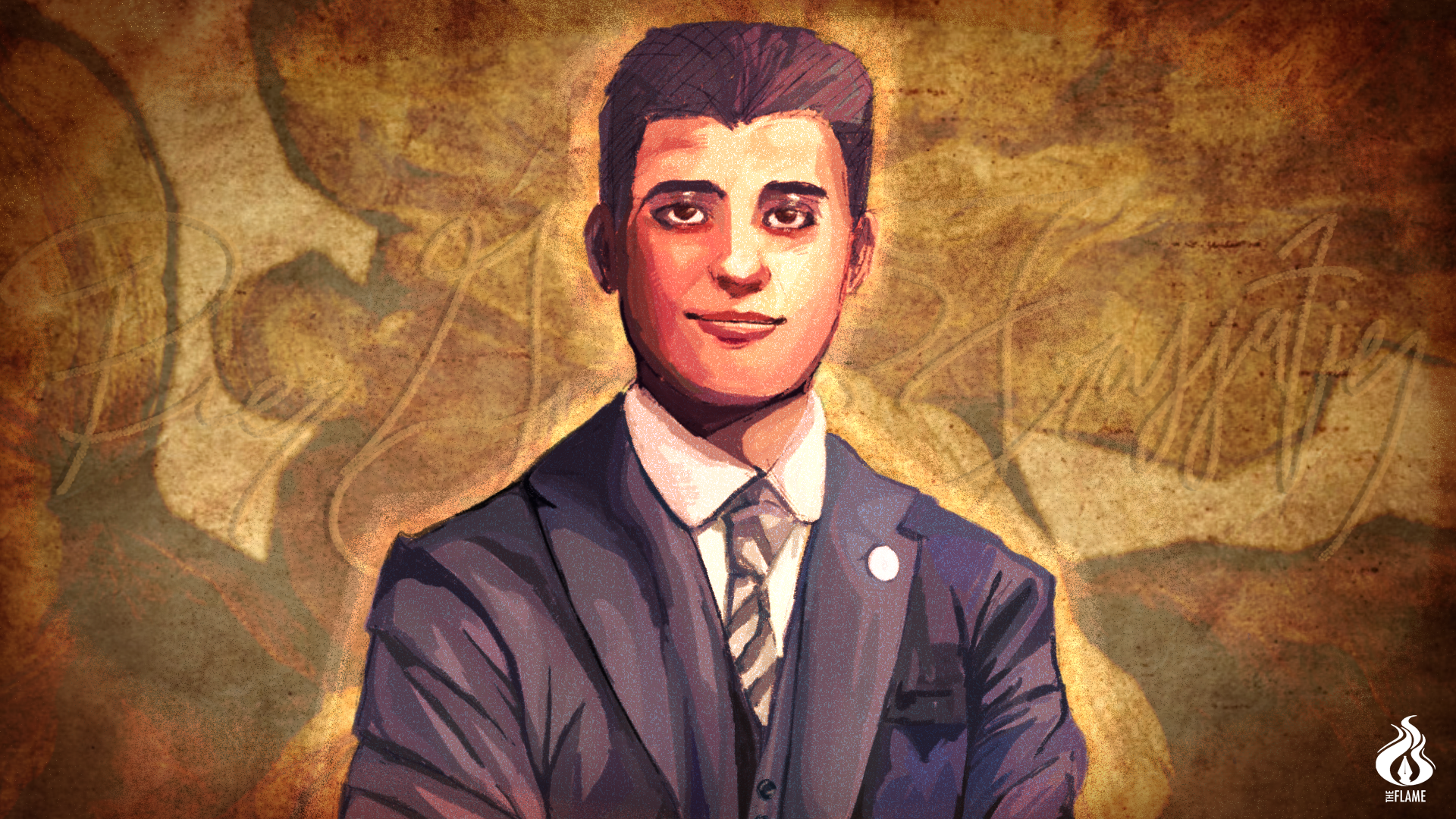
Art by Natalie Reign Pacat/ THE FLAME
A KNOCK echoed from the door one morning in Turin, Italy. A sickly mother and her son stood at the doorstep asking for alms. To the surprise of the wealthy Frassati family, their only son took off his shoes and socks and gave them to the boy.
St. Pier Giorgo Frassati then closed the door before his parents could object.
That was one of the many remarkable acts of the newly canonized saint, featured in his biography titled ‘The Man of the Beatitudes: Pier Giorgio Frassati.’ The book was written by his sister, Luciana Frassati Gawronska, and was published in 1990.
When one pictures a saint, what often comes to mind are their solemn faces on prayer cards with halos encircling their heads, holy figures meant to be admired from afar. But beneath this Dominican saint’s exterior is a life not far from the ones who pray to him.
‘Kuya Pier’
Like any student, Frassati struggled with schoolwork and experienced unrequited love. He always had a prank up his sleeve. He stood up for social justice, being an activist, and spent his free time as an avid hiker in the Alps.
“St. Pier Giorgio Frassati has always been an inspiration to me. He is our Kuya Pier Giorgio, to whom the younger generation most relates,” Herb Vincent Hernandez, a freshman from the UST College of Information and Computing Sciences (CICS), told The Flame.
Fine coats and shoes decorated Frassati’s life ever since he was a child. He was born in Turin in 1901. His father, Alfredo Frassati, was a former Italian senator and an editor for the still-standing Italian newspaper, La Stampa. His mother, Adelaide Ametis, was a famous painter.
In 1922, he entered the Third Order of St. Dominic, the lay Dominicans. Just three years later, Frassati passed away. His death was swept in waves of tears from the poor in Turin. Doctors suspected that he caught polio from one of his visits to the sick and the poor.
The Italian’s journey into sainthood lasted a century, from his death to his beatification in 1990 and canonization in 2025.
At UST, he is honored through the Saint Pier Giorgio Frassati, O.P. Building, which houses the UST Senior High School (SHS) and CICS. The young follower of Christ is the patron saint of SHS students.
Fr. Christopher Jeffrey Aytona, former director of the UST Communications Bureau and the current spiritual adviser of the Frassati Society – Philippines, describes Frassati as similar to the youth of today.
“Pier Giorgio’s life story is not rare, and that is precisely what makes it so inspiring. It proves that sainthood is attainable in the ordinariness of life,” Aytona, also the director of Caleruega Philippines in Nasugbu, Batangas, told The Flame.
Academic failures
Even a saint like Frassati had to brawl with the everyday trials of student life.
In 1910, he and his sister were set to enter the Massimo D’Azeglio, a public school in Turin. A disaster struck not long after.
At age 12, Frassati failed his Latin exams. As a result, he was pulled out for a year to make up for it in a private school. In a letter to his father that was published online, he poured out the heavy weight of the failure.
“I saw how upset Mama was, and I thought about you so much that I don’t know how to ask for a word of forgiveness,” the distraught Frassati wrote.
“I am also sorry that I have to stay behind, and I am ashamed in front of my classmates and my sister who have gone ahead of me.”
Despite his best efforts, the same subject bested him a second time. Frassati returned to the private school, the Istituto Sociale run by Jesuit fathers, and finished his high school education.
At seventeen, he entered the Royal Polytechnic of Turin to study mechanical engineering, specializing in mining engineering. He chose the field to better serve the miners who struggled under harsh conditions.
Finals week eventually came for Frassati. His struggles persisted until the final stretch.
“I began the series of exams in this Holy Year poorly enough because yesterday after an hour of tough questioning, the professor made me withdraw because I didn’t know how to sketch well,” Frassati wrote to Marco Beltramo, his close friend, in 1925.
Frassati had a list. He had written down the last examinations he needed to pass to finish his degree. The finish line was only a few papers away before his goal became out of reach. With two exams left uncrossed, his death came to stop him.
On the centennial anniversary of Frassati’s birth in 2001, the Royal Polytechnic of Turin posthumously awarded his degree in mining engineering.
The life of the party
Frassati had his own set of barkadas, or a tight-knit friend group, with whom he shared adventures and laughter. They were called the ‘Society of the Tipi Loschi,’ which roughly translates to “sinister ones,” and included both men and women from his closest circle.
Inside that group, he was known as ‘Il terrore’ (The terror) because of his fondness for practical jokes.
“He was infused with constant joy, a joy that was sometimes explosive, and he surpassed just about everyone with his bottomless bag of noisy pranks,” Fr. Rinaldo Ruffini, a friend of Frassati, was quoted by several online sources as saying.
Frassati concocted various tricks, from waking his friends with toy trumpets to sending a package of melting ice cream to his professor. The pranks he pulled with Beltramo as his partner-in-crime earned them the nickname ‘Fracassi Company.’
One of such pranks was narrated in a letter to his sister in July 1924, published online by Frassati USA. When Tina Bonelli, another friend, was set to travel to England, Frassati and Beltramo gifted her a box of delectable candies. The twist: the sweets were tied in a long chain.
Bonelli had finally settled in her seat when the train left the station. Unaware of Frassati’s scheme, she decided to give her travel companion a piece. As planned, all the candies came out in one long chain, much to Bonelli’s embarrassment — and Frassati’s amusement.
In the Tipi Loschi, Frassati established a set of rules, though joke provisions rather than serious ones lined this friendship constitution. Their motto, for instance, was “Few but good like macaroni,” and their patron saint was imaginary: St. Pece of the Fools.
He had a ‘TOTGA’ too
Even Frassati himself could not escape the mysteries of the heart. He knew love firsthand. And he had a ‘TOTGA (the one that got away)’ even before the term was invented.
The most poignant story was a one-sided romance that left the saint anguished. Accounts differ on the origins, but it is said that he was once deeply smitten with a girl named Laura Hidalgo.
In 1923, the two met at Little Saint Bernard, a mountain pass in France. Frassati frequented there when he wanted to ski. From that day, they developed a close friendship with one another. Hidalgo even joined the Tipi Loschi.
A hushed affection began to take hold of the young man. But never once did he let a single feeling slip out throughout the course of their friendship.
Frassati knew that his family would not accept Hidalgo. This fear of hurting her with disapproval held him back from admitting how he felt. The sole confession came when he confided in his sister, Luciana.
“He came to me with his great black eyes and told me he was in love with a girl I know,” his sister said.
In one of the published letters to his friends, dated 1925, Frassati turned melancholic yet prayerful over his lost love.
“She is whom I loved with a pure love and today in renouncing it I desire her happiness,” Frassati wrote.
“I urge you to pray that God gives me the Christian strength to bear it serenely and that He gives her all earthly happiness and the strength to reach the goal for which we were created.”
A giving heart
Above all, Frassati was known for his acts of service for the poor.
Without a second thought, he frequently handed over his bus fare to the needy, only to rush home to catch dinner on foot. Despite the privilege that came with his family name, Frassati saw every opportunity to help the lesser privileged.
“His family situation was far from ideal and could have easily discouraged him from pursuing holiness. Yet, he remained steadfast in his vocation and love for the Lord,” Aytona said.
Reports from the Catholic News Agency found that even on important occasions, Frassati chose to give back to the poor. On his graduation from high school, Frassati’s father gave him a choice: a car or money worth the same amount as the car.
He chose the money, yet it never reached his pockets. With his graduation gift, he housed an elderly woman facing homelessness and provided care to the sick.
For Brother Karlos Cruz, the moderator of the Frassati Society – Philippines, the Italian saint was a point of change and hope.
Cruz had his first encounter with Frassati in 2015, when he worked as a professor and administrator at St. Jude College in Sampaloc, Manila. On the night of July 4, a parish he regularly attended celebrated the feast of Frassati, who then bore the title ‘blessed.’
Right after being exposed to Frassati’s story, Cruz hurried back to his office and further explored the young saint’s life.
“From then on, I made him one of my favorite saints,” he said.
The theologian used to be known as a strict teacher who hated noise outside the classroom. However, upon meeting Frassati, he made a conscious effort to become kinder.
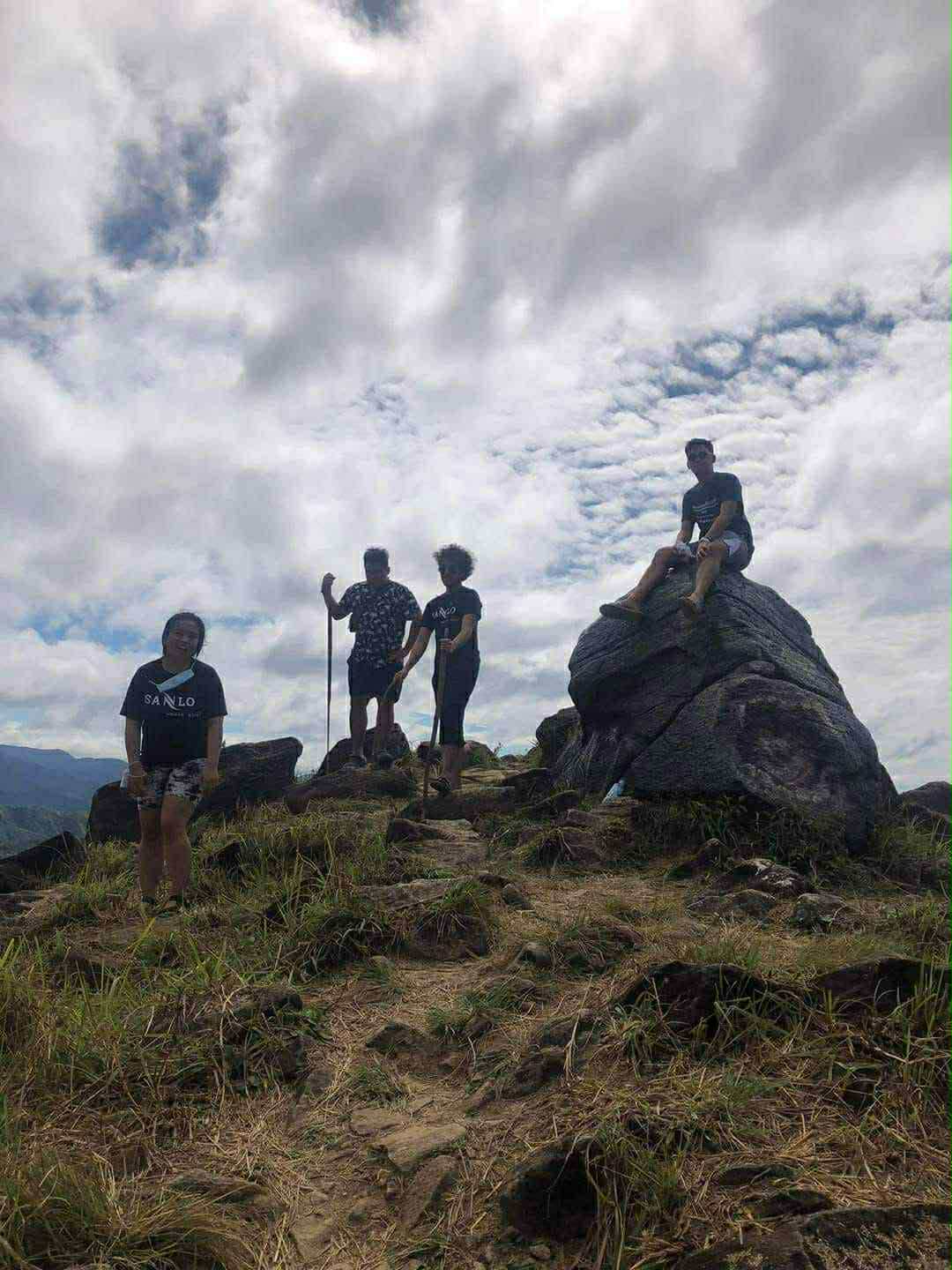
In turn, he translated this into teachings for the other members of the Frassati Society. Cruz has even gone as far as trekking Mt. Balagbag in Rizal, just like Frassati did.
Courtesy of Frassati Society – Philippines
“Si Frassati kasi, he used to go hiking, di ba? (Frassati used to go hiking, right?) So, I told my friends, ‘Let’s go hike and see what we can see up in the mountain,’ ” he said.
Frassati’s personal motto, ‘Verso l’alto’ (To the heights), was written on a now-famous photo of one of his climbs.
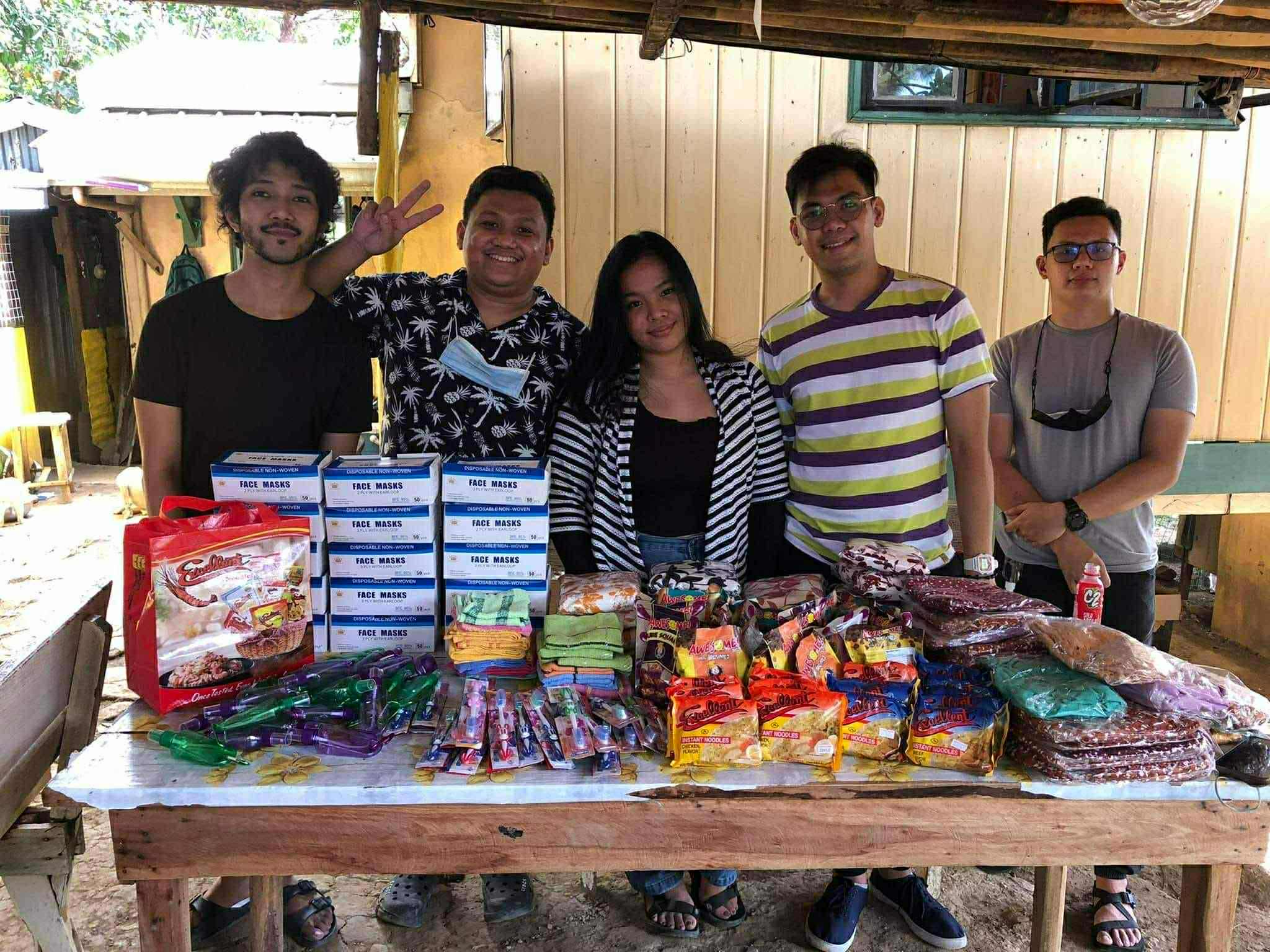
The group met the mountains’ locals. Through dialogue with them, the hikers understood what supplies they were missing. Cruz made a promise to himself atop the mountain; a vow to return with goods in his arms.
Cruz’s first hike started in February after the COVID-19 pandemic. When May came, they returned to the mountain carrying hygiene kits and school supplies for the locals. He makes it a point that the stock they distribute to them is new.
“The perspective of the Frassati group is to make sure we give them the dignity that they need,” Cruz said.
“Ang mindset dati ay kung ano lang ang tira-tira mo, ‘yun lang ibibigay mo sa mahirap. Along the way, I realized na hindi pala ganoon. You need to give what you experience.”
(The mindset before was that you only give your leftovers to the poor. Along the way, I realized that it should not be like that. You need to give what you experience.)
Courtesy of Frassati Society – Philippines
An impassioned advocate
Though born into a life of pressed collars, Frassati stood shoulder to shoulder with laborers and defied the fascist wave that emerged during his lifetime.
According to Hernandez, Frassati’s outspoken activism persists in the youth of today.
“Like him, we, the young people, call for social justice and the preferential treatment of the disadvantaged, while ensuring that those guilty of corruption are held accountable,” the CICS student said.
Following in the footsteps of the saint, the members of Pax Romana joined the University-wide walk-out protest on Sept. 21, 2025 to fight against government corruption.
Rain fell upon the serpent of umbrellas and drenched uniforms and placards. The protestors, coming from various colleges, faculties and academic levels, wound through the campus pathways. Cutting through the parade was a portrait of St. Pier Giorgio Frassati.
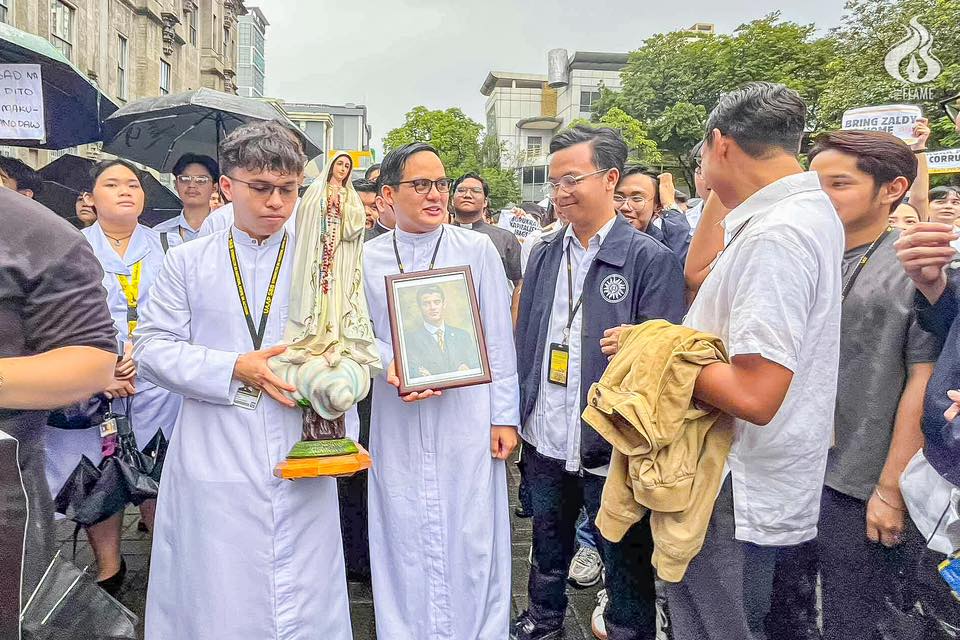
Photo by Joss Gabriel Oliveros/ THE FLAME
“He exemplified that holiness is not lived by being silent and tolerating what is intrinsically wrong. It is lived by always standing up for what is morally good and right,” Hernandez said.
Frassati, just like his father, did not shy away from expressing his views. He faced arrest on multiple occasions. He fought for his beliefs, sometimes with fists.
One evening in 1924, while his family was gathered at the dinner table, their doorbell rang. Their maid went to answer. In an instant, a group of fascists burst in, searching for Frassati’s father. Acting on instinct, the young man leapt to his feet and fought off the intruders.
“My blood raced in my veins. I threw myself at that scoundrel shouting, ‘Rascals, cowards, assassins,’ and delivered a punch,” Frassati wrote in a letter talking about the event.
Another time, featured in an online biography, he and his fellow youth stood against the royal guards during a protest in Rome. An officer had knocked away a student’s banner. Amid the chaos, Frassati picked up the banner. He raised it to the skies and used its pole to defend himself and his fellow protesters.
“[Frassati] showed us that no matter our past or background, this does not dictate the pureness of our hearts,” Hernandez added.
The calling of sainthood
Frassati’s path to sainthood took over a hundred years of waiting. On Sept. 7, 2025, he was finally canonized by Pope Leo XIV, together with Carlo Acutis, in St. Peter’s Square in the Vatican City.
While the Church has recognized over 10,000 saints, Aytona cited the need for more spiritual models in the modern times.
“We need new saints today. In a world overshadowed by darkness, saints are like stars in the night sky, offering glimmers of hope and inspiration. Their stories remind us that holiness is possible, even in the face of human weakness,” said Aytona.
For Hernandez, there is no Church without the laity. As a layman, he knows the struggle that Frassati similarly faced with balancing themselves and their faith.
“St. Pier Giorgio Frassati showed us that we can be extraordinary by doing ordinary things,“ Hernandez said.
Cruz said the Catholic Church is beginning to widen its perspectives on the virtues and holiness that the faithful can imitate. The Church is no longer limiting herself to priests, bishops or otherworldly miracle workers when it comes to sainthood, he added.
“Siguro binabago ng simbahan ‘yung perspective na ganoon, na hindi lang porket nakalakad ang pilay, nakakita ang bulag, ay santo na, mga ganoon,” Cruz said.
(Perhaps the Church is changing that perspective, that just because the disabled can walk, the blind can see, [that person] is a saint.)
The average nature of Frassati’s life, while relatable to the common people, is the call for the laity to pursue holiness above the struggles of life.
The modern world is in desperate need of holiness, as Aytona described it. He urged the Filipino youth to find inspiration and strength in Frassati’s story; in the midst of struggle, to find the gifts in their lives.
“Find joy in giving, not in accumulating. Strive to climb higher each day, because we are made for greatness and holiness. Young Filipinos are called to be saints,” the priest said. F