LEADERS SHOULD use their power to render service and immerse themselves in the suffering of others, a Thomasian priest said.
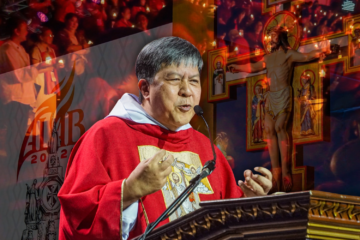
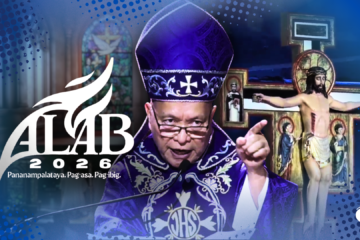
In his homily for a mass in honor of Christ the King, Fr. Paul Obispo reminded Catholics that power and service must not be separated.
True public servants should be defined through love and service for the people instead of their possessions, position and popularity, he added.
“It’s not really about the position… not about popularity, but the service, [that is] full of love for God and for other people,” Obispo said during the mass held on Saturday, Nov. 22, at the Sacred Heart of Jesus Parish.
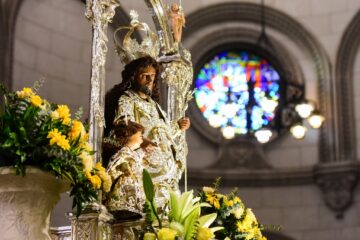
The priest recalled the service rendered by Christ, whose kingship was defined by sacrifice rather than earthly symbols. While many associate being a leader with possessions, Obispo noted that Christ possessed none of these.
“When he gave his great service on the cross… He did not have a golden crown, but a crown of thorns… He did not have a precious staff and nails were on his hand… He did not have beautiful clothes, but was naked,” the priest said.
“Jesus didn’t have these things… What set Jesus apart was service, full of love for God and for other people. That’s the true king.”
According to Obispo, leaders who do not empathize and experience the pain of their citizens do not resemble Christ’s service to the people.
“No one becomes a true king through possessions, position, or popularity. It is not true service when we do not feel any pain,” he said.
Obispo urged those who hold authority, including parents and educators, to live with the mission of Christ and to serve with empathy rather than control.
“Use power to serve, not to cause suffering. If you use your power to make people suffer, then you are not a true king,” he added.
The mass was held as part of the vicariate-wide celebration of the Solemnity of Christ the King. It was celebrated after the opening liturgy at the UST Santísimo Rosario Parish and a procession joined by 11 other parishes from several parts of Manila.
The Solemnity of Christ the King marks the end of the Catholic liturgical year. It is celebrated on the last Sunday before Advent, a four-week season that prepares Catholics for Christmas. F – John Martin Revilla