THE GREATEST calling in a Christian’s life is not to achieve excellence, but to let all actions be guided by love, a Dominican priest said.
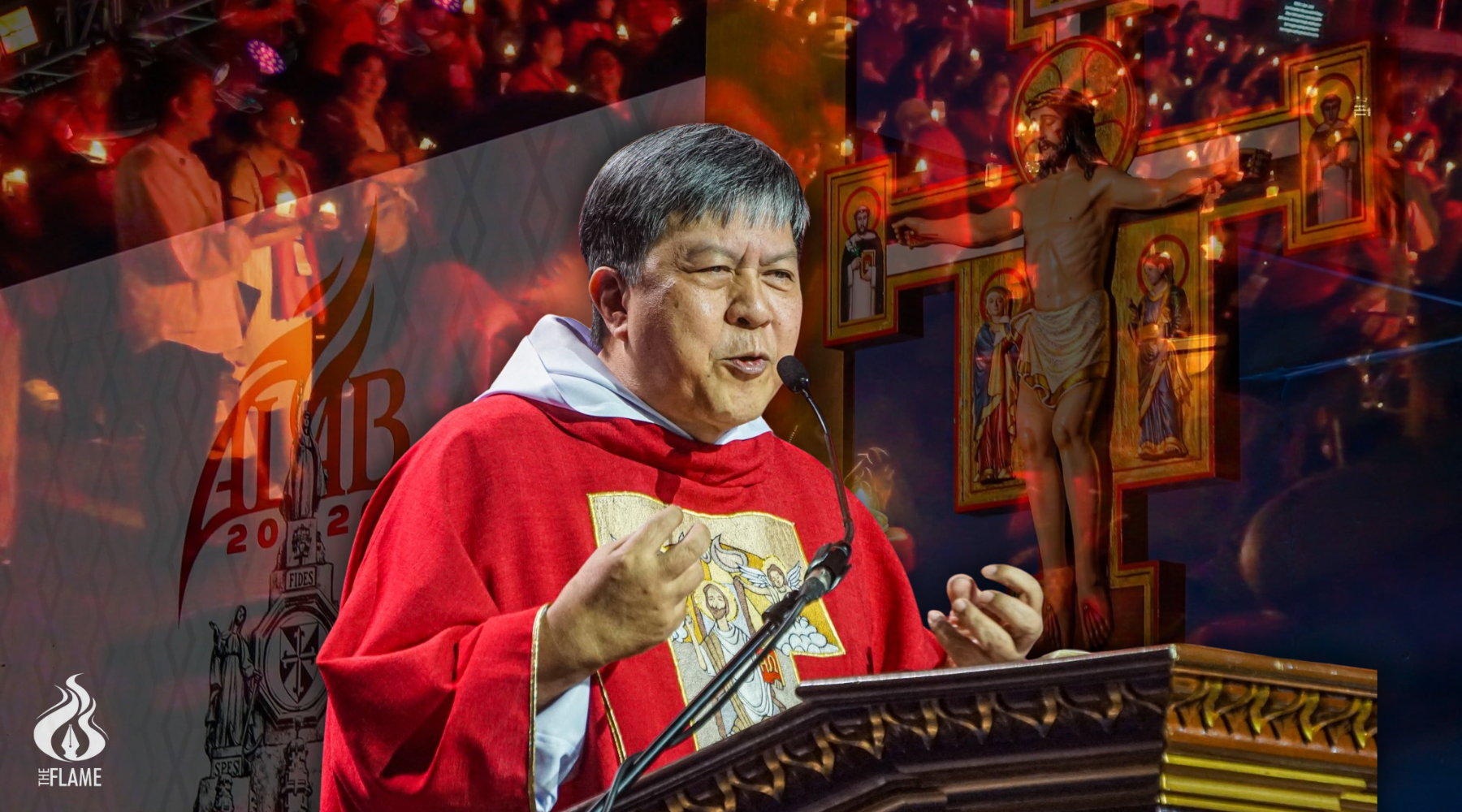
Fr. Filemon dela Cruz, Jr., O.P., prior provincial of the Dominican Province of the Philippines, said no matter how extraordinary one’s abilities or achievements may be, they may become meaningless if the virtue of love did not direct them towards their ultimate purpose.
“We may have many gifts, but if it is not directed, informed, or deprived of love, it is nothing,” he told Thomasians during his homily for the culmination of the University’s three-day retreat on Friday, March 6.
According to dela Cruz, love is the greatest among all virtues in the Tria Haec, statues found in the University’s Main Building, which also represent faith and hope.
The reality of life challenges the faithful to live out these ideals, be added.
The Dominican priest cited the story of Joseph in Genesis, whose brothers betrayed and sold him out of envy because he was their father’s favorite.
“In fact, the word that was used was ‘they hate.’ It speaks of evil intent, evil plan. This is not between neighbors or nations, it happens within families themselves,” he said, noting how the Scripture shows even family life can be marked by conflict and betrayal.
These virtues, dela Cruz added, must be lived even in times ot hardships, citing the parable of the tenants in Matthew, which illustrated how human greed and violence can escalate even among those entrusted with responsibility.
“[T]hrough those times, it’s about prayer, it’s about trusting God, it’s about hoping, and it’s about loving, even when you are suffering,” the priest said.
The Dominican provincial prior also linked these to the virtues of faith and hope, explaining that love should also mean trusting in God and looking forward to the place He has prepared for believers.
He added that trusting God shapes decisions, guides actions, and grounds Christians in hope for the future, emphasizing that hope is more than wishful thinking — it is the courage to anticipate God’s promises even amid uncertainty.
“I have told you that I am going to prepare a place for you,” he quoted, citing the book of John. “Jesus gives us something to long for, to look forward to. A place that the Lord has prepared for us,” dela Cruz said.
“For me, that is what love is all about. That’s the endgame of love… That you will not be separated with Him who gave us life, with Him who is our beginning, and hopefully is also our end,” he added.
Dela Cruz reminded the faithful that the virtues shown in the Tria Haec are not meant to remain as ideals during prayer and reflection, but to be lived in the realities of daily life, where injustice, jealousy, and violence are prevalent.
“There is a time of reckoning wherein we will have the time to face the consequences of the things that we have done to others. The things that we have done in this life. That is God’s justice,” he said.
Dela Cruz called on the faithful to remain steadfast in their faith by practicing the three virtues even in the midst of hardship.
“They (Tria Haec) will remind us of the challenges and at the same time of remaining faithful to what God has destined us to, that we must be faithful even in the midst of uncertainty,” he added. F