GLOBAL CRISES should not hamper the expression of faith, including celebrations of key religious events, as trials strengthen the longing for God, members of the clergy said.
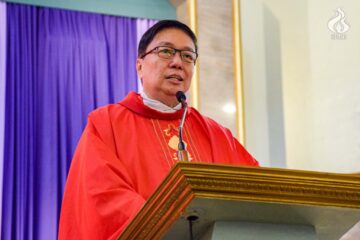
Lingayen-Dagupan Archbishop Socrates Villegas said the “determining factor” for such celebrations is neither the presence nor the absence of a crisis, but faith in God.
“In the middle of the crisis, we are having [a] celebration… When did we ever have no crisis? So if crisis [were] the reason for not celebrating, then we would not celebrate at all because there is always [a] crisis somewhere, sometime in the world,” Villegas said during the press conference on the centennial of the canonical coronation of Our Lady of Manaoag on Tuesday, April 7.
Manaoag’s prior and rector, Fr. Felix Legaspi III, O.P., said more devotees are coming to the Church as the conflict in the Middle East rages on.
“At times, the more the crisis we have, the more that we have that longing to come to the Divine, to our Lady for courage and for health, so I think…there’s a need for us to proceed to the celebration,” Legaspi said.
He added that no crisis would stop the procession, as it is driven by the devotees’ faith in God.
According to Villegas, people across nations have the Blessed Virgin Mary as their common mother, the message the centennial celebration intends to convey.
“We have a message to proclaim to those who are advocating war and violence, that we have a common mother, and we have a common father who is God. So before we are enemies we are brothers and sisters,” Villegas said.
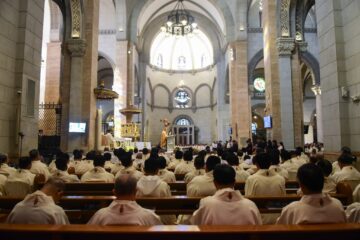
Among the highlights of the centennial festivities are the “Serenata sa Coronada,” a choral competition and concert in honor of Our Lady of the Rosary of Manaoag on April 11; novena masses from April 13 to 20; rededication of the church on April 21; reenactment of the coronation, solemn Eucharistic celebration, fiesta mass and solemn procession on April 22.
Recognized by the pope
For Fr. Wilhelm Boñon, the centennial celebration serves as a recognition of the long-standing devotion of pilgrims.
“The Pope recognizes that the devotion in Manaoag is significant for Catholics,” he said.
“It is a recognition by the Church of the countless miracles and the devotion and faith of the pilgrims and devotees of our Lady of the Holy Rosary of Manaoag.”
Manaoag, the town that venerates the Marian image, comes from a term in the Ilocano and Pangasinan dialect that means “to call.”
Mary’s first miracle in Manaoag can be traced back to a farmer who reported hearing a gentle voice calling his name while passing a hill where the present Minor Basilica now stands.
He later described seeing a radiant cloud atop a tree, within which appeared a luminous lady who asked that a shrine be built on the site for her devotees.
The story spread across nearby communities, prompting early pilgrimages and establishing the area as a center of Marian devotion. Over time, the site developed into one of the country’s most prominent pilgrimage destinations, drawing generations of faithful seeking intercession and protection.
“The image is important not only culturally, not only in the Filipino culture but also religiously in our faith as Catholics, especially in the Church,” Boñon said.
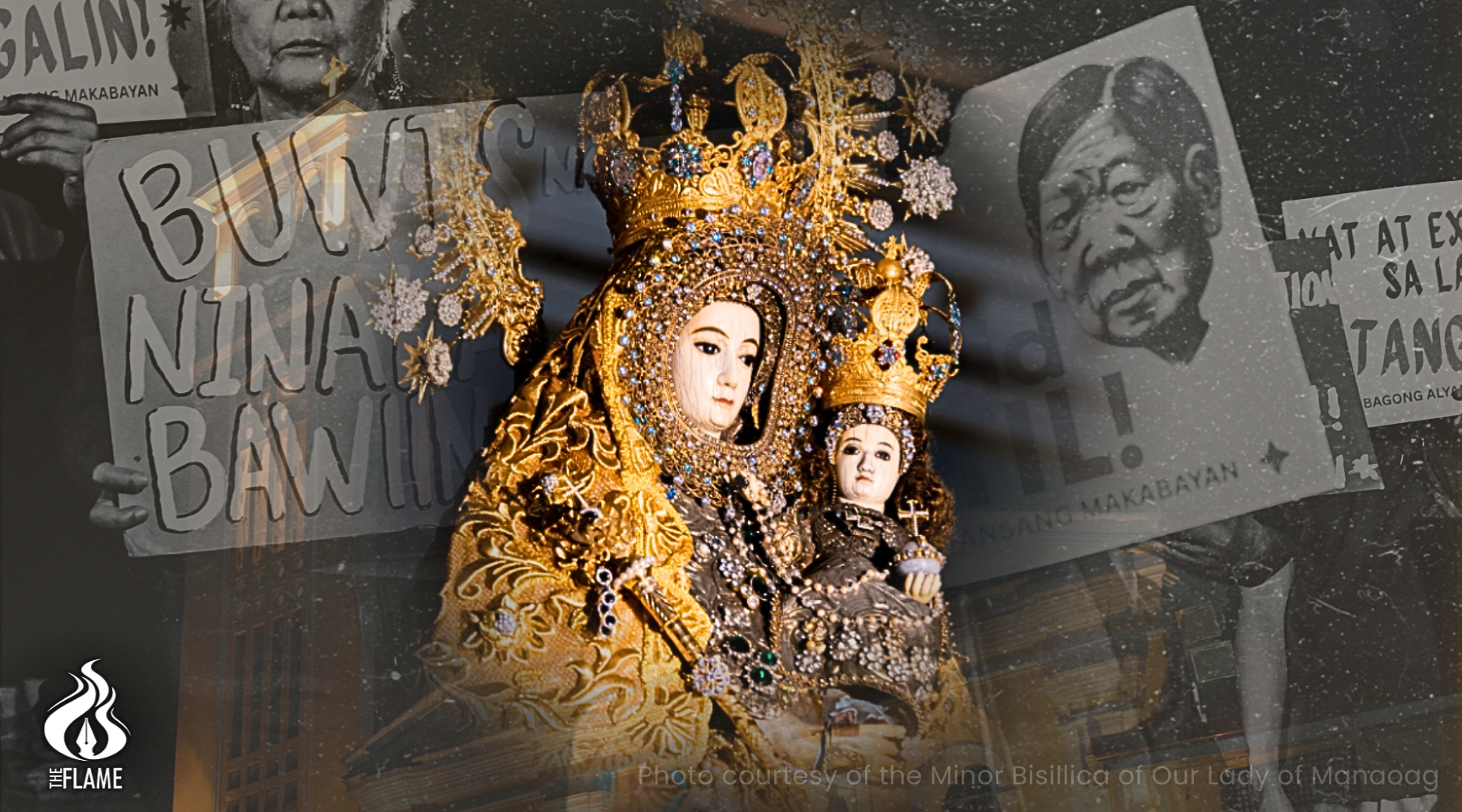
A Canonical Coronation is a formal act authorized by the Pope that recognizes a Marian image for its profound spiritual significance. It serves as an official affirmation by the Church of the image’s enduring role in the faith of the people.
The Manaoag image received this recognition on April 21, 1926, following a petition by Fr. Mariano Rodriguez, OP to Pope Pius XI.
The coronation was carried out by Monsignor Guillermo Piani, then-apostolic delegate to the Philippines, marking the image the third in the country to be granted such distinction after Nuestra Señora del Santisimo Rosario La Naval de Manila and Our Lady of Peñafrancia of Naga City.
While many images may be crowned as a sign of reverence by bishops, priests, or local communities, only a canonical coronation represents the highest level of Vatican recognition of a local devotion, as it is formally granted in the name of the Pope. F – Dave Justine Desilos and Sophia Carmela dela Cuesta