THE CLASSROOM filled faster than it emptied.
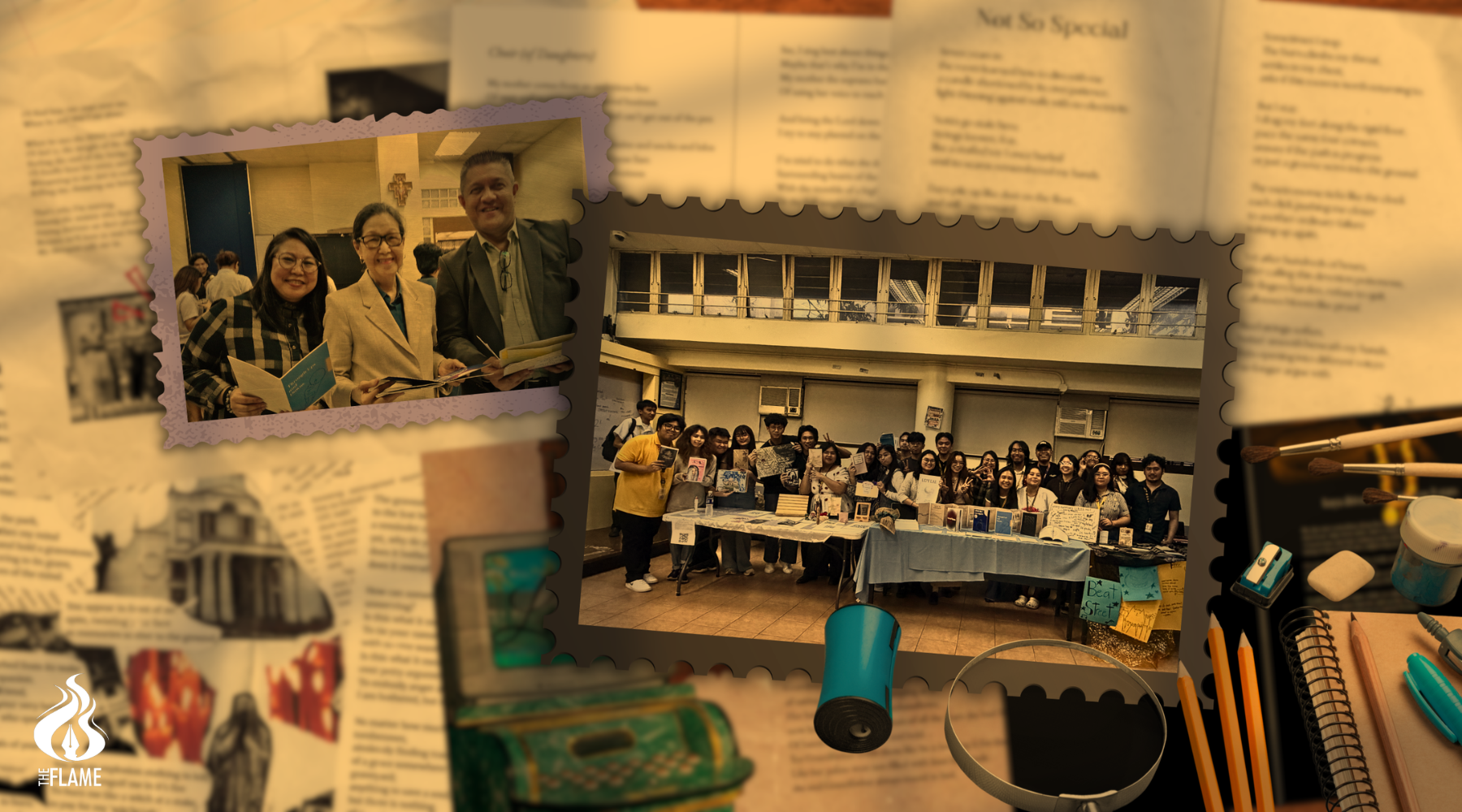
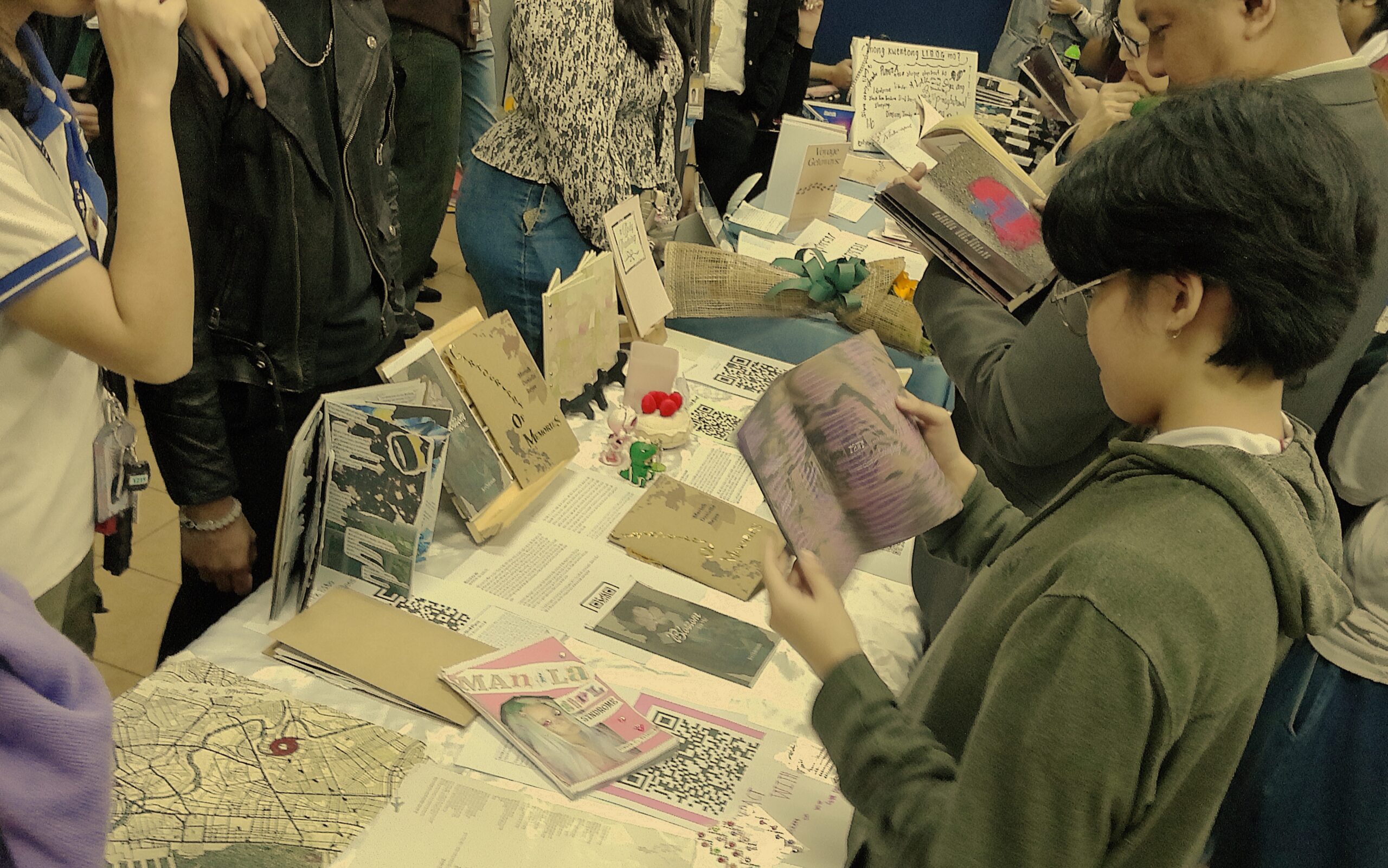
People stood shoulder to shoulder, leaning over long tables lined with stapled zines of diverse designs. Candid discussions on line breaks, visuals and the weight of words permeated through a room of the St. Raymund Peñafort building.
For the past two Decembers since 2024, students in the Poetry Workshop course under Assoc. Prof. Nerisa Guevara of the Creative Writing department came together to arrange their very own zine festival.
A zine is a self-published, small-run booklet that features original poems and layouts — a marriage between writing and illustrations.
When Guevara was assigned to teach the course in 2023, she thought of introducing the fair as her students’ final major activity.
“I just wanted to bring back a sense of community that was present before the pandemic,” Guevara told The Flame when asked about the fair’s core objective.
“[The students] can actually see how many people are interested in their work. At the end of the zine fair, they’re tired, but there are smiles on their faces or the happy shock that people are actually staying there and reading what they made,” she added.
When writers become artists
At the start of each term, Guevara would stand before her class to explain the details of the project. It included writing original poems and creating the accompanying visuals to form a zine ready to be exhibited.
But her most important instruction to the two batches was simple.
“I encouraged them to be themselves,” she said.
“If you say, ‘Be yourself,’ then incredibly beautiful forms, beautiful fonts and incredible concepts come from that.”
In between regular class meetings, students juggled the project with major papers from other courses.
Amber Reyes, a Creative Writing junior from the first batch of the fair, learned how to metamorphosize her work into something presentable for the public. Ramblings turned into full sentences, then raw poems, until it later became The Labyrinth, her zine.
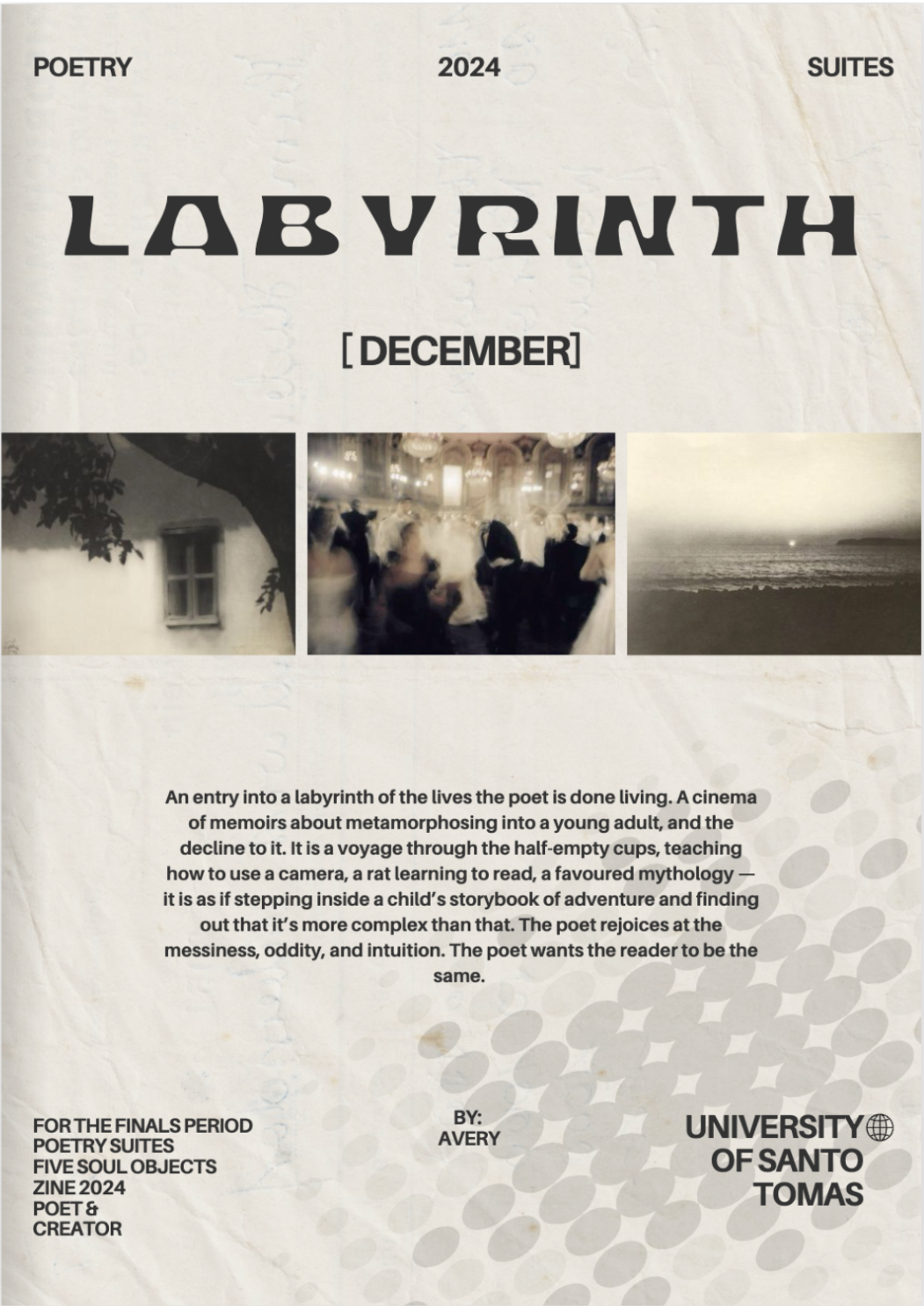
“Creating the zine is a deeper level of involvement because it’s your work. You can easily store it and give it to someone else. That kind of feeling is an extreme one that you will remember forever,” Reyes said.
“It’s sharing something that is a piece of your soul,” she said, describing the process as a delicate but fulfilling craft.
With the themes, aesthetics and paper dimensions being free range, the project presented opportunities to push the writers’ creative limits.
In conceptualizing what to create, sophomore Clarence Torres opted for a kalye (street) theme. He wrote his poems in front of dim alleyways “just to get the vibe, the feel of it.” With night as his muse, his poems aim to invoke the scenes associated with being outdoors after dark.
“That method really showed how desperate I was to get something out of myself when it comes to writing,” he said.
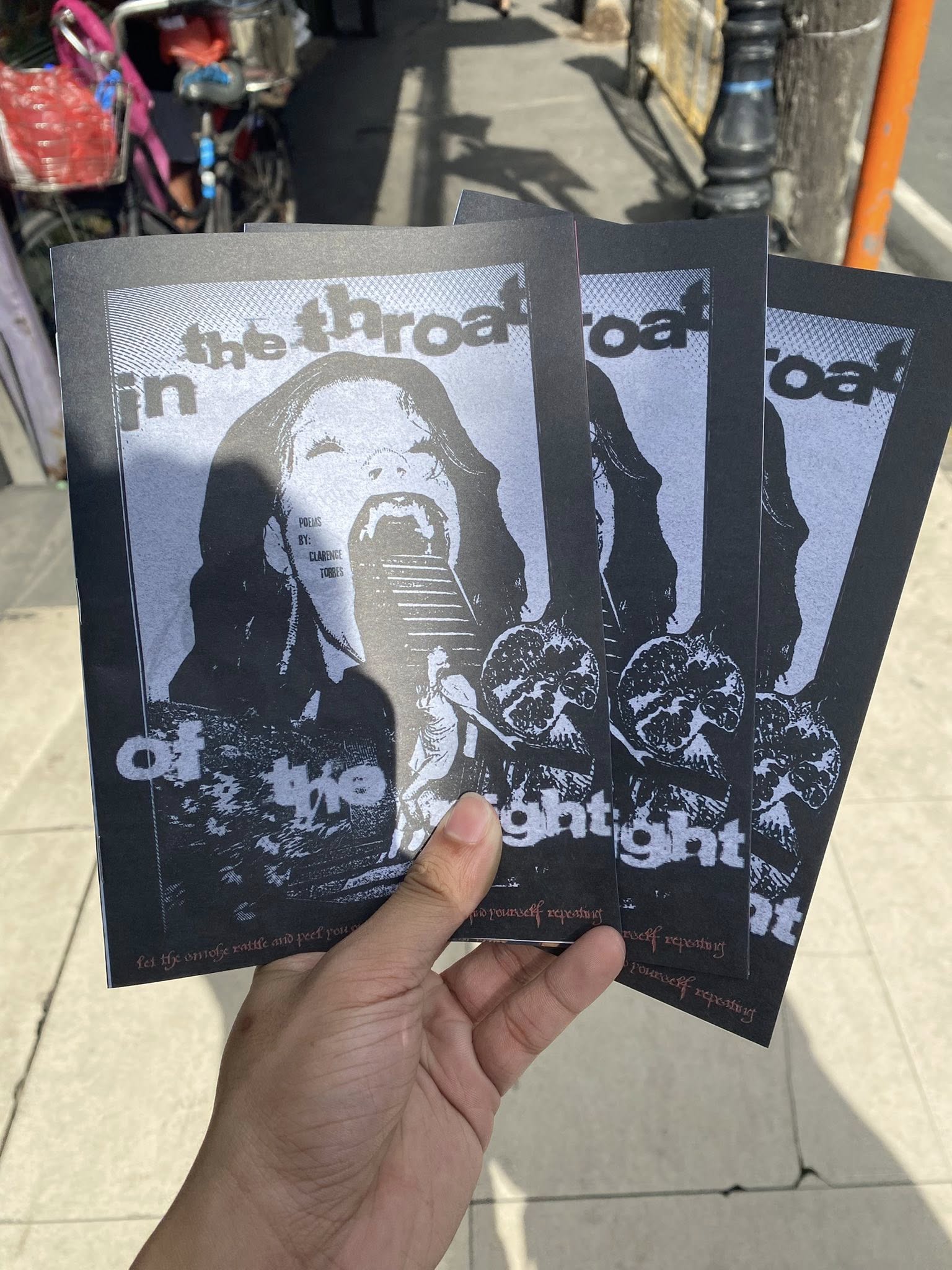
Torres was part of the second batch that held the fair. His zine, In the Throat of the Night, carries a greyed palette that was textured to resemble the worn surfaces of the street. To achieve that appearance, he dabbled into graphic design as another medium of art.
Meanwhile, his peers experimented with editing programs to map their layouts.
When it came to materializing drafts, this meant trips to print shops in the nooks surrounding the campus. Just getting the pages right spawned multiple back-and-forths. Wallets were not spared, as the price of producing a zine cost around P80 to P200 depending on page number, color and quality.
With the week before the fair rolling in, midnight cramming sessions had students finalizing cover designs or recalculating printing expenses. After nearly a month of preparation, D-Day came with their final copies ready to be displayed.
Words given form
The fair was a full-day event from 10 a.m. to 5 p.m. By morning, students stood beside their respective tables, where the zines, varying widely in form, were laid down.
Some were bound into the size of pocket notebooks, while others featured irregular cuts or three-dimensional elements. Several incorporated QR codes and experimental folds that required readers to physically flip or rearrange sections to follow the text.
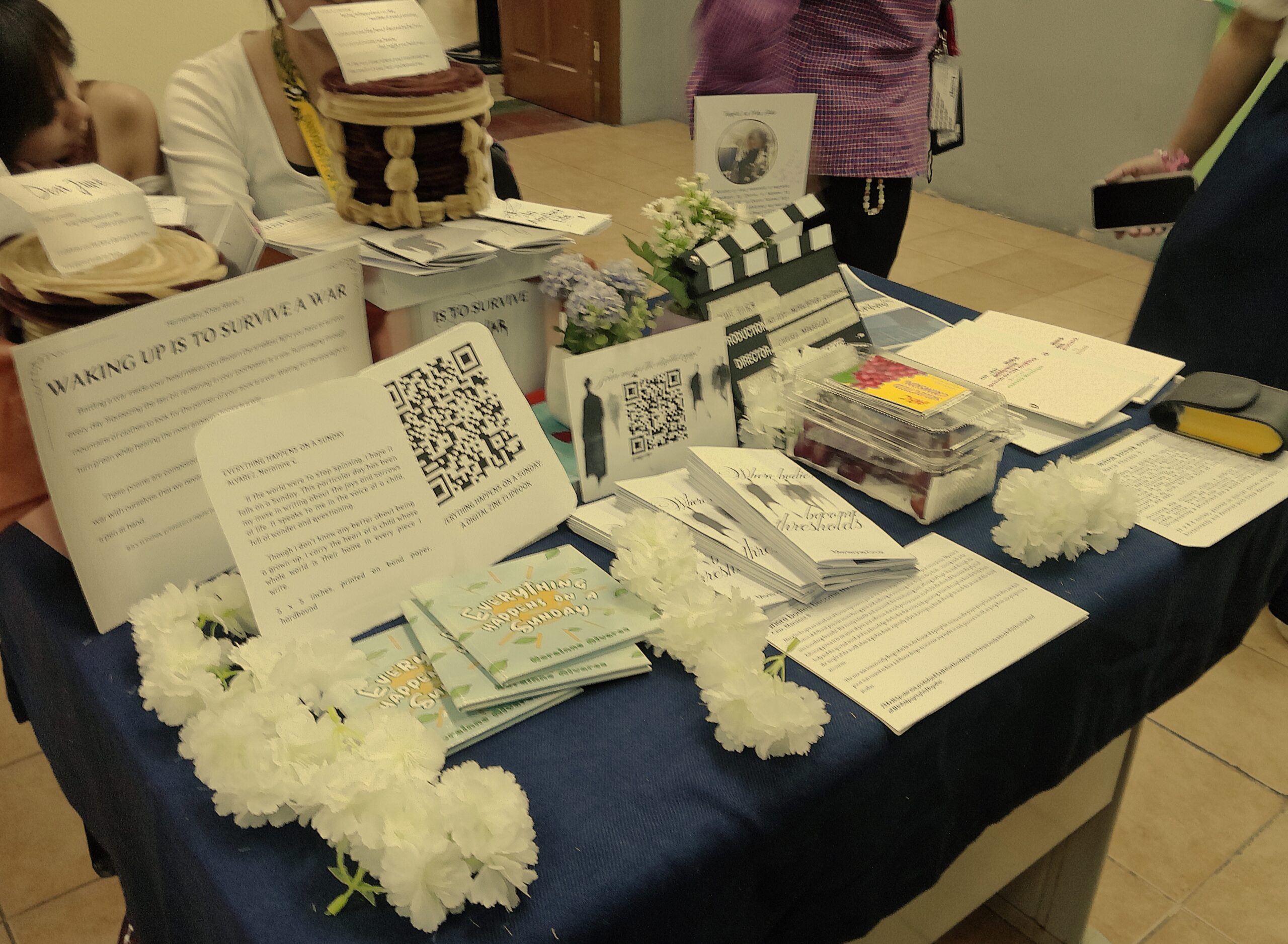
Guevara cited sophomore Samantha Calaguas’ work, The Weight of Spaces, as an example of the unconventional. Designed to fit within the palm, the compact laminated zine resembles an architectural plan portfolio, with poems mapped onto different kinds of houses the author once lived in.
“Not all zines are perfectly laid out because it’s their first time,” Guevara said, referring to the outputs in general.
“But actually, for their first time… The sizes they planned to do are beyond the capability of publishing houses, where you have to do traditional layouts.”
From conception to exhibition, the fair was a free taste of the adventure of publishing one’s own work.
“When the students do this on their own, they get to have this appreciation of what goes into what will begin their journey in publication,” Guevara added.
A community act
The classroom morphed into a museum with the influx of visitors.
Passing readers shot questions, and the student writers had to explain the concepts behind their work. Torres remembers seeing more than 50 people during the peak hours.
“It was so exciting for us, because it was an opportunity to get ourselves out there and to prepare us for the inevitable future — that we as writers would want to put our name out there,” Reyes said.
Within the gathering crowd, the value of collaboration and community among fellow writers became a lesson learned past the syllabus.
“There is this saying that writing is a solitary act,” Guevara said.
“I don’t believe in that. I believe that writing, especially as a Southeast Asian and a Filipino, is a community act.”
For the professor, community meant writers and readers, across generations, coming together to create and appreciate poetry not individually but side by side.
On the stereotype that creatives are loners, Guevara believes that is far from the case. Even the act of placing the pen on paper is an act where the writer is never alone.
“History, current events — an entire society has contributed to the first word being written. Even physically, if you had isolated yourself to be able to write that one word, there are just so many people involved in that,” she said.
“Nobody exactly retreats to write, but comes forward to write. They test out their ideas in the community.”
During the fair, Torres felt the vulnerability in sharing his work to fellow students and even strangers. When he saw faculty members entering the room, a mix of surprise and nervousness overcame him. Among those that approached his table was Prof. Augusto Aguila, the co-director Center for Creative Writing and Literary Studies.
But when the professor complimented his work, Torres realized people could like what he writes — that he could create something publishable.
“He is now my professor, and tandaan niya pa rin ako, kaya isa ‘yun talaga sa hindi ko makakalimutan,” he said.
(He is now my professor, and he still remembers me, so I won’t ever forget that moment.)
The zine fair also compelled the students to venture out of Thomasian circles, as they were instructed to contact zine artists for guidance and inspiration.
“After they graduate, meron na kasing network (they now have a network). They know how [publishing] goes, if ever they want to pursue it,” Guevara said.
She expressed hope that the fair would remind students that writing neither begins nor ends on the page. It rather lives when people make time to read and write together and nurture ideas through conversation.
Looking ahead, she wishes other instructors would consider adopting the zine project. It may even be expanded across year levels as a way to sustain both creative practice and connection.
“Whether it’s going to be a Creative Writing course or an Art Appreciation course, it really is about community. The social function of art is there in every single minute and in every single gesture,” she said. F – with reports from Yelah Israel