
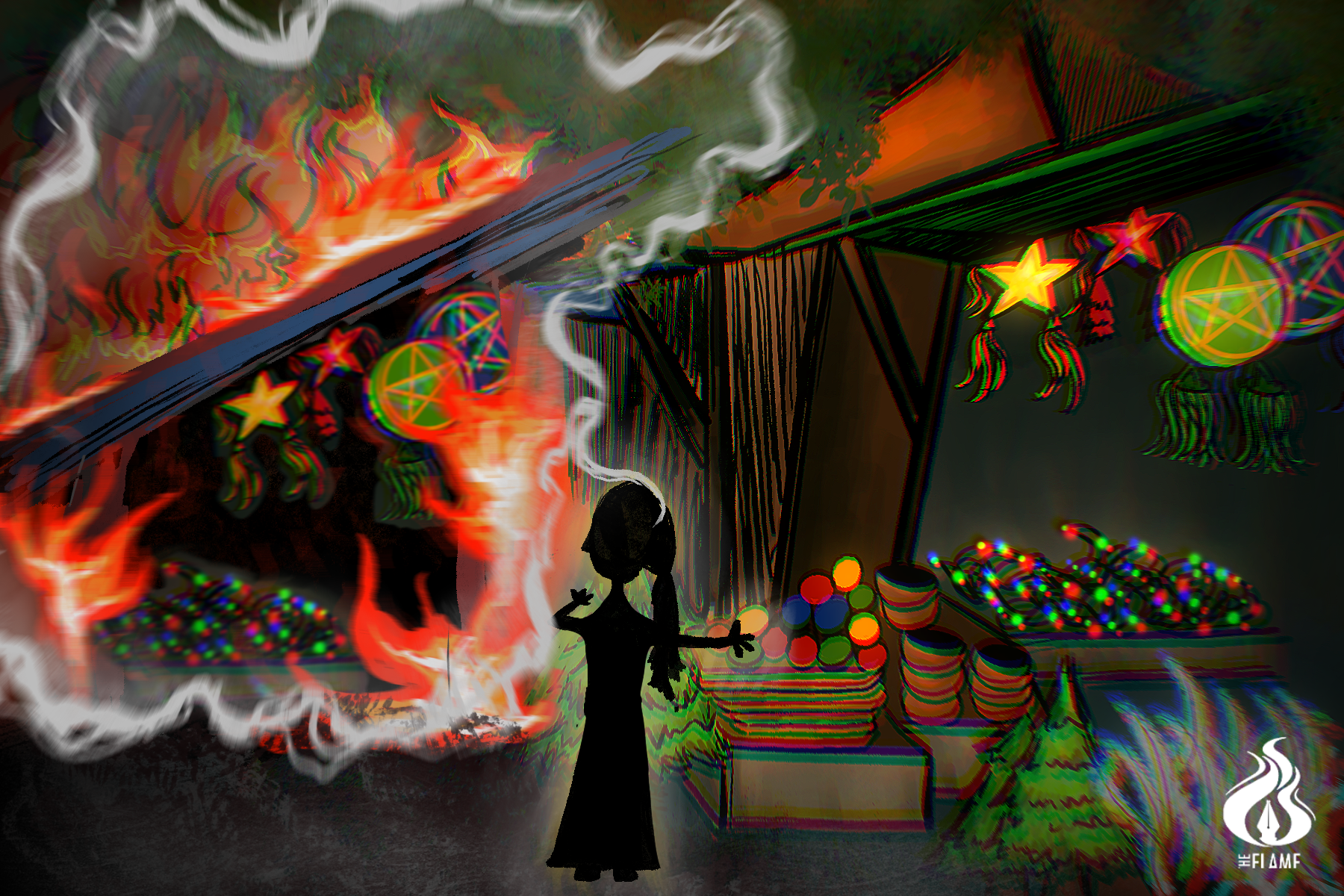
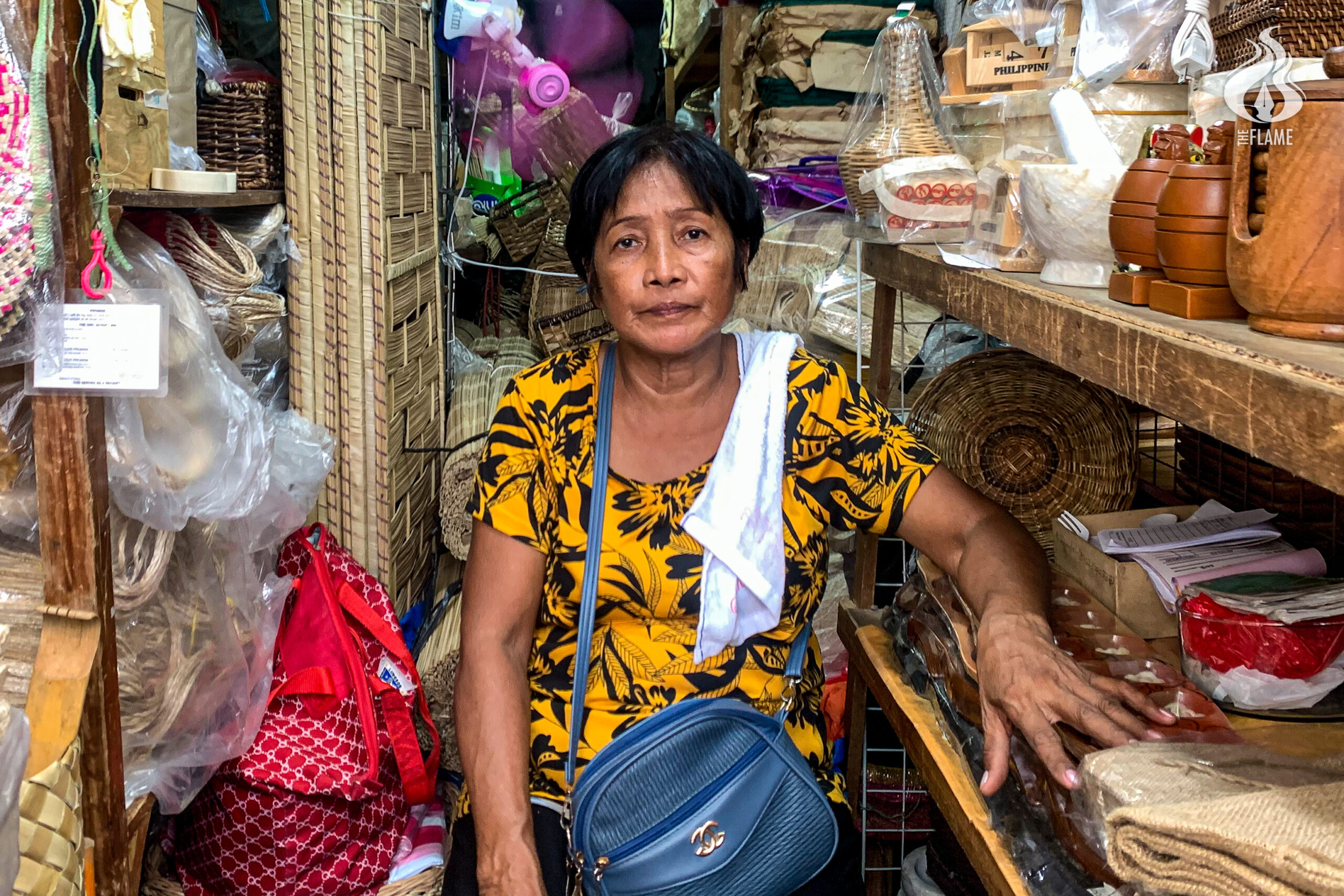
WHILE OTHER stall owners around Dapitan Arcade went on to sell the remaining products they acquired for the Christmas shopping spree, handicrafts vendor Francisca Sison still struggles to recover from a blaze that turned her livelihood into ash more than a year ago.
Ever since that tragic day in 2024, the 64-year-old vendor has made it her daily routine to return to the ruins of the McJo Galatian Building at the arcade.
In front of the ashes of what used to be the items in her inventory and the remains of 60 destroyed shops, she sets up her makeshift handicraft stall.
Sison and other former vendors at the building noticed that things have never been the same since then even during the holiday season, when demand for decorations and other home furnishings is high.
“Malaki ang pinagkaiba. Kung kumita man ako, kulang. Pambayad lang sa utang. Pambayad lang sa mga utang, kulang pa. ‘Yung kinita ko ngayon, kulang pa pambayad sa mga utang na dati ang utang nung nasunugan kami,” Sison told The Flame.
(There is a huge difference. Even when I earn, it’s not enough. I only use it to pay off debt. The earnings I had this time does not even cover the debt we had at the time of the fire.)
“Dati kasi, maraming paninda kaysa ngayon. Noong nakaraang December (2025) na, wala. Walang gaanong paninda. Konti lang kasi ang [puhunan],” she added, lamenting her lack of capability to restock because of limited funds.
(Back then, we had more stocks compared to now. Last December, we had nothing. We did not have much stock because we only had little funds)
As early as August two years ago, a month before the unofficial start of the Filipino yuletide season, vendors at the McJo building were already preparing for the influx of customers.
Fresh stocks of twinkling lights and delicate ornaments rolled in at the renowned hub for Christmas items with vendors hoping for a sales surge as the season kicked into gear.
But hardly a week into the yuletide hustle, a fire engulfed the one-story building, displacing its stall renters.
The Bureau of Fire Protection (BFP) identified electrical ignition as the reason behind the Aug. 5 fire, which was likely from faulty wiring and octopus connections, where multiple plugs are choked into one socket extension.
While the smoke has long cleared, a silent fire continues to smolder the livelihoods of its former vendors now scattered along the sidewalks of Brgy. Sta. Teresita.
Forty-four-year-old Roger Julio (not his real name), a ceramics seller who managed five stalls in the building for six years, recalled earning between P500,000 and P1 million per month in the last quarter of the year. In the past years, his monthly revenue has shriveled to less than a quarter of those amounts.
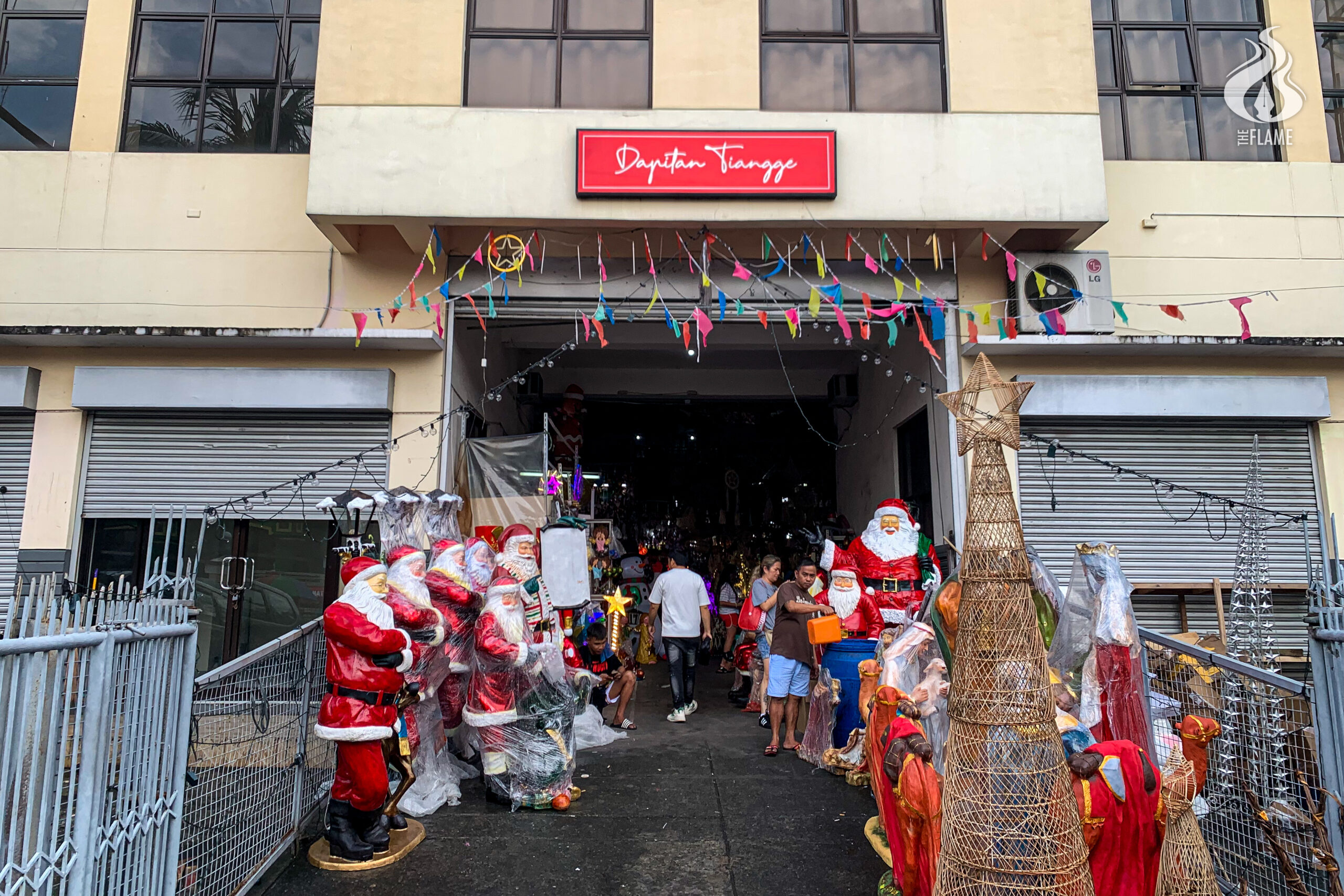
“Nakakalungkot lang. Ang laki nga ng diperensya. Kumbaga hindi man lang one-fourth [ng sales],” Julio said from his former stall at the Dapitan Tiangge building located just a short turn from the busy street near Mcjo.
(It’s disheartening. There’s such a big difference. It didn’t even compare to a fourth of our sales before)
Overloaded
Sison was about to get her goods insured with her spare earnings from her handicrafts stall the day before the fire.
“Pupunta na talaga ako sa (insurance company) kasi kinakabahan ako. Sabi ko, ba’t hindi ko pa ipa-insure ‘yun ngayon, may pera naman ako. Inaantay ko ‘yung anak ko, tapos seconds lang, nasunog na,” she said.
(I was supposed to go to the insurance company because I was getting anxious. I told myself, ‘why don’t I get [my stall] insured today? I have the money anyway.’ I was waiting for my child, then seconds later, the building went up in flames)
With the flames in view outside her stall, the handicrafts vendor knew that escaping the building was the only option she had.
“‘Yung inisip ko na lang ‘yung kaligtasan ko. Sabi ko kasi kung ‘yung mga paninda, kaya ko pa namang…palitan,” the vendor said.
(Back then, I only thought about my safety. I told myself that I could always replace the merchandise)
According to Froilan Carasco, a floral designing shop employee who worked at the time of the fire, Mcjo lacked fire safety features like working sprinklers, emergency water tanks and functional extinguishers.
“We weren’t able to extinguish the fire because even the fire extinguisher we used was from outside… Because of the fire’s scale, it was only natural for the building’s metal to soften. That’s why the building collapsed, but the fire couldn’t have grown as strong if there was a sprinkler,” Carasco said.
“Even if you say the people were stubborn [with using the electrical sockets], the building wouldn’t have burned down if it was safe.”
The fire resulted in at least P7-million in losses for the building’s tenants, according to BFP’s report. But for the tenants, the amount barely represents what they have lost; the disaster deprived them of a sense of security and shattered their dreams for their families.
Sison estimated about P2-million loss for herself, while Natividad cited half a million worth of products lost in the fire.
Some of the vendors received a one-time P5,000 aid from local officials, but none of the tenants were included in the building’s insurance policy, which only covered the structure itself.
Julio described power outages in the building as normal because of overloaded outlets linked to stalls simultaneously turning on their Christmas products.
“It (power outage) is normal there because the outlets get overloaded when too many things are plugged in, so something happens every year. We’re basically used to it by now. This was the only time it really escalated that badly,” he said.
According to FO3 Mary Jane Napadao of the BFP National Capital Region’s (BFP-NCR) investigation and intelligence unit, some tenants tried to douse the source of the electrical fire with a wet cloth, which can lead to electrocution and aggravate fire.
The BFP-NCR attributed most of Metro Manila’s fire cases to problems in electrical connections.
The Mcjo fire incident, for Napadao, was caused by the citizens’ lack of awareness and action about fire safety, which were considered as top contributors to the rise of fire occurrences nationwide by the bureau.
“We cannot use water when it’s an electrical fire because water is a conductor of electricity… From that alone, you can already see that the people were not aware that you cannot use water for an electrical fire,” Napadao said.
“Fire safety is everybody’s concern, but when it’s implemented and no one follows procedure, then nothing will happen,” she added.
‘Signaling effect’
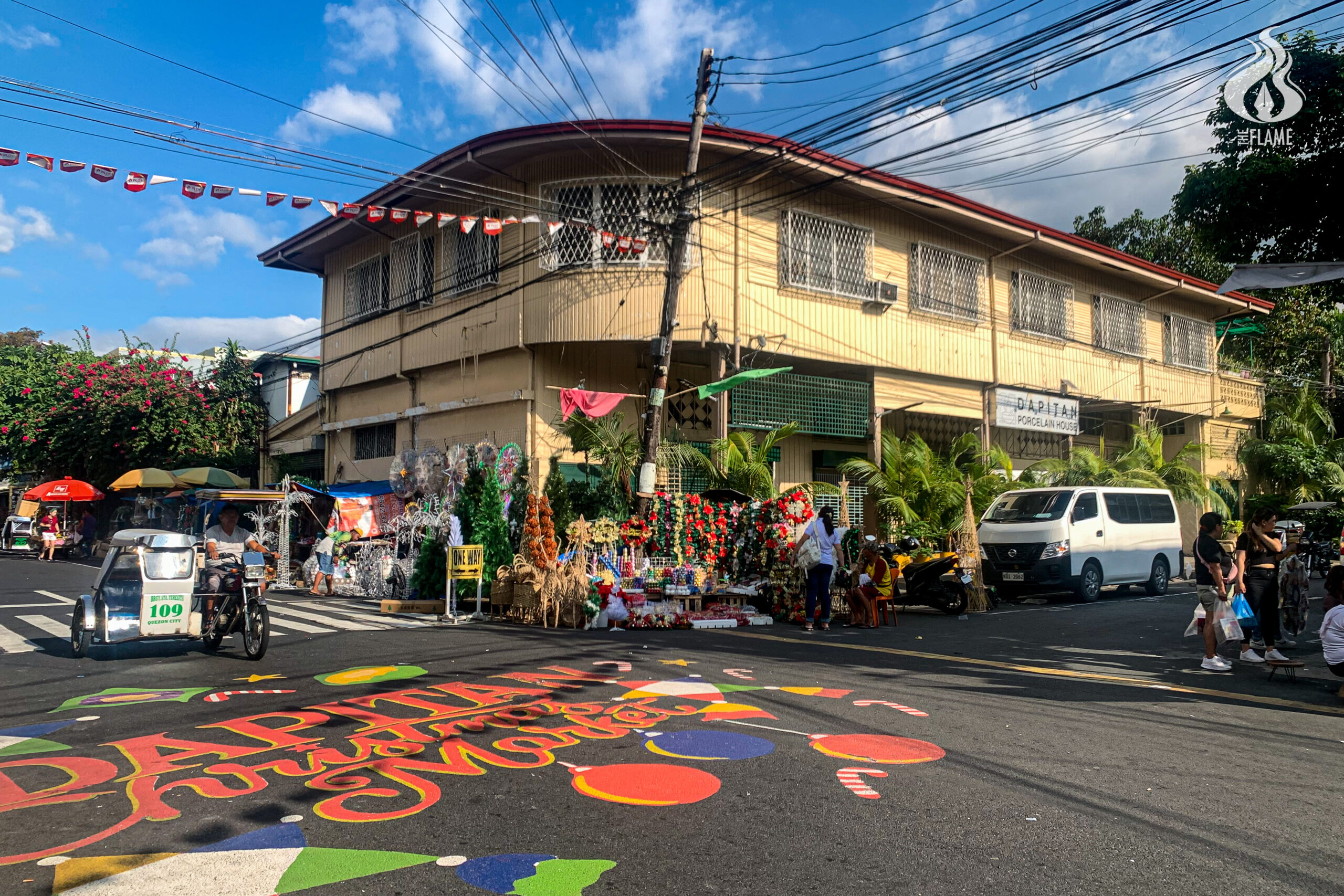
Best known as a one-stop shop for Christmas decorations, home accessories, dinnerware and pottery, the hub along the Kanlaon-Dapitan street corner has been alive since Sison was a kid.
But since the loss of the Mcjo building built in 2018, some of its former sellers saw fewer visits from their “suki” or regular customers – an unusual sight for a place where steady crowds of buyers lingered beyond the holidays.
Vendor Princess Natividad (not her real name), whose stalls are now placed in front of Mcjo’s ruins and at Dapitan Tiangge, said buyers are no longer coming because they do not know what happened to the Mcjo vendors.
“There are fewer buyers now, and they aren’t really going out of their way to visit because they don’t know where we moved after the fire. They keep looking for our old spots, but since we’re all scattered now, they can’t find us,” Natividad said.
Some of their fellow vendors in the area would instead direct inquiring customers to the spread-out vendors, according to floral designing shop employee Froilan Carasco. But a one-day sale is not a guarantee that there will be another one.
“It’s good that sometimes, there are people who point to our stall here when someone comes looking for us, so we still get them,” the employee said while crafting mini acorn-like ornaments at hus stall.
“But it’s such a waste, (because) what about the others? It would be fine if every buyer asks questions. But sometimes, they don’t bother asking. They’ll just browse on their own,” Carasco said.
According to UST Economics instructor Justin Nikko Lazo, the loss of a landmark like the McJo building acts as a “signal” to customers, discouraging them from revisiting the area and opting to look for alternatives elsewhere like online shopping.
“If [the fire is] in the news and there are people who are usually going there, it creates a signal to the consumers that perhaps no one buys there or that there’s not a lot being sold at Dapitan,” Lazo told The Flame.
Lazo said the loss of the physical structure may have also stripped the area of the “comfort factor” that once attracted its customers. He noted that for some families, the shift from a ventilated, organized building to disorganized roadside selling creates a deterrent.
“Filipinos would want a comfortable place for buying certain decorations, but because of what had happened, that creates low sales [because] they are now selling on the streets,” he said, adding that the lack of infrastructure directly impacts the area’s marketing appeal.
“Unless someone spreads the word that the place is still okay and that the vendors still sell merchandise, that breaks that signal.”
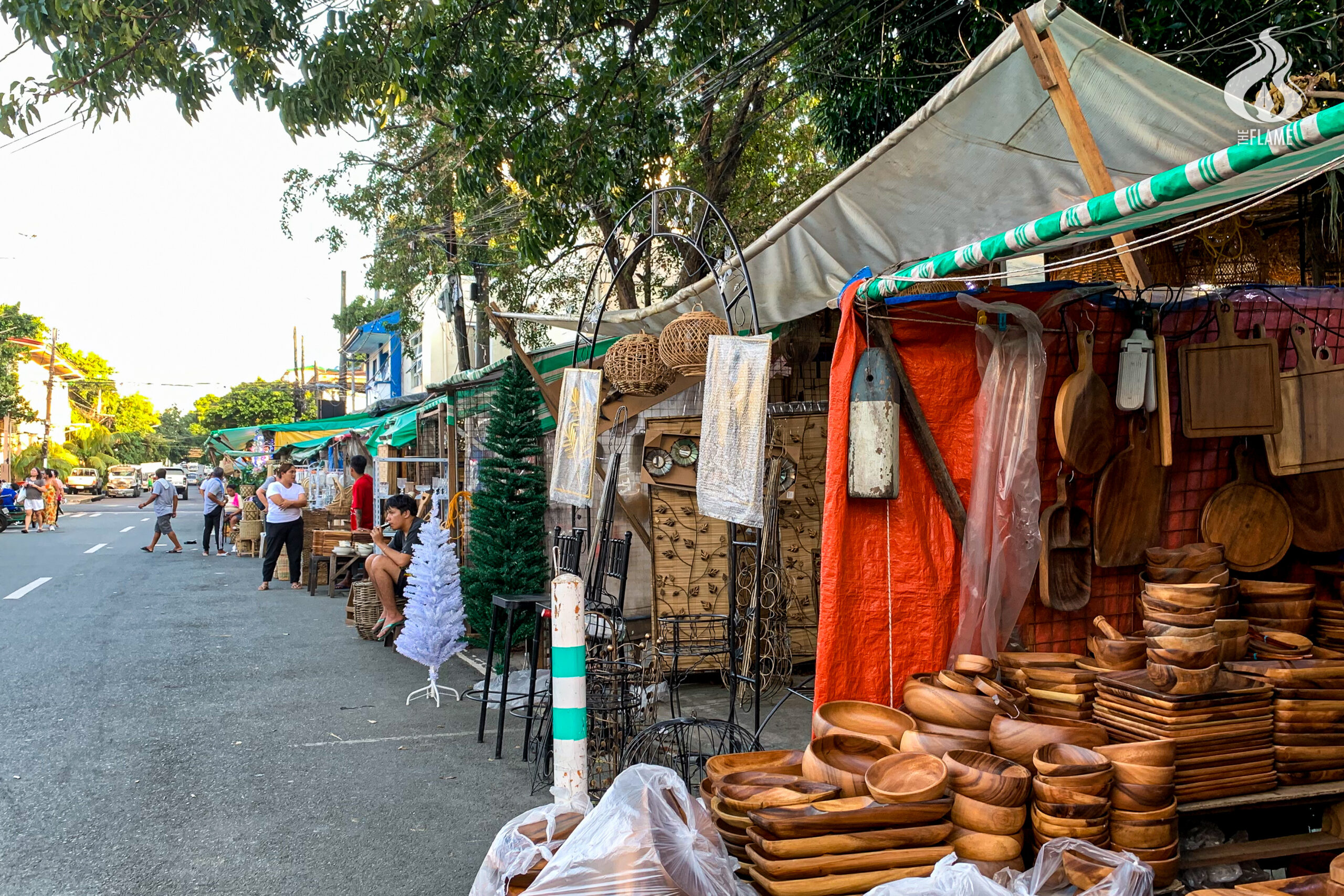
Not just the building
For handicrafts vendor Rizza Candava, persistent flooding in the last Christmas season led to a lower volume of customers in the area, dampening her business’ income.
“It’s still okay, but it’s weaker than last year. It’s worse in 2025 than 2024. Sales were stronger back in 2025,” Candava said.
“Maybe it’s because of recent floods since many of our buyers come from Bohol, Davao, Cebu. And since some may have been [cautious] with money,” she added.
La Niña, which brings above-normal rainfall conditions in the country, usually persists through the year’s last quarter and the first few months of the following year.
Unlike Candava, Julio found better footing in last year’s jolly season compared to 2024 after moving to his sibling’s garage, which opens to the road of Dapitan Street.
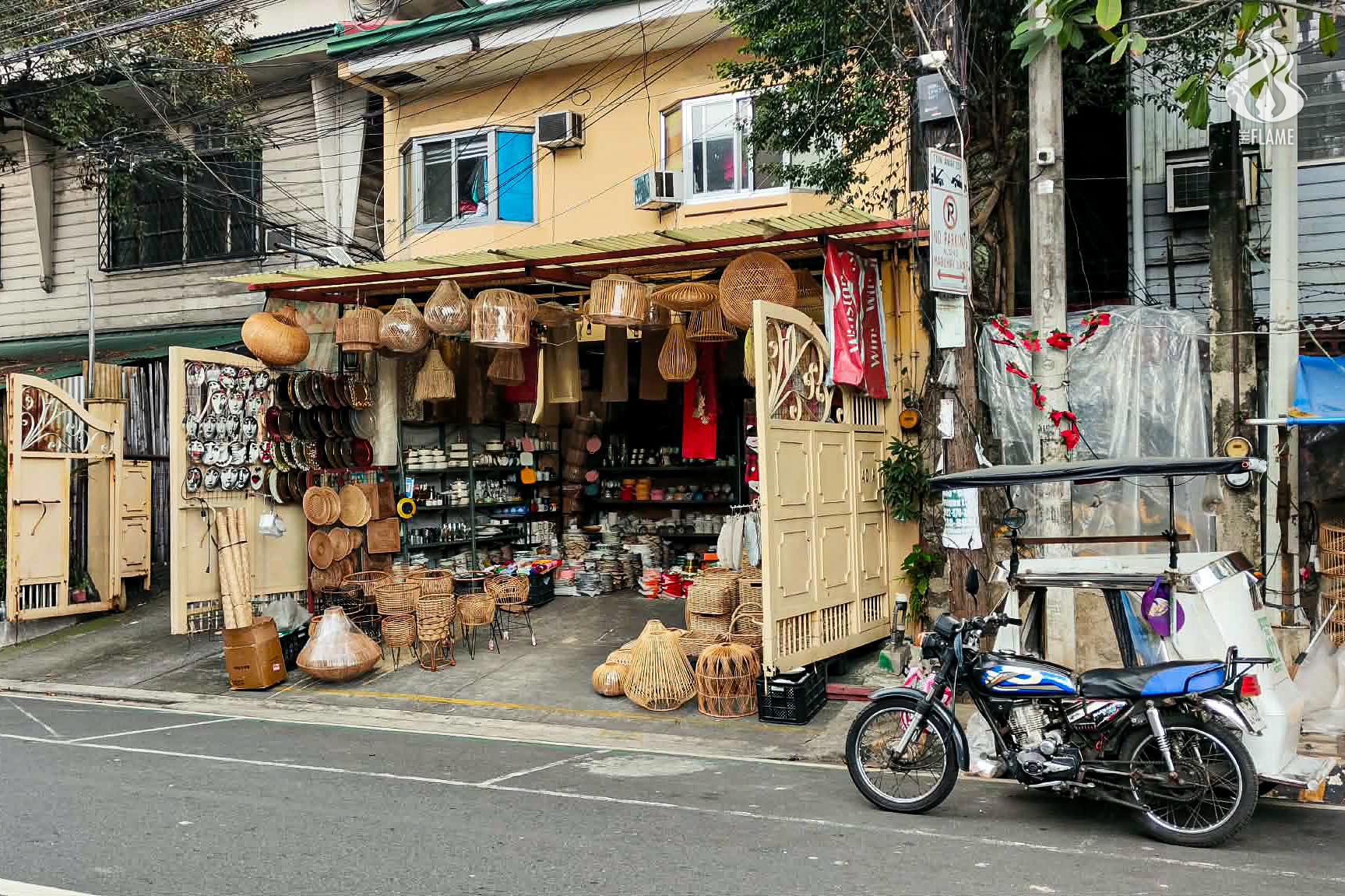
The ceramics seller moved his products with his sibling’s just before the so-called ‘ber’ months kicked in 2025. Another factor that prompted him to transfer was the losses he incurred while selling at the Dapitan Tiangge in the past years following the fire.
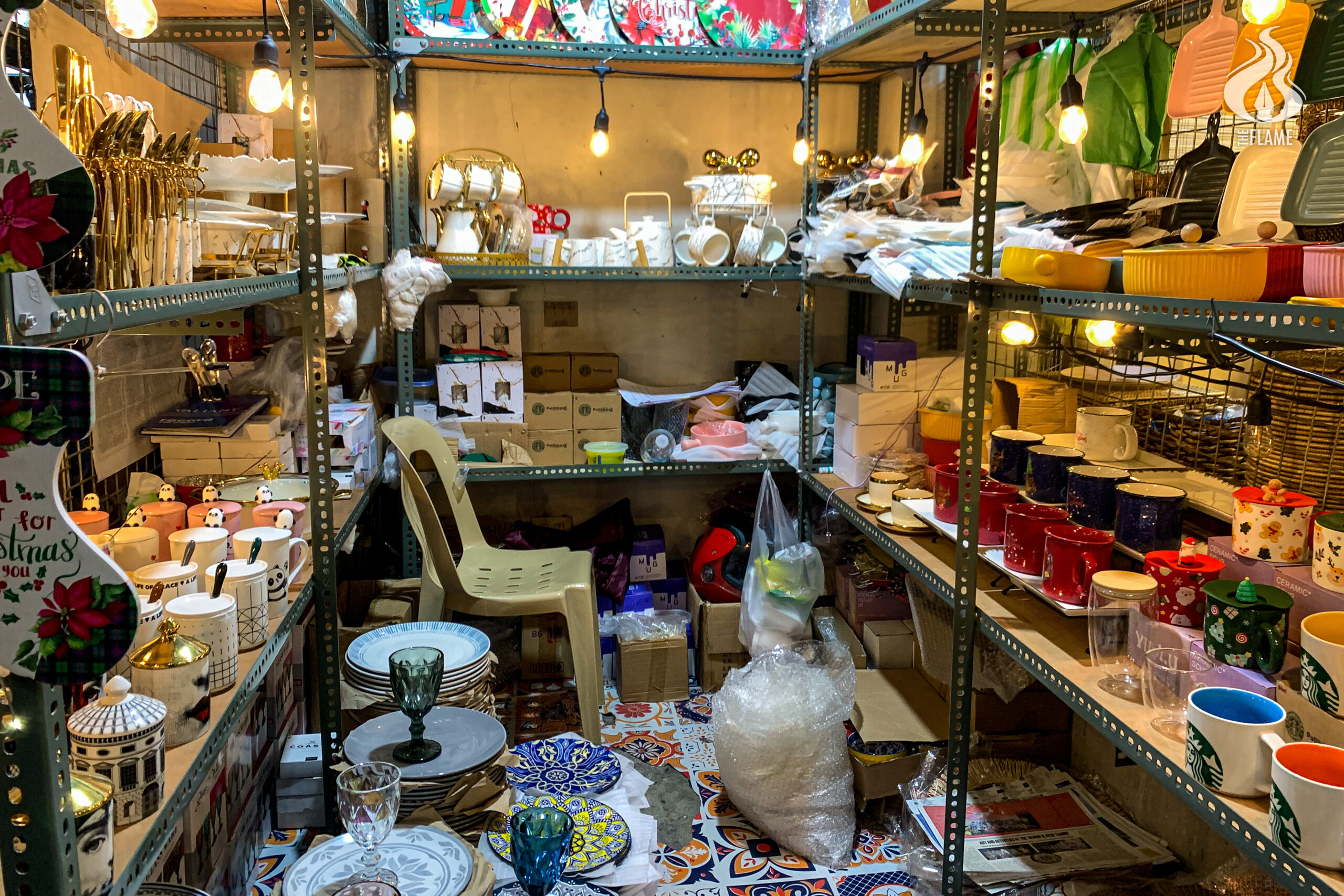
Rising prices
Although Julio stands firm that the foot traffic in the area was heavy during Mcjo’s prime, Lazo noted that the fire is not the sole culprit behind the thinning crowds. He said there has been a change in Filipinos’ spending behavior during the holiday rush with higher inflation.
“People are seeing options, where to buy that is cheaper. That’s the effect of inflation,” he said, highlighting that price-sensitivity has become a more significant driver than landmark loyalty.
For the last quarter of 2025, half of Filipinos decided to cut their holiday spending from the previous year, according to a 2025 consumer survey of credit company TransUnion Philippines,
The company’s survey, which gathered data from 961 adults, found that Filipinos became more cautious in their household spending due to factors like inflation, job stability and rates in borrowing money.
The year 2025 closed off with a headline inflation rate of 1.7%, the slowest in nearly a decade. However, think tank IBON Foundation contends that the average prices of goods and services purchased by households in July 2025 was 5.2% higher than in January 2023.
According to Lazo, rising food costs force families to choose between a decorated home or a full table.
“Since goods are sold at a high price, and although inflation has been somehow managed a little bit, household goods are still pricy [and] families will opt to go on a saving mode,” the economist said.
“They prioritize what is more important – their expenses for Noche Buena (Christmas Eve feast), Media Noche (New Year’s Eve feast),” he added.
All these factors combined with the sunk cost of materials, or the irrecoverable money spent on raw materials, may present an insurmountable challenge in recovery for the Mcjo vendors like Sison, Julio and Natividad, according to Lazo.
“When your whole stock is burnt to ash, whichever way you look at it, you would find yourself at a loss… Even if you earn a profit every day and stock up another P100,000 worth of Christmas decorations, for you, you’re still losing,” Lazo said.
“Whatever you do, even if you double your efforts in selling, you still won’t be able to recover your losses from the fire,” he added.
But despite higher prices of goods, Lazo noted that December remains a time where Filipinos spend most of the year due to its cultural and economic importance in the Philippines.
To survive the changing behavior of Filipino spending, especially with online selling on the rise, the economist believes the arcade’s small businesses must move beyond physical storefronts and focus on a collective digital presence to reach a wider audience.
“So, if they join forces, the best thing they can do is to cooperate with each other and break that particular signal to the consumers that there might be no vendors [at Dapitan],” he said.
Picking up the pieces
Julio, who previously worked as a delivery driver for delivery apps like Food Panda and Lalamove, turns to motorcycle taxi driving from time to time once the roads of Dapitan becomes empty after the yuletide season.
“If it’s the [yuletide] season, I’m just here. But after that, very few people come here. After next week, I will drive,” Julio said.
Left empty-handed after the structure collapsed, Sison strives to survive by selling her products from the last season while settling her debt from her burnt consigned products.
“Wala akong maibayad kasi gipit na gipit kami kasi wala akong sariling puhunan…Hindi sapat ‘yung nabebenta namin sa araw-araw kasi ang laki ng hinuhulugan namin sa araw-araw lalo na ako mahigit P50,000 isang araw,” the former Mcjo vendor said.
(I don’t have anything to pay for the consigned goods now because money is really tight and I don’t have my own capital… What we make in a day is not enough because we need to pay an installment of over P50,000 daily)
“Kaya ngayon, nagbabayad pati ako ng utang na hindi ko naman napakinabangan pero okay lang naman din na magbayad ako para igawa pa nila uli ako”
(So now I’m paying off a debt for something I didn’t even benefit from. But it’s okay that I keep paying them, so they’ll be willing to work with me again.)
According to Sison, she pays a P150 daily fee to the barangay for her place along the sidewalk, electricity, street cleaning and another P900 monthly for her business permit at the Quezon City Hall.
However, Marie Anthonette Molderra of Quezon City’s Market Development and Administration Department (MDAD) explained that some of the sidestreet vendors of Dapitan lay on a legal gray area due to the absence of hawker permits or official licenses to sell in public spaces.
“They don’t process their permits. So in our records, they are illegal vendors in the city,” the MDAD employee told The Flame.
Molderra noted that several vendors mistake the barangay clearance for the hawkers permit, or the document submitted and renewed yearly at the city to secure a vending site. The permit is a requirement for vendors’ license to sell on the streets.
To be recognized as a licensed vendor, a formal request letter must be submitted to the MDAD to evaluate whether a temporary vending site is feasible. Once approved, applicants must provide a map or sketch detailing the exact stall number and the specific products they intend to sell.
Personal documents, such as a Quezon City ID, barangay endorsement letter and either an NBI or police clearance must also be submitted to be allowed to sell products. For those handling food items, a health certificate is a mandatory requirement.
If approved, vendors must personally secure an order of payment from the MDAD office and settle their dues at the city treasury before a permit is finally issued. The permit costs P20 per square meter per day plus additional miscellaneous fees, which may be paid monthly or quarterly and renewed yearly.
Vendors operating without a valid hawker permit will be issued a notice of violation and will be slapped with a P300 fine, or may even be subjected to full-scale clearing operations, according to Molderra.
Mcjo’s comeback
Mcjo is now being rebuilt as its owner managed to secure a building permit last October. According to its lead construction worker, who requested anonymity, the building may be finished around June, three months before the start of the Filipino Christmas season.
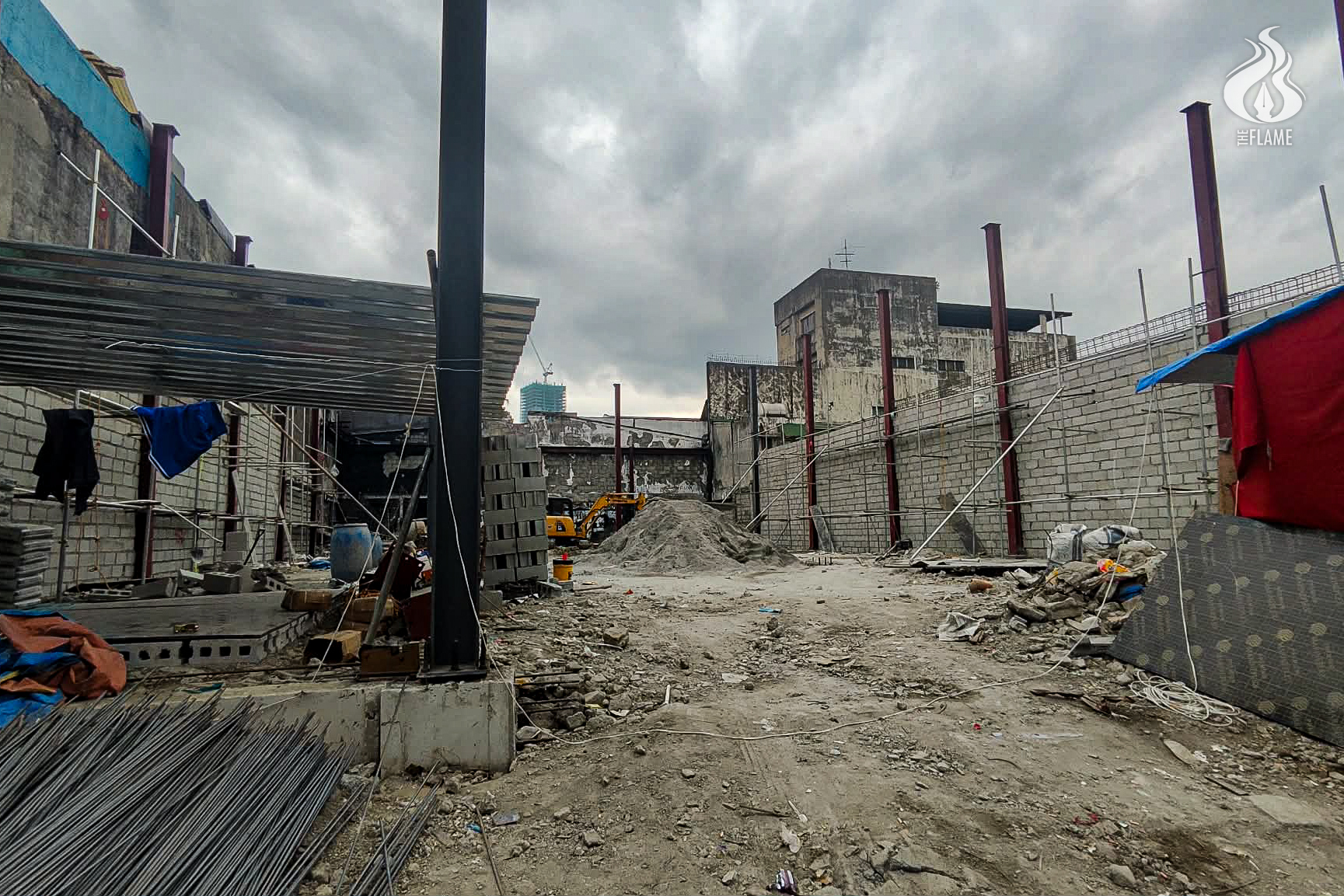
Julio and Natividad said they would not miss a beat in regaining their places at the reconstructed building as they expressed hope that their business would thrive again and their patrons would come back.
But for Sison, who is still recuperating from her losses, her initial plan to return may seem far from reach.
“They’re rebuilding it. My problem now, though, is once it’s rebuilt, I won’t have anything left to pay the deposit for a stall. That’s my problem,” Sison said.
For now, the vendors of Dapitan continue to create a semblance of normalcy, opening their stalls daily even when sales are zero and hoping to break the negative signal and prove that their spirit has survived the ashes.
“If you’re just sad about it, then nothing will happen,” Julio said.
Julio hopes that a “Mcjo 2.0” will be a fortified version of its now-collapsed predecessor, especially in handling the typical wiring problems they experienced in the past, to prevent a repeat of the fire.
“They probably know by now that they need to improve and strengthen the building they’re reconstructing,” he said.
The fire protection bureau advises that the building comply with the Fire Safety Code, which mandates the issuance of a fire safety evaluation clearance and fire safety inspection certificate for buildings.
As Sison looks at her former stall’s ruins, she is bent on changing her situation from starting from nothing to recuperating from everything.
“It saddens me. Of course, I always remember all my merchandise that were burned. I lost a lot… [But] I just keep my spirits up. I will keep on selling. I just order more merchandise. That’s how it is,” she said. F