IN THE West Philippine Sea, the water is both a cradle and a coffin.
It has become a fluid, unstable and intimate space where food travels with the weight of sustenance and comes at the cost of absence.
What does food delivery look like in the West Philippine Sea?
Directed by Baby Ruth Villarama, Food Delivery: Fresh from the West Philippines Sea shows how to sail through tension and survival.
After its premiere in the Philippines at the Power Plant Mall in July this year, Food Delivery returned to Rockwell for a special screening and talkback session last August.
Originally slated for a March 2025 premiere at the Puregold CinePanalo Film Festival, Food Delivery was unexpectedly pulled out from the lineup. The documentary later premiered at the Doc Edge Festival in New Zealand, which recognizes films that address significant societal issues. The documentary won the Tides of Change Award in June.
The talkback session featured director Villarama, producer and editor Chuck Gutierrez, Philippine Coast Guard spokesperson for the West Philippine Sea Commodore Jay Tarriela and Mamamayang Liberal Rep. Leila de Lima.
The documentary follows a recurring structure that foregrounds the state of the maritime dispute’s frontliners. Beyond narratives rooted in heroism, Food Delivery unveils the labor and their survival through displacement, separation from family and national uncertainty.
Food Delivery expands into the nuances of delivering sustenance to the Filipinos working at a potential flashpoint, showing how food, both as necessity and symbol, impacts morale and affirms Filipino sovereignty.
‘What’s ours is ours’
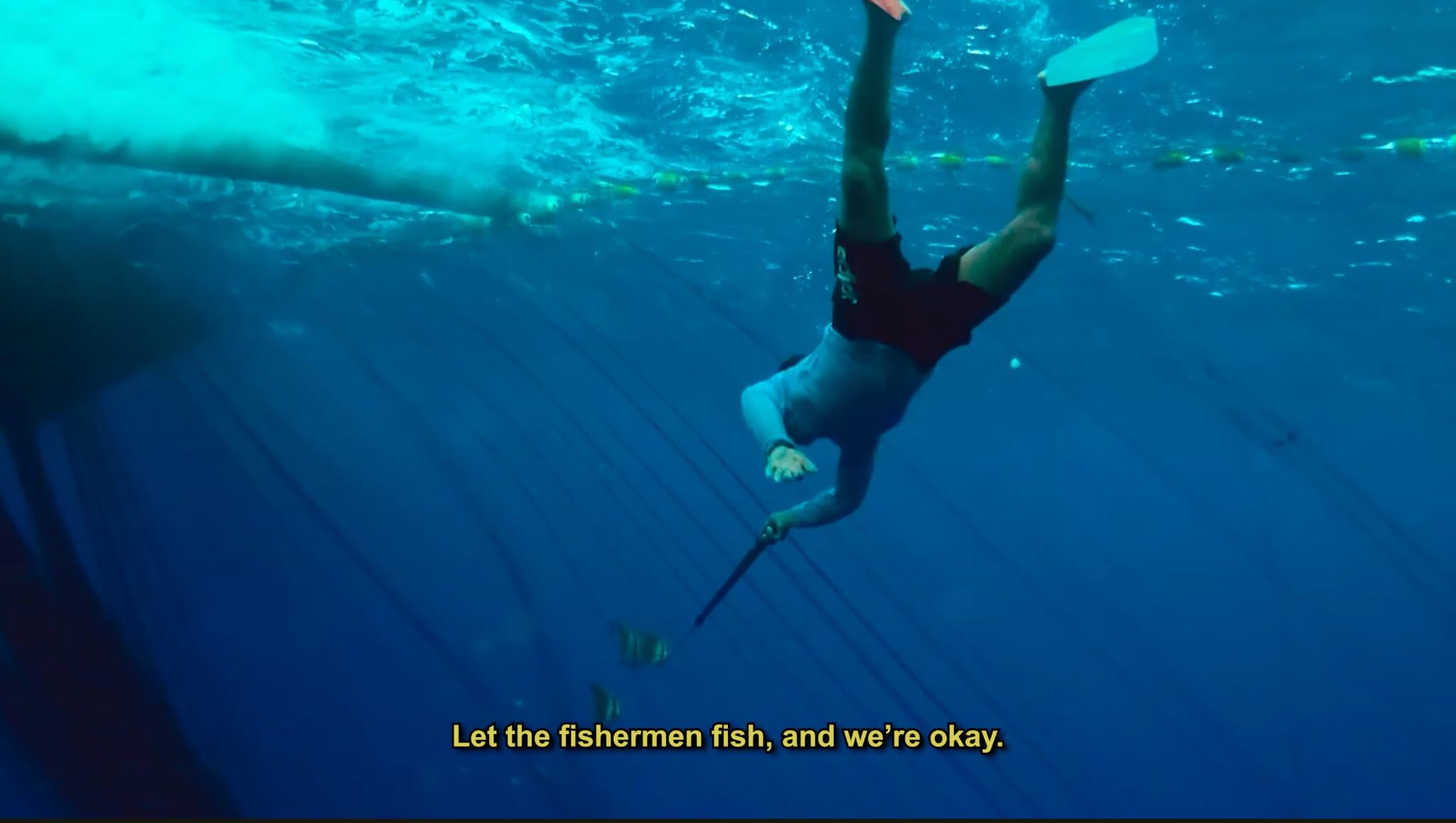
The plight of fishermen and Navy personnel were given deeper nuance in the documentary, an element often absent in mainstream news reports. Rather than frail, delicate workers, they were portrayed as Filipinos with unwavering strength and unending hope despite maritime tensions.
“We are not people who surrender; we do not yield what is ours,” De Lima said during the talkback session.
Despite the waves of tension that the documentary had created in the Philippines and other neighboring countries, it ended on a hopeful note for the Philippines to protect what it rightfully owns.
De Lima stressed the importance of Filipinos in combating the wave of misinformation and propaganda surrounding the West Philippine Sea in the talkback session.
“Let’s just call them what they are, they’re traitors,” she said.
De Lima also questioned why the film was discouraged in its own country.
“This is really not acceptable that we cannot show this film in our own country. What are they protecting? Who are they protecting? What’s behind that? I think we should protest that. I think we should investigate that,” De Lima said, referring to the documentary ‘s exclusion in a film festival.
“It is for the Filipino voters who have the power to make sure that the West Philippine Sea will never be forgotten again,” Tarriela said.
Sovereignty and suppression
On July 5, New Zealand’s international documentary film festival Doc Edge Festival publicized the formal request from the Consulate-General of China for it to refrain from screening the documentary.
“This documentary disregarded history and facts and is designed to amplify the Philippines’ wrong position on the issue concerning the South China Sea and deliberately distort and hype up the maritime situation,” China, whose maritime claim in the South China Sea, including West Philippine Sea has been voided by an international arbitral court, said in its letter.
The film festival’s organizers dismissed China’s appeal.
Despite Food Delivery’s noble aim to highlight the country’s sovereignty and the struggles of those defending it, the people behind the film faced backlash.
Villarama revealed that her Facebook account has been blocked and her phone has been bugged, but these only fueled her drive to continue pushing for the film’s distribution until it reaches the average Filipino and Congress.
“I’m not the enemy, really; it’s actually the entire country they’re challenging, not me. I’m just one,” Villarama said.
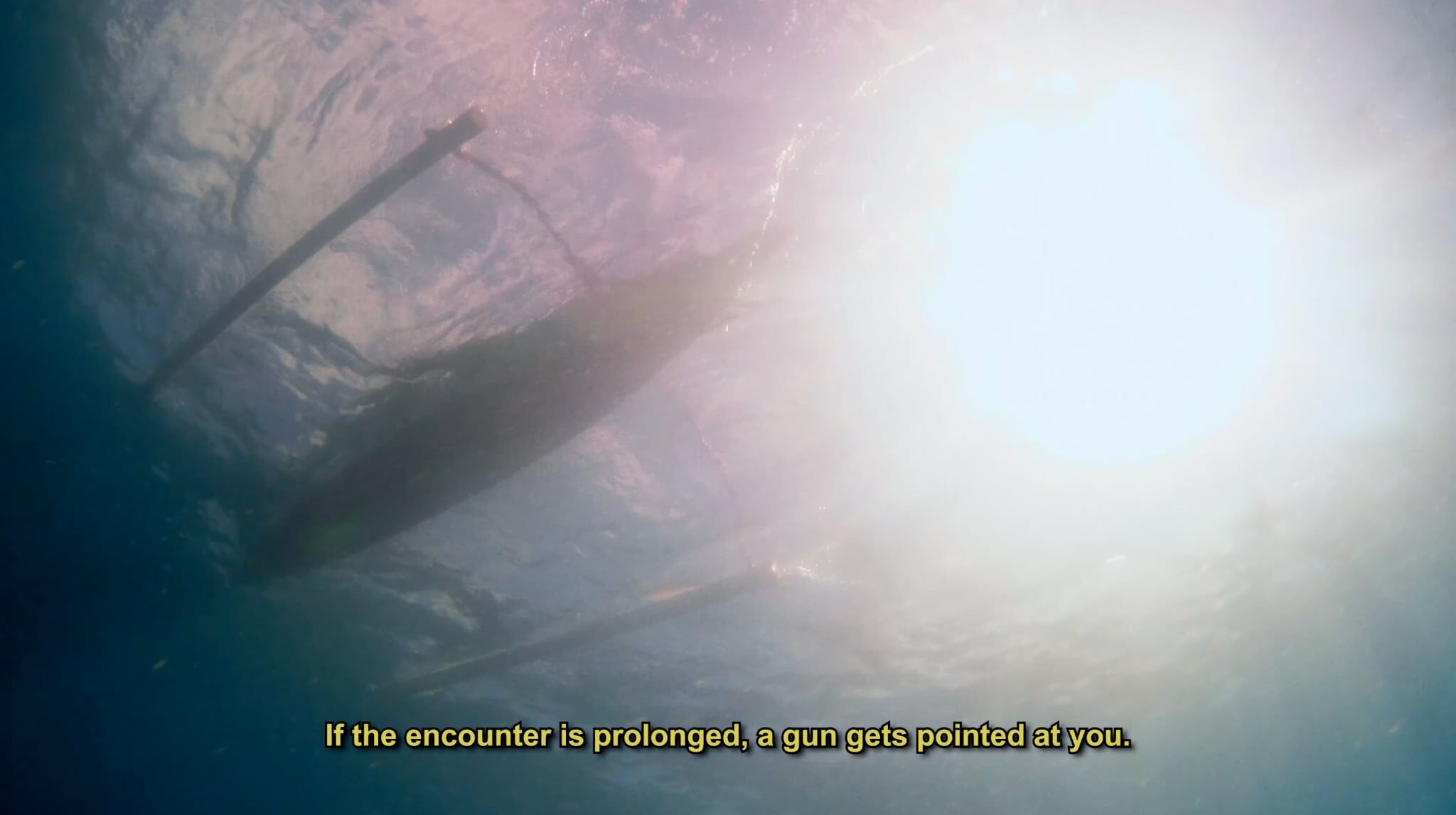
Food Delivery captured the ethereal beauty of the islands in the West Philippine Sea; a portrayal compelling enough to trigger discussions among Filipinos.
Villarama encouraged the audience to step out of their comfort zone and go beyond being spectators.
“There will come a point in your career that you have to stop being a spectator and do something within your area of influence, especially if you’re a storyteller,” Villarama said.
For filmmakers like Villarama, truth-telling means pushing against suppression.
“I know one hundred and one percent sure we can win the war on narratives, because the truth is on our side,” Villarama added.
Practices of resistance
As portrayed in the documentary, the exchange of food between the Philippine Coast Guard and the fishermen sailing at sea symbolizes the broader message of hope that Food Delivery carries.
With the market flooded by imported fish sold at cheaper prices, local fishers are forced to compete unfairly, undermining the value of their hard-earned catch. The fisherfolk’s arrival in fish ports does not indicate safety, as they often face unjust compensation for their labor.
The documentary also showed the government’s failure to ensure the safety of the couriers of food to the Filipino people, just as the maritime areas of the Philippines remain at risk.
“A father bringing food home is also sovereignty. A mother waiting on shore is sovereignty. If our policies don’t protect those everyday stories, then what’s the point?” Villarama told The Flame.
Food is embedded in Filipino culture, which binds every Filipino in all instances. The film reminded the viewers of the culture by showing the ordeals of the fishermen to bring food to the table, from sailing for 12 consecutive days at sea to their disappearance. The documentary also dives into the four fishermen who went missing during the monsoon season. No traces of them were found.
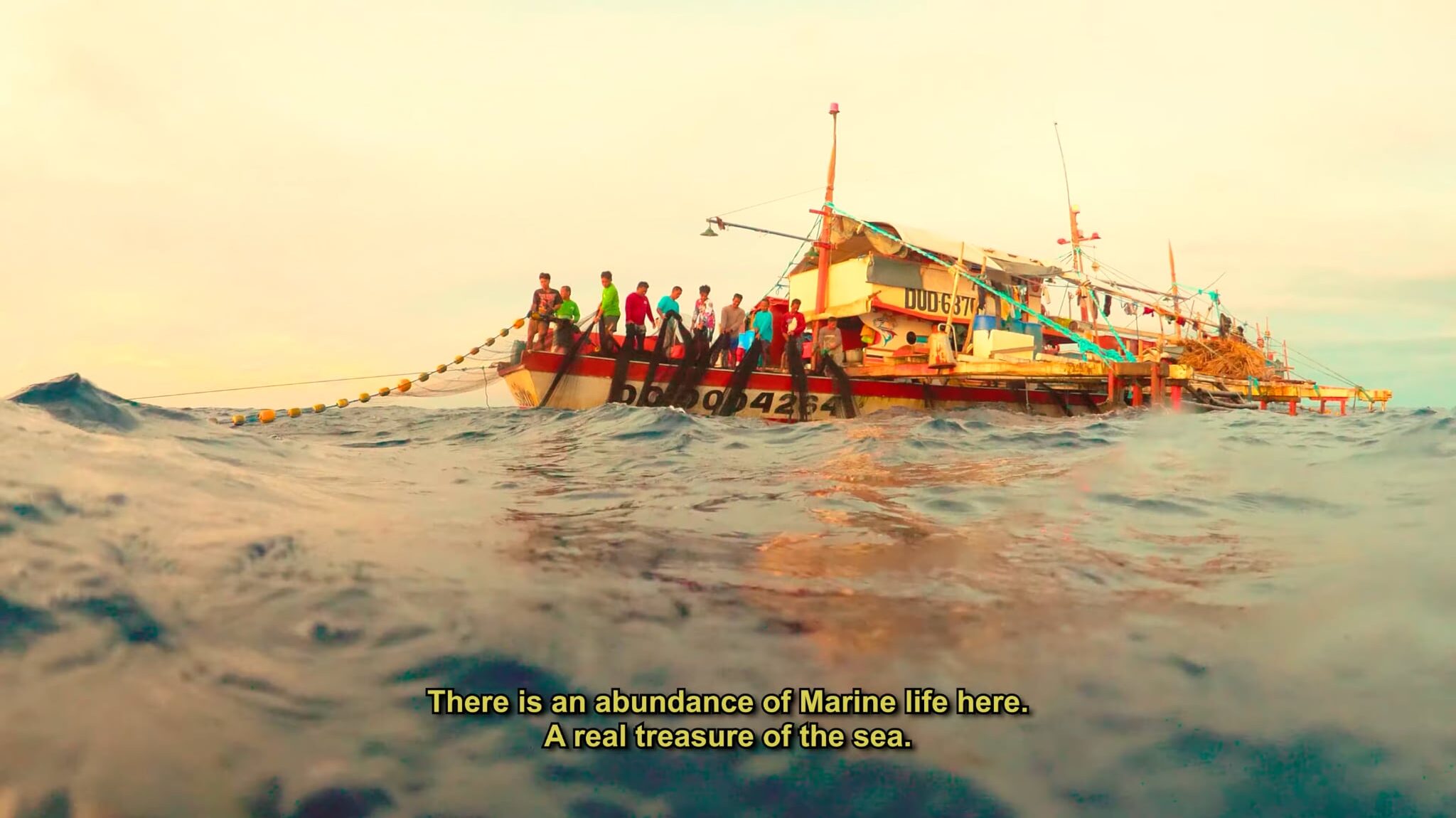
The documentary shows how disappearances at sea have become a recurring ordeal, with fishermen relying only on each other in times of loss. In these instances, the documentary emphasizes that hope prevails over fear.
The documentary also highlights how resistance does not always take the form of short-lived government statements. For fisherfolk, simply returning to the sea each day is already an act of sovereignty.
“Fisherfolk, on the other hand, go back to the sea every single day, even if it’s risky. That persistence is resistance,” Villarama said.
Villarama stressed that beyond the fishermen’s fight for their maritime rights is also their fight for their livelihood. Every time they set out to sea, it is already a fight for their families to keep the Filipino way of life alive.
“It’s like saying, ‘This is our sea, this is our life.’ They don’t need to wave a flag because every net they throw is already proof of presence,” Villarama said.
Media portrayal
Despite the censorship during the time of former president Rodrigo Duterte, tensions in the West Philippine Sea occasionally reached mainstream media. One widely covered incident involved a Filipino fisherman being chased off Scarborough Shoal by the Chinese Coast Guard in 2023.
The documentary’s presentation of the event is a window into the daily reality of Filipino fishermen. Despite facing aggressive tactics like water bombing, they are rendered with no choice but to remain composed out of necessity.
Through Food Delivery, the human cost of the maritime dispute, the resilience of those most affected and the significance of giving these fishermen visibility are emphasized. While the Chinese vessels continue to harass them, these fishermen continue to persevere to provide food for their families.
Villarama noted that there are differences in perspectives with regard to the fishermen’s relationship with the sea. For the state, she explained, the sea is viewed as “territory.” Meanwhile, the media frequently depicts it as a “flashpoint.”
Not captured by the two portrayals is the fisherfolk’s different perspective of their bond with the sea, which Villarama described as ambivalent, perilous, yet life-giving.
“It can be brutal, but it also feeds them. That complicated love, that mix of fear and devotion rooted in love and respect, is what’s missing in the headlines,” Villarama said.
She was then challenged to represent the sea that resists promoting flattery and deceit.
“If I only showed the danger, people might just feel fear. If I only showed beauty, I’d be lying about the risks. So I tried to show both: the sea under siege and the sea as home.”
Remapping the West Philippine Sea
More than a maritime and media dispute, Food Delivery reframed the narratives of the West Philippine Sea as a lived experience of labor and hope. With Villarama’s narrative-centric storytelling, the documentary echoed the often unheard statements of Filipinos on the frontline.
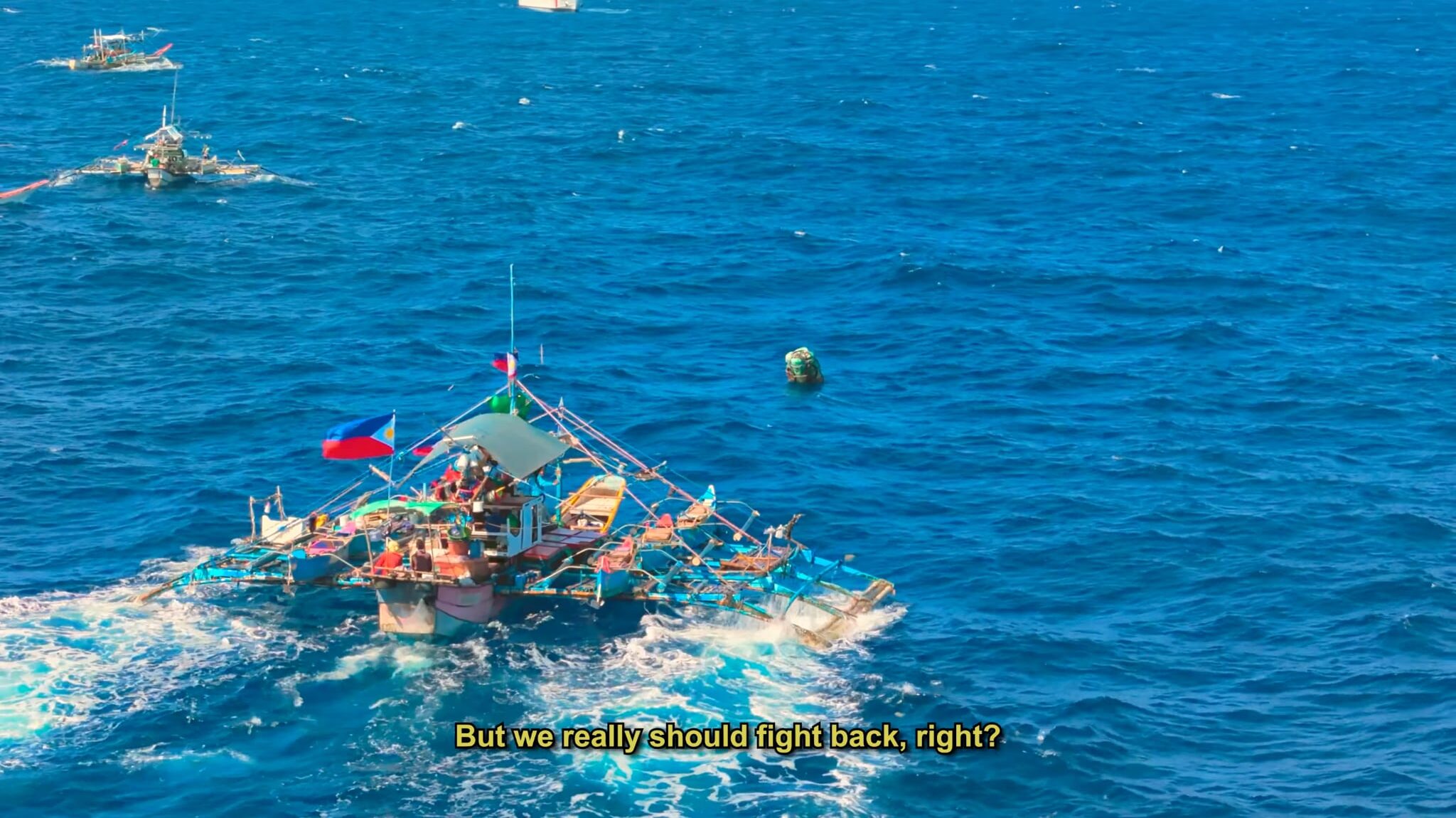
Through Food Delivery, Villarama seeks to remap the West Philippine Sea through stories of home, hunger and hope and to portray the West Philippine Sea beyond the lenses of politics and geography, but through the people.
“It’s about hunger, yes, but also hope. It’s about home. If the film helps young people and change makers see the sea not as something far away, but as something deeply connected to their own lives, then perhaps the film has done its job,” Villarama said. F