
CAN MOTHERHOOD be measured by biology or by the choices we make?
In his latest Metro Manila Film Festival (MMFF) entry, Call Me Mother, Jun Robles Lana explores the tension between biological ties and physical presence as tenets of motherhood.
During the MMFF’s 51st Gabi ng Parangal, the film won the Gender Sensitivity Award, Best Child Actor for Lucas Andalio, Best Actor for Vice Ganda, whose real name is Jose Marie Viceral, and Third Best Picture for the film.
The film follows Twinkle (Vice Ganda), a beauty pageant coach, as he arranges the adoption papers for his son, Angelo (Lucas Andalio). To fully adopt Angelo, Twinkle requires the signature of his biological mother, the famous beauty queen Mara de Jesus (Nadine Lustre), whose return disrupts the dynamics of Twinkle’s family.
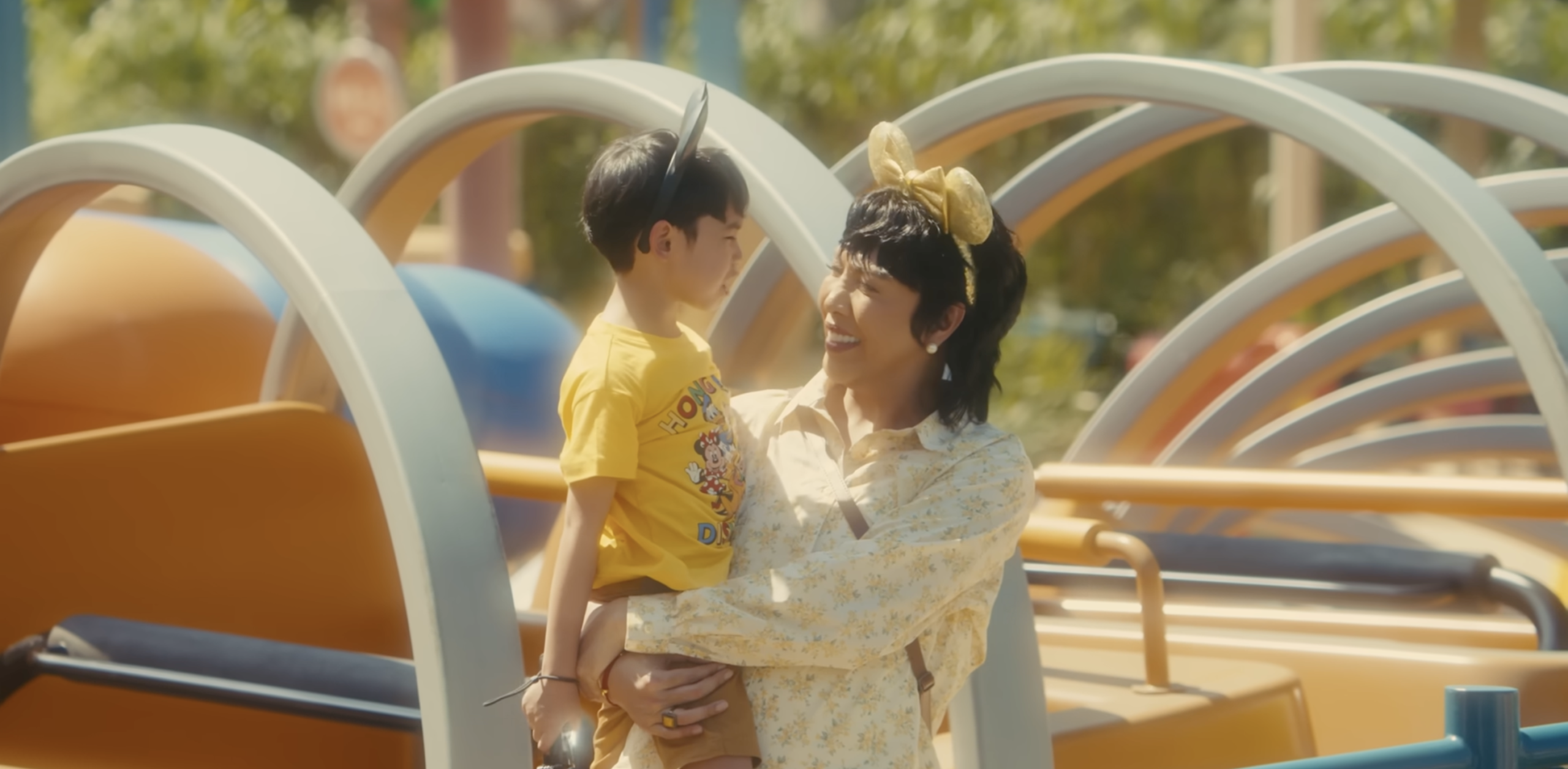
The first act of the film establishes the dynamics between Angelo and his adoptive family. Like a typical comedy-drama film, Call Me Mother spends half of the film being comedic, spending the majority of the punchlines and familiar Vice Ganda humor in the earlier scenes.
Despite this, Lana emphasizes the queer struggle of being an adoptive parent. Even in the earlier parts of the film, Lana reminds the audience that the film is not merely for a quick laugh.
The drama begins and intensifies in the second half, when Mara becomes more involved in Angelo’s life. As the two grow closer together, Twinkle visibly dims and crumbles into a heartbreaking collapse.
During the second half of the film, the audience gets to know and empathize with Mara. After spending the first half of the film with Twinkle, Lana uses the second act to create a debate among the audience: who is more worthy to be Angelo’s mother?
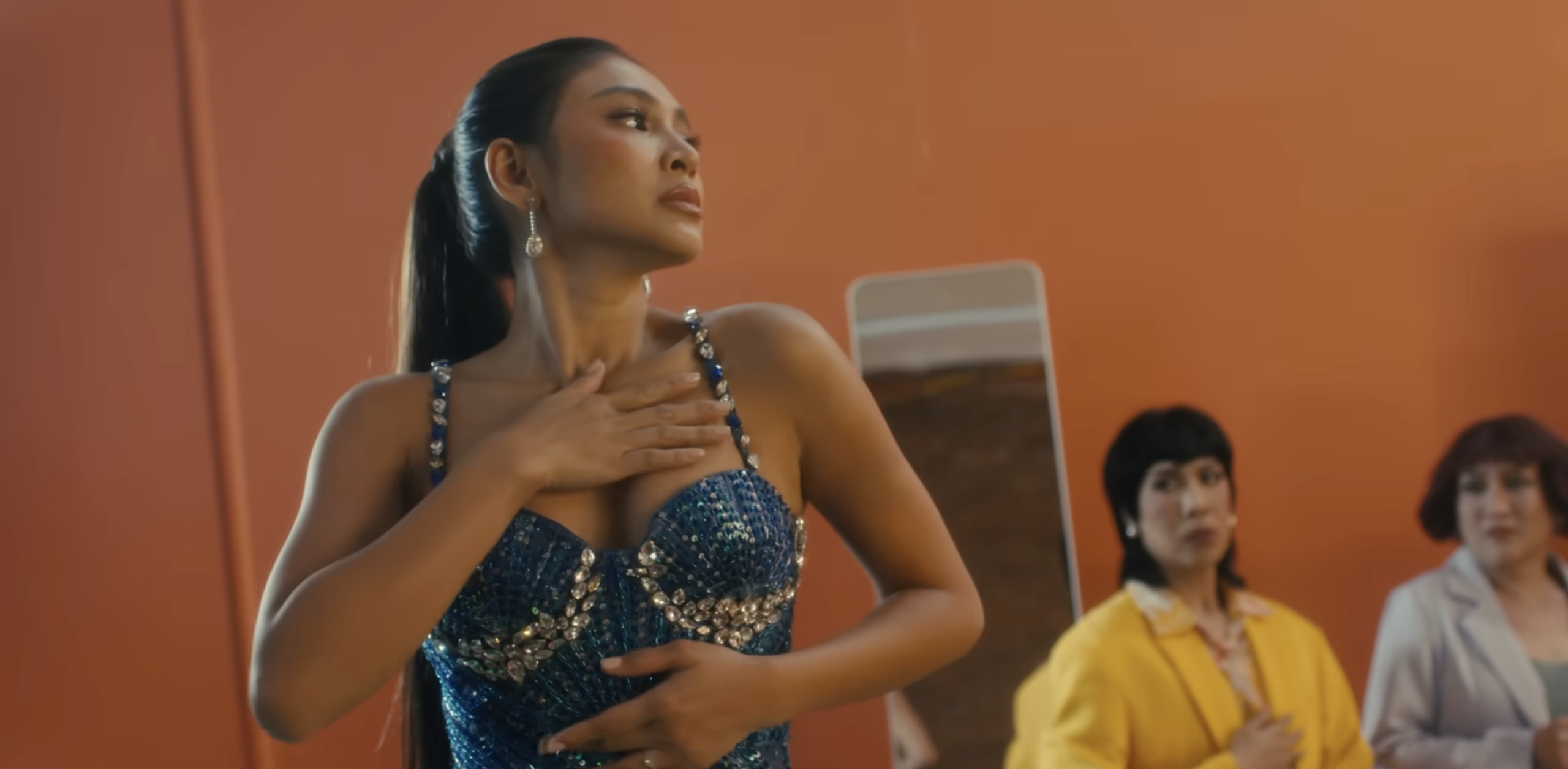
Mara and Twinkle’s friction is the film’s emotional core. Rather than spiralling into a melodramatic fight over Angelo, the script takes into account the perspectives of both the biological and adoptive mother, showing how the two mothers are right in their own ways.
This friction reaches its peak during a sequence in the emergency room. When Angelo requires a blood transfusion after an accident, the abstract discussion between nature and nurture becomes a literal matter of life and death. The scene mirrors a truth, showing the biological advantages that the world prioritizes.
The conflict between Twinkle and Mara extends from the interpersonal to the systemic level. Throughout the film, Twinkle is forced to prove his worth to a system that often invalidates queer parenthood despite his dedication. His struggle depicts a painful reality of how queer adoptive parents constantly need to work harder to prove that their love is legitimate.
In doing so, Call Me Mother also becomes a subversive text on gender and how motherhood is exclusive to those who have the biological ability to bear children. The film asserts that the essence of being a mother does not rely on nurturing a child in the womb, but on the sacrifices made in the grit of daily nurturing. It promotes the idea that queer individuals such as Twinkle are denied the title.
Compared to his previous roles in MMFF entries, Vice Ganda presents a stripped side of himself, no longer tethered to the comedian he is known as. Instead of constantly delivering punchy jokes to lighten the mood, he settles into vulnerability and melts into the pains of being a single, queer mom, that is, Twinkle.
Lustre succeeds at portraying Mara’s character without being overly dramatic. Her portrayal of Mara prompts the audience to consider whether a past mistake can define and disqualify a woman from being a mother.
Caught in the middle of the maternal tug-of-war is Angelo. Unlike the overly rehearsed child often seen in films, Andalio delivers an emotional performance that creates remarkable chemistry with Vice Ganda and Lustre. He provides the innocence of a child who struggles with being adopted, abandoned, and accepted.

Visually, the film uses color grading to mirror its emotional arcs. During happier, comedic scenes, Lana uses warm and bright tones that complement the comfort of the characters’ shared moments.
The warm tones also create a nostalgic effect, making the film feel as though it is a distant, lived memory. As the film progresses, the colors shift into cooler and darker hues, amplifying Twinkle’s growing fear of losing Angelo to Mara.
The camera follows the movement, amplifying the energy of the family and the progression from happy to empty moments. Likewise, the camera feels like a spectator in Twinkle’s home. When confrontations arise, the camera sets into the quietness, fueling the tension.
However, the script occasionally compromised emotional intensity to insert unnecessary comedy. The film could have benefited from seizing emotional moments to create a meaningful balance between mainstream appeal and cinematic substance.
Call Me Mother invites the audience to redefine their concept of motherhood — on how companionship, shared memories and daily devotion are what create a mother. It leaves viewers with an understanding that motherhood is a deliberate, enduring act of will. F