AN INSTRUCTOR of the UST Faculty of Arts and Letters received the second prize at a national academic conference for a paper that examined how a film reflects persistent corruption in Philippine society.
During the 22nd Pambansang Kumperensiya sa Wika, Panitikan, Kultura, at Pelikula, instructor Mark Anthony Angeles of the Creative Writing department was awarded second best presentation (professional edition) for his research, “Isang Sipat-Suri sa Hahamakin ang Lahat bilang Lente ng Korapsyon sa Pilipinas.”
The online conference held on Oct. 18 and 25 brought together educators and researchers to assess film and television as cultural texts and tools for social reflection. Selected works were cited for their analytical depth and relevance.
“The magic of cinema is not in its way of entertaining its viewers, who are mostly diehard fans, but in its capability to create a dialogue and allow people to work on various approaches in fighting the ills of society,” Angeles told The Flame.
“Three decades after it was first shown in local cinemas, Hahamakin [ang] Lahat continues to prove its relevance, especially to the Filipino youth of today. We still see the same corrupt practices among government officials and their cohorts,” he added.
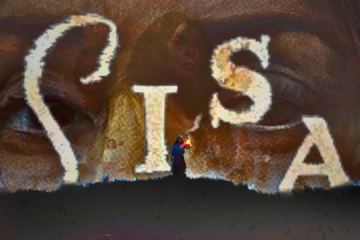
Hahamakin ang Lahat (All Be Damned) is a 1990 film about a woman and a government official in a picture-perfect marriage driven by greed and ambition rather than love. As old personal ties resurface and political interests collide, the couple eventually turn against each other in a struggle for power.
The study builds on his earlier article, “Vilma Santos sa Lente ni Lino Brocka at Isang Sipat-Suri ng Hahamakin Lahat,” which was published this year by the UST Publishing House in the anthology Vilma Santos, Icon: Essays on Cinema, Culture & Society.
While his earlier work focused on the professional relationship between Gov. Vilma Santos-Recto and director Lino Brocka, his winning study shifted attention to the film’s themes and portrayal of corruption in the country.
Angeles expressed hope that his new paper would offer those who had already read his previous article ”a larger, if not a different, perspective” of the film.
The instructor handles the courses Panulaang Filipino, Pamamahayag sa Filipino, Multimedia Storytelling and Panimulang Pagsasalin.
Over the years, Angeles has garnered numerous accolades for his writing, including the Mananaysay ng Taon of the Gawad KWF in 2023, 2015 and 2013; the Philippines Graphic Nick Joaquin Literary Award Poet of the Year in 2019; and the Tula category first prize of the 2016 Don Carlos Palanca Memorial Awards for Literature.
He is also a council member of the University’s Sentro sa Salin at Araling Salin (Center for Translation and Translation Studies) and a fellow of the UST Research Center for Culture, Arts, and Humanities under its Literary and Cultural Studies interest group.
The event, which carried the theme “Lente: Pagtingin, Pagsusuri, at Paglalarawan sa Ugnayan ng Wika, Kultura at Pelikula” (Lens: Viewing, Analyzing, and Describing the Relationship between Language, Culture, and Film), was organized by the Pampelikulang Samahan ng mga Dalubguro (PASADO), a nonprofit organization of educators who view films as effective means for teaching.
Established in 1998, the group is known for bestowing the prestigious Gawad PASADO film awards. F