SILENCE IS a love language employed when the heart wants to say so much, but is not capable of articulating it fully.
In Gitling, the love left unsaid lingers in the air; silence holds more weight, speaking louder than any poetic dialogue or confession of love.
Directed by Jopy Arnaldo, the film was released in 2023 and reaped the Best Screenplay Award in Cinemalaya and QCinema. Since its release, Gitling has sparked attention in the film community, especially during Valentine’s Day. Screened the previous year exclusively by Ayala Malls for their Sine Sinta event and most recently by Cinema ‘76 earlier this month, Gitling is now streaming on JuanFlix: The FDCP Channel.
For this year’s Valentine’s Day celebration, the Thomasian Film Society held a film screening of Gitling as part of its celebration titled “Meet Me in Santo Tomas.” The show ran from Feb. 13 to 14 at the Saint Pier Giorgio Frassati, O.P. building, allowing couples and cinephiles to enjoy their own form of dates for the Valentine’s Day weekend.
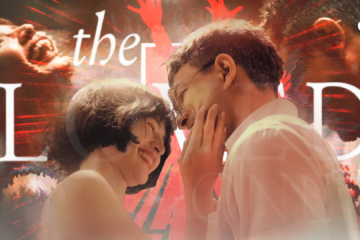
Gitling is a romantic drama following Makoto Kanno (Ken Yamamura), a Japanese director who visits Bacolod for a film festival that will screen his piece. He meets and connects with Jamie Lazaro (Gabby Padilla), his interpreter and the subtitle translator of his film, who is running from her past.
It is a general rule in storytelling to “show, not tell,” yet Gitling diverts such expectations and breaks the rules. Aside from the lengthy dialogues that reveal crucial character information, the film adds subtitles to share the thoughts and feelings of the characters in certain moments, giving voice to the silence.
The film is spoken through different languages: English, Hiligayon, Nihongo and Filipino, all delivered through color-coded subtitles. The fifth language spoken is Jaime’s own made-up language she had made for fun when she was younger, something that captured Makoto’s interest. The sixth language present in Gitling is the visual language itself—film.
Yet perhaps the decision to add subtitles in silences, as seen in Makoto’s film, where he left the last portion of his film muted, evokes the very nature of the film: the fear of being misunderstood. Like the characters Jaime and Makoto, who revert to saying nothing at all, speaking up becomes a form of vulnerability.
As mentioned, there are pages of dialogue uttered by the characters; however, what strikes the heart is the things left in the air, and those lengthy monologues dissolve into the background as the visual language takes over.
It is strange how this film “tells” rather than “shows,” yet in spite of this obscurity, the cinematography works overtime to catch up with the burdening dialogues and to add movement and an extra layer of identity. This makes Gitling a perfect execution of peak visual storytelling.
The sequence that encapsulates this form of storytelling takes place by a poolside in the dead of night. Jamie and Makoto maintain their respectable distance from each other, keep their hands to themselves as they reveal their recent failed relationships and avoid communication—something out of character for two people who deem opening up as a sin.
Viewers learn the story of Jaime and Makoto through their monologues and confessions and through the lingering gaze of the camera, which makes the audience peer through this private world that the two have created for themselves.
The meticulously staged blockings reveal the connection between the characters. They are so close, yet so far, there is always a gap in between them, something retained for the things they are too afraid to say and the yearning that comes with it.
Their fear of being known slowly cracks and burns as the romance swells up. Love creeps through every meal shared, awkward car rides and confession uttered—the love comes eventually only after the characters have peeled their layers and laid themselves bare with one another.
With Yamamura’s restrained yet soulful performance sweetly melting into Padilla’s sincere romanticism, the characters deliver a chemistry perfect for a romance film, yet they find themselves in a narrative imbued with melancholia and yearning.
To know and be known is a risk itself. The two characters have difficulty communicating and opening up to others, making the film monotone in its progress by only showing how two people exert efforts in getting to know each other.
Filmmaking and love are vulnerable processes, allowing one to be criticized, misunderstood, and worst of all, seen. Gitling confronts the frightening process of finding someone who can comprehend you the way you intend to. It might not be everyone’s cup of tea due to its dialogue-heavy and slow pacing. But it also offers a possible refuge for those who use a secret language to be decoded only by a few.
Arnaldo crafts a film that touches on the intense craving of wanting to speak out, yet the desire is crippled by fear of the pursuit of it. This is perhaps the primary reason why so many audiences have sought out this film ever since its 2023 debut.
Gitling thrives on the suppressed ache present in the two characters, the unspoken gaps in every line of dialogue, the lingering shots of the camera and our own yearnings in life. It accomplishes its deed through our own introspection on language, communication and expression.
And lastly, it conveys the message that by opening yourself to the possibility of being misunderstood, perhaps that is borne out of love. F – Anthea Anika de Sales