THE UNIVERSITY of Santo Tomas will collaborate with the Philippine Army to develop a prototype robot designed for surveillance, field assessment and operational safety support in the military’s various missions.
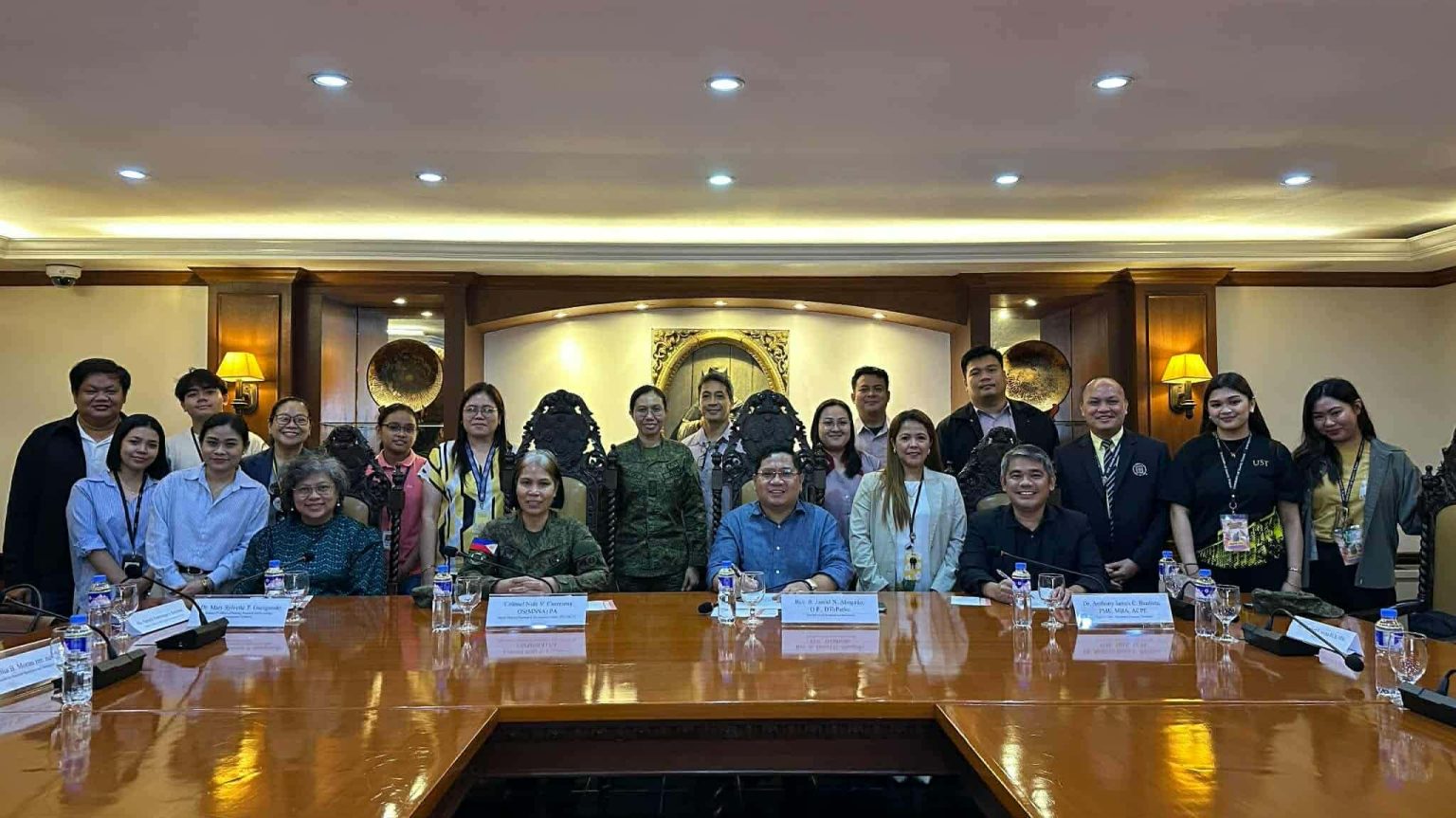
UST’s Research Center for the Natural and Applied Sciences (RCNAS) will lead the prototype development of the SAFEGUARD Robot: Surveillance and Field Evaluator for Ground-based Unmanned Autonomous Robot under a memorandum of agreement signed by both parties on Nov. 28.
“Funded by the Commission on Higher Education, the project aims to advance unmanned autonomous ground-based technologies that can support surveillance, field evaluation, and operational safety in various Philippine Army missions,” the University announced on Dec. 9.
The agreement allows the RCNAS and the Army Support Command’s Research & Development Center to collaborate for innovation, national development and defense modernization.
Under the memorandum, RCNAS is tasked to handle the overall project management, which includes establishing research protocols, securing ethics approval, coordinating implementation and evaluating project results.
The Army’s research and development center will focus on the design, development and testing process as the project’s co-implementor. The Army will also provide technical expertise and assistance in evaluating the research protocol.
UST will be offered access to the agency’s fabrication and testing centers for the implementation of the project.
The project will involve faculty experts and staff in its various stages led by the following: RCNAS researcher and Department of Mechanical Engineering Prof. Anthony James Bautista; Prof. Eugenia Zhuo of the Department of Information Technology and the Research Center for Social Sciences and Education; and Department of Marketing Management chair Asst. Prof. Antonio Etrata Jr.
“The SAFEGUARD Robot initiative represents an important milestone in the country’s efforts to harness science and technology for national security,” UST said.
“By blending academic innovation with search and rescue application, the project aims to produce a prototype capable of enhancing field operations, reducing risks to personnel, and supporting data-driven decision-making in mission-critical environments,” it added. F