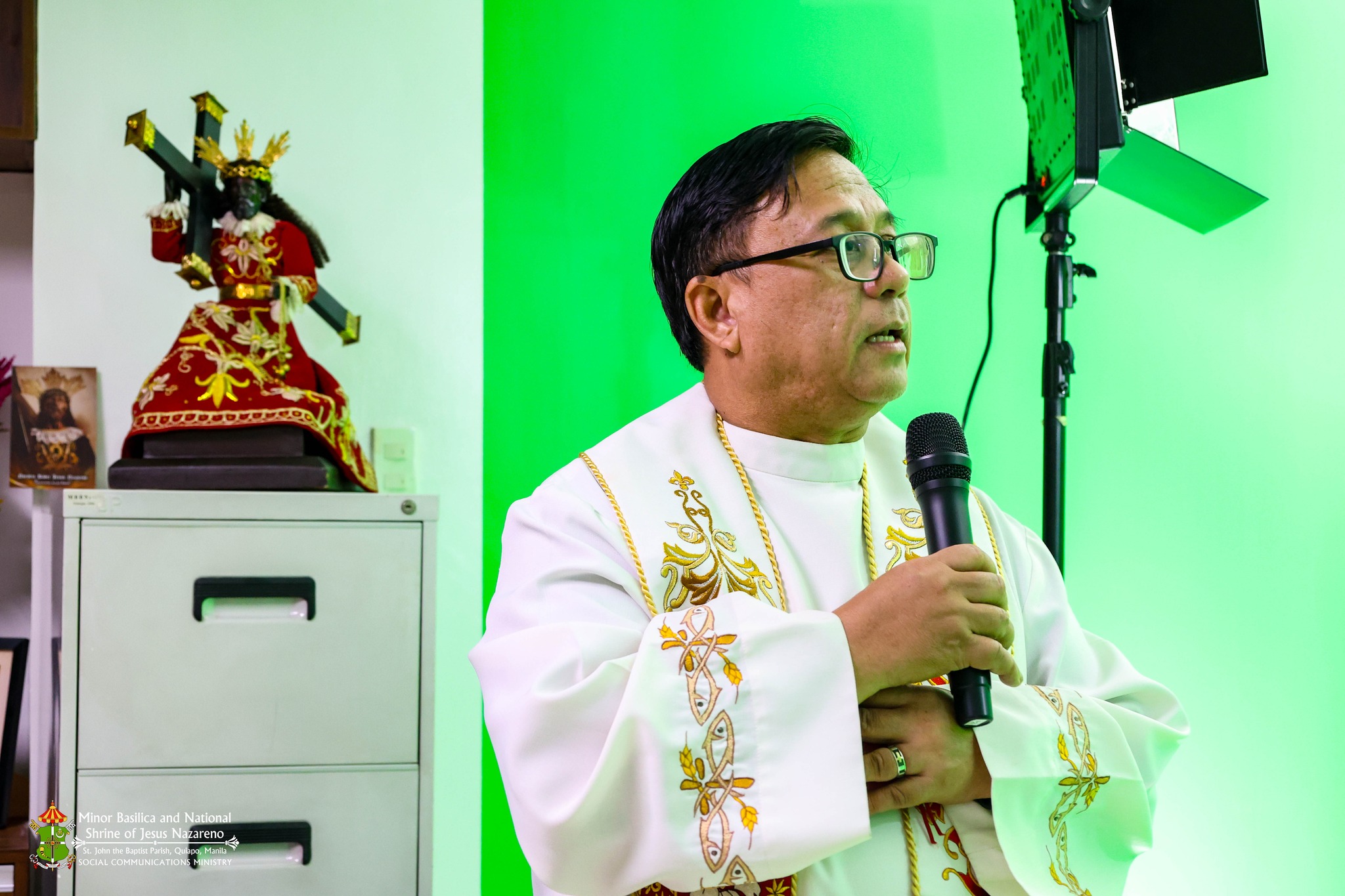
THE QUIAPO church has built a green screen studio ahead of the Feast of Jesus Nazareno to strengthen its digital presence and to harness online content as a form of “media evangelization.”
Through the initiative, the Minor Basilica and National Shrine of Jesus Nazareno aims to share knowledge about its enshrined image, which is venerated by millions of Filipinos during the Traslacion held every Jan. 9.
“The green room that the Quiapo church built will be used for online catechism, and at the same time media evangelization, which is the main spirit of the church to reach out to social media,” Bro. Benedict Canapi, coordinator of Quiapo’s social communications ministry, told The Flame.
“[B]ecause we can see that information spreads quickly on social media. So why not the Church use it, spread information about the catechism, and at the same time form devotees of the Black Nazarene?” he added.
Media evangelization is the use of various online communication platforms to disseminate religious messages, boost faith and encourage spiritual growth that leads people closer to God.
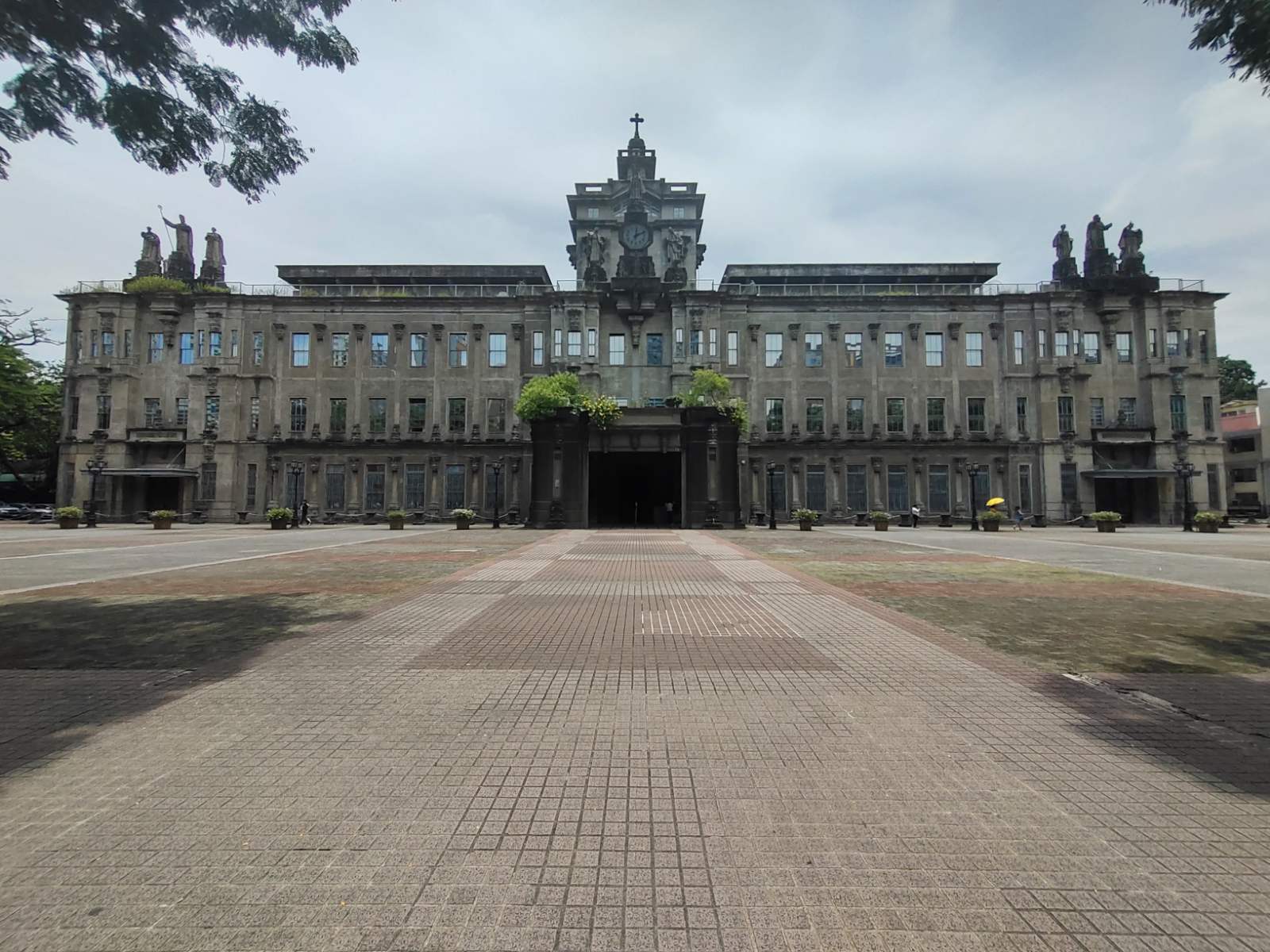
The development of the green screen studio was led by Fr. Ramon Jade Licuanan, a Thomasian alumnus who was appointed rector and parish priest of the Quiapo Church on Jan. 29, 2025.
“Because as he became part of the commission on youth of the Archdiocese of Manila, the online programs became their platform. He (Licuanan) injected those in the Quiapo church because one of the spiritualities of Quiapo [church] is media evangelization,” Canapi said.
The project, which began about August last year and was completed on Dec. 30, would be used for live updates in the upcoming Traslacion, according to Canapi, who is also part of the event’s documentation team.
During the Traslacion, Quiapo Parochial Vicar Fr. Robert Arellano, the event spokesperson, and other hosts will be livestreaming from the studio, along with their media partners, faith-based broadcasting groups Radio Veritas and TV Maria.
The procession itself will also be livestreamed on online platforms such as Facebook, TikTok, YouTube, and Instagram, in addition to the LED walls attached outside the Quiapo Church.
According to Canapi, the digitalization efforts are a way for the Church to make its services more accessible to Filipino devotees who are far away or cannot attend onsite because of various reasons.
“[T]he green room would serve as the training ground for our media ministries to reach those people, especially those that are not yet fully catechized and evangelized…and at the same time, a room for ideas that could be formed as a devotee of the Black Nazarene,” he said.
Canapi added that the church is looking to collaborate with Catholic content creators and other parishes to create a “large community of media evangelizers.”
Bigger crowd expected
The Quiapo church is expecting the number of devotees to surpass that of the 2025 Traslacion, which was tallied at 8.12 million.
The turnout for last year was much higher than in 2024, when it drew 6.5 million devotees.
Canapi said despite the event’s elevation to a national feast, meaning it is now celebrated across the country, Filipinos still attend the procession as part of their yearly panata or vow.
“Perhaps what inspires them is what you see in the procession, the spirit of bayanihan (cooperation) Because we see the crowdy procession from far away, [but] if you were inside, their language, you can see that they would work together on how to get closer to the carriage,” he added.
Despite the crowd, more devotees are still “willing to make sacrifices for themselves and their families,” Canapi said.
Attendees of the feast believe that touching the image of the Jesus Nazareno, which depicts a suffering Jesus Christ carrying the cross, will help them achieve the things they are praying for.
Although organizers want to limit the Traslacion to below 20 hours, they are not sure if this can be achieved.
Last year’s procession lasted 20 hours and 45 minutes, during which the two ropes used to pull the carriage carrying the image had snapped, while the previous year’s lasted around 15 hours.
The Quiapo church has coordinated with the local and national governments and the police to manage the procession’s flow.
The Traslacion is an annual commemoration of the solemn transfer of the image of Jesus Nazareno from its original shrine in Intramuros to Quiapo. F — with reports from Mei Lin Weng