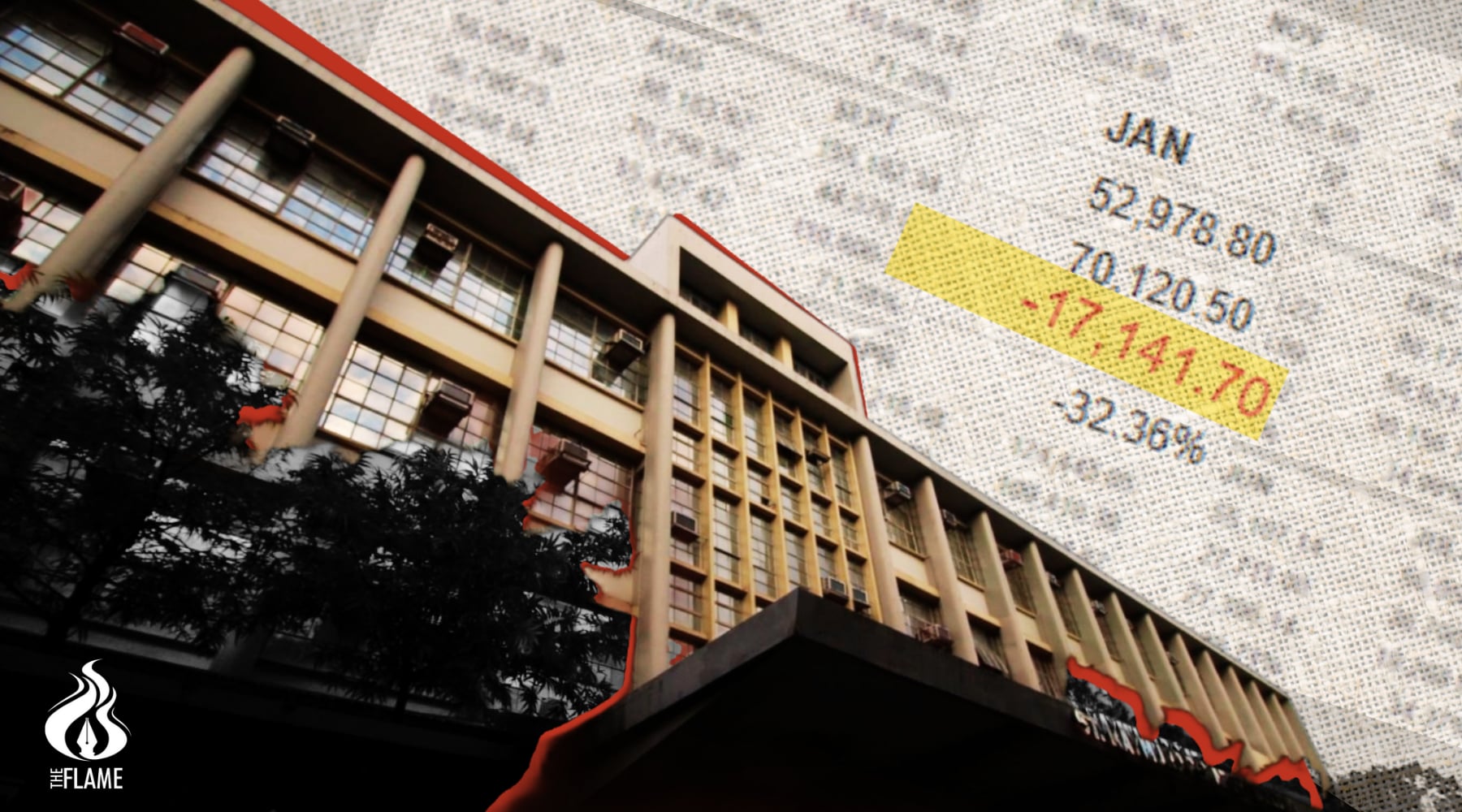
THE ST. Raymund de Peñafort building was not among the awarded facilities in the recent Energy Management Forum (EMF) as it failed to meet its energy savings target for the first month of 2025.
St. Raymund’s, which houses both the Faculty of Arts and Letters and the College of Commerce, accumulated 860,301.39 kWh energy consumption of its overall 1,185,765.38 kWh cap for last year, but overconsumed by 32.36% in January.
“It doesn’t mean that you’re not an awardee because you didn’t save energy. [St. Raymund’s] fell short. It was only 11 months. In January, you slightly failed to meet your target,” UST Facilities Management Office (FMO) engineer Oliver Gagarin told The Flame.
FMO data showed that St. Raymund’s consumed 70,120.5 kWh in January 2025, way above its 52,978.8 kWh target. The building drew its highest energy savings in September and conserved 110,606 kWh or 71% of its target consumption.
This is the second time the building was not able to achieve recognition in the Energy Efficiency and Conservation (EEC) Awards since it won in the medium category in 2023, when it saved 457,481.74 kWh or 38.58% more than its target.
St. Raymund’s used 27.45% or 325,463.99 kWh less than its target for 2025, up from 2024’s 219,314.63 kWh, which made it among the “most concerning” UST facilities in terms of consumption.
Facilities recognized as energy accounting centers (EACs) are nominated for the award if they are able to meet their respective monthly target electricity consumption, show no need to realign their consumption and have committed to at least one of UST’s 22 energy conservation measures.
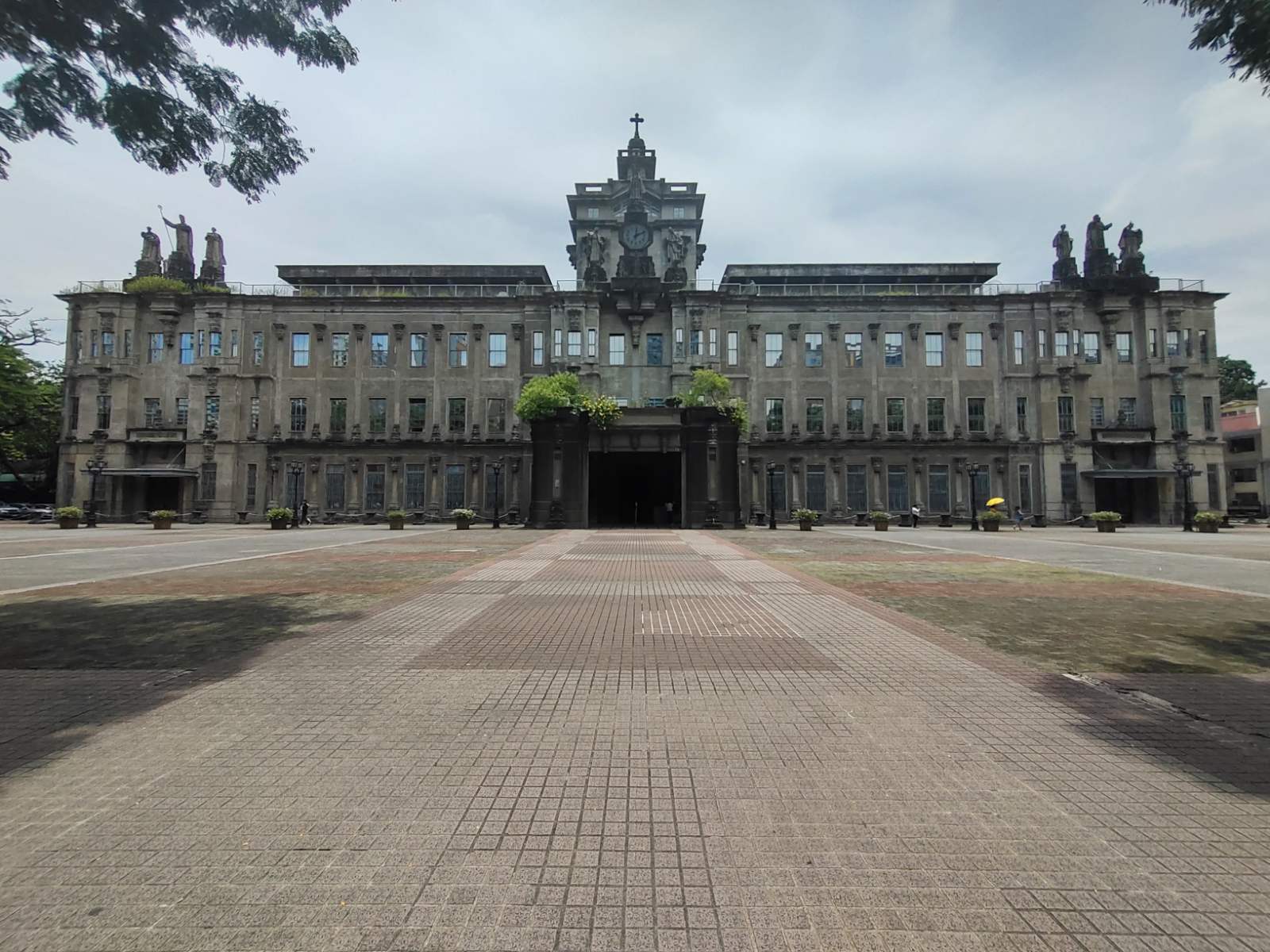
The Main Building bagged the award for the large category after garnering 221,833.55 kWh energy savings last year. Meanwhile, the UST Data Center building earned the award for the small category, with 171,550.62 kWh energy savings.
No building was nominated in the medium category this year after all EACs failed to reach the qualifications.
A total of 28 EACs were recognized in 2025, with the Henry Sy Sr. Hall building adding to the list. Of these, only five facilities qualified for nomination across the small (four), medium (zero) and large (one) categories.
Despite a lower tally of nominees, UST’s energy savings stood at 4.93%, higher than its 3.33% target and the previous year’s overall energy savings of 3.79%.
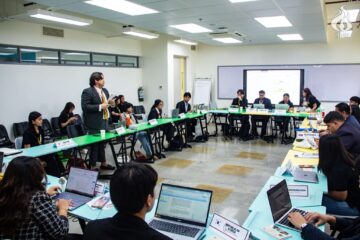
The data were presented during the annual EMF held on Feb. 13.
FMO raises bar to 12%
From 2023 to 2025, UST was able to draw a total of 17.1% energy savings, way higher than its goal of 10%.
The UST Payward Division had the highest average annual energy savings over the three-year period at 1,086,576.12 kWh, followed by the Main Building (513,622.75 kWh) and the UST Hospital Clinical Division (456,010.46 kWh). St. Raymund’s, which recorded a 334,086.79 kWh yearly average, ranked sixth among the top 10 EACs.
For the years 2026 to 2028, the FMO raised the overall target of energy conservation to 12% from the previous 10%. The figure was finalized during the forum after a consultation with the audience composed of students, teachers and experts.
The period will also see a total of 31 EACs, with the addition of three facilities in the small category: the Science SRL building, the Pharmacy Botanical FLR Laboratory building and the University’s property warehouse.
Motivation
Gagarin described the lower number of nominees as “alarming,” noting that the previous years’ nominees would often reach more than 10.
He attributed the lower number for 2025 to a lack of motivation, adding that the FMO is planning to add rewards to encourage facilities to achieve their respective targets.
Gagarin said the failure of some buildings to meet their monthly targets is likely due to the higher population of students and higher temperatures experienced last year.
“This is where we’re getting alarmed because out of 28, only five were consistent. Before, there were many — 13, 14, 15 — but now, what’s happening is the motivation is declining,” Gagarin said.
“That’s why I motivated them earlier. We will raise the bar and then we will employ some rewards next year. Real rewards next year so it will be more appreciated,” he added.
Gagarin said the FMO’s goal is to increase awareness on preventative measures and energy conservation through forums and dialogues to “revive” motivation.
“In the first year, the reception from the people was overwhelming. We just need to revive that awareness again through the forum series within this year. Maybe it will boost things again, re-motivate people, and at the end of the day, you close it with a reward,” he said.
“I think that’s the best combination because I also believe that people’s awareness leads them to correct themselves and practice saving.” F