
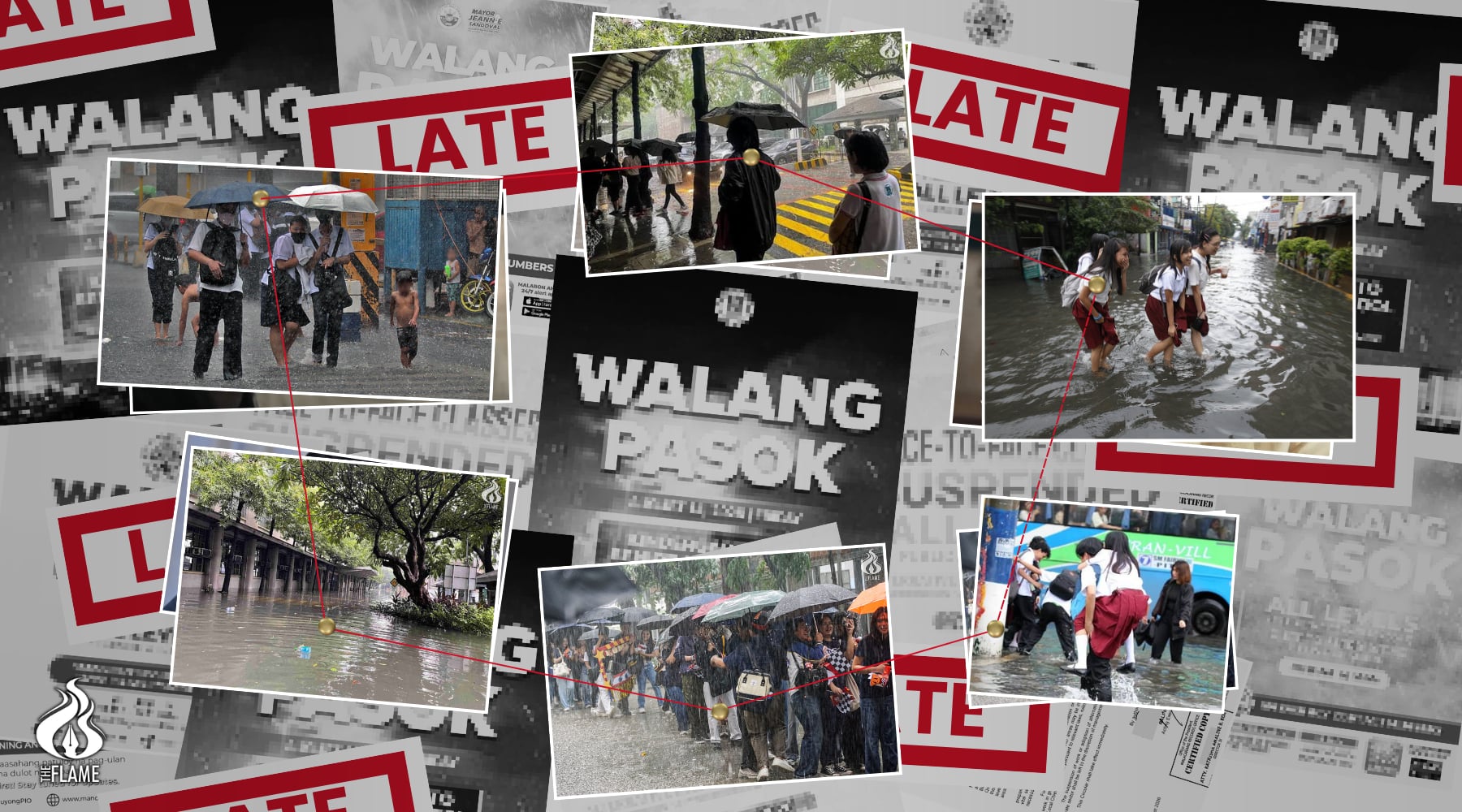
A CRISIS management official from the University of Santo Tomas (UST) has criticized the late suspension of classes and work during recent weather disturbances, saying the delays reflected poor disaster governance by local administrators.
Tobey Calayo, an officer of the UST Red Cross Youth Council – Central Unit, said local disaster response should not rely solely on severe rainfall advisories from the Philippine Atmospheric, Geophysical and Astronomical Services Administration (PAGASA), as they neglect the “actual” vulnerabilities of various communities.
He added that late class and work suspensions expose students and workers to hazardous conditions.
“A suspension announced too late may still be called a suspension, but if the workers and the students are already at school, commuting, drenched by the rain, or are already exposed to the hazard, we also have to ask: What risk did it actually prevent?” Calayo said in his Facebook post dated Aug. 14.
He said that while PAGASA’s scientific data is indispensable, it only provides information about the hazard itself. He added that the decision to suspend classes or work also requires a deeper understanding of the community and its risks.
“If your city and institution’s disaster response begins only when PAGASA tells you the rain is already severe, then what exactly were your local risk assessments for?” Calayo asked.
He argued that a national hazard bulletin cannot answer pressing local concerns such as how many students are already in transit, which specific communities are actively flooding, or whether public transport is still operational.
Central Student Council staffer Raven Racelis echoed a similar sentiment, saying delayed announcements place students at risk.
“Students had already made their way to school this morning, braving heavy rain and increasingly flooded roads, only for the suspension to be announced later. Now, many of us have to face the same dangerous conditions just to get home,” Racelis said in an online post.
“The government should not wait until students are already exposed to danger before acting,” she added.
Journalism instructor Paterno Esmaquel II warned of the long-term impact of the issue in a Facebook post, saying the Philippines would “reap the effects of erratic class suspensions, thanks to politicians hungry for likes.” F


