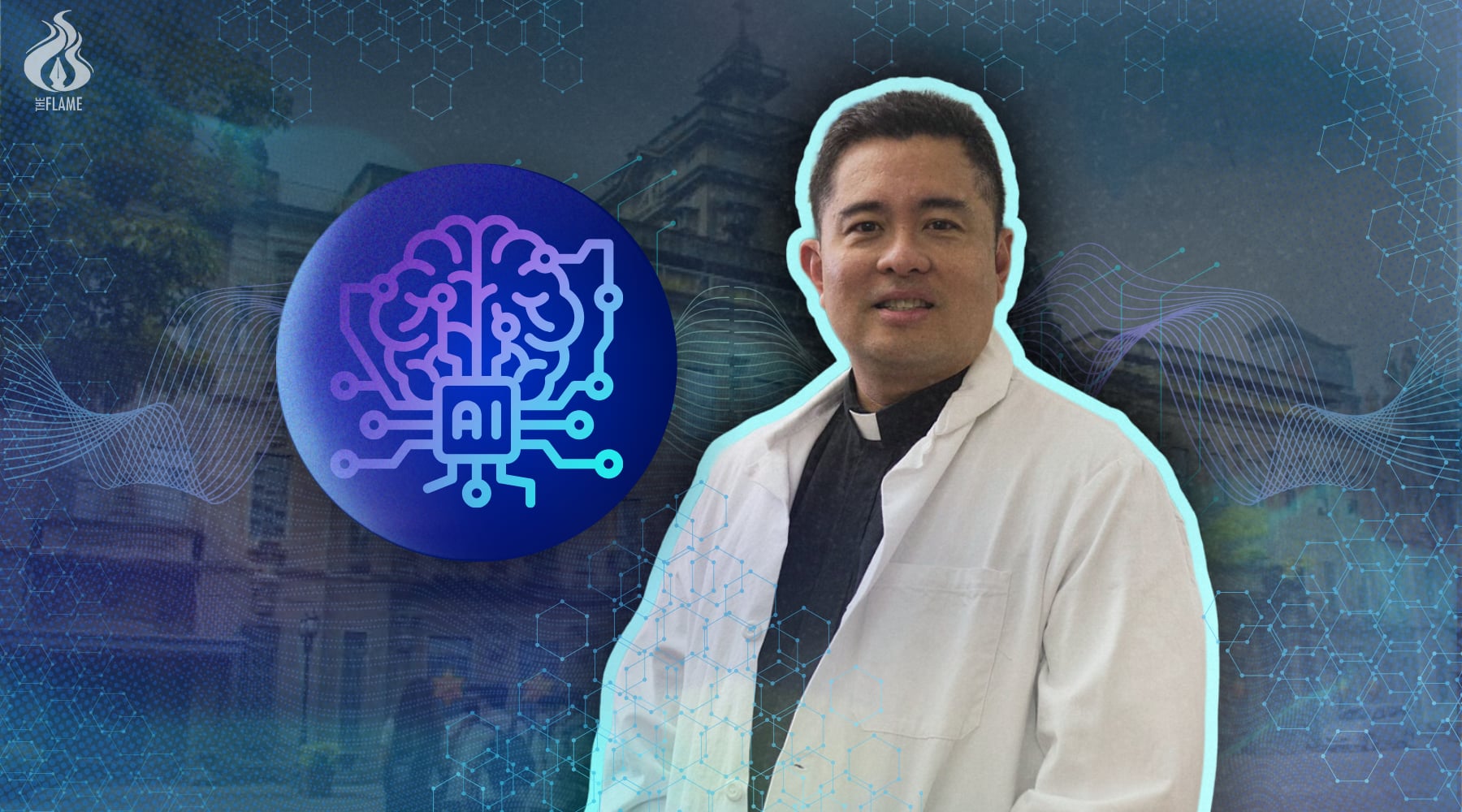
A THOMASIAN friar and biologist has been appointed to an eight-person body examining the effects of artificial intelligence (AI) and technology on Dominican teaching, according to a report by the Order of Preachers.
Fr. Nicanor Austriaco, Jr. O.P. was included in the study group on AI and emerging technologies formed by Master of the Order Gerard Francisco Timoner III, O.P on Wednesday, Sept. 9.
The study group’s creation is in line with the 2025 General Chapter of Kraków’s call for reflection on the challenges and opportunities posed by emerging technologies, particularly in relation to the Dominican mission of preaching truth and upholding human dignity.
Austriaco will be joined by Fr. Dominik Jarczewski, O.P., the chair of the group, alongside members Fr. Salvatore Di Fazio, O.P., Fr. Ghislain-Marie Grange, O.P., Fr. Rodrigo Hidalgo Torres, O.P., Fr. Łukasz Mścisławski, O.P., Fr. Anselm Ramelow, O.P. and Fr. Gabriele Scardocci, O.P.
The group will also collaborate with the Socius for the Apostolic Life, other Socii and concerned offices of the General Curia.
Among its tasks is to examine AI’s implications for preaching, particularly the need for discernment and truthfulness as information and images can be generated or manipulated.
It is also expected to propose guidelines for further legislation on AI use in the Order’s governance, administration and communications from the General Curia to individual communities.
The study group will also develop guidance for houses of study, formation programs and libraries on the responsible use of emerging technologies while preserving the theological disciplines of lectio, or reflective reading of sacred text and disputatio, a structured method of scholarly debate, in Dominican intellectual formation.
Timoner expressed hoped that the group would help the Dominican order discern “with wisdom and courage,” particularly on how it can live out its preaching charism in a technological age while safeguarding human dignity.
Emphasizing Pope Leo XIV’s Magnifica Humanitas, the Dominican order echoed the sentiment that technological tools should neither be demonized nor idolized, stressing that truth is a common good rather than the possession of those with power or influence.
Austriaco is affiliated with the UST Department of Biological Sciences and the UST Research Center for the Natural and Applied Sciences. His research interests include health care ethics and bioethics in the Catholic tradition, as well as the philosophical and theological implications of modern evolutionary theory.
He also serves as a professor of Theology at the UST Ecclesiastical Faculties.
He earned his bachelor’s degree in Bioengineering from the University of Pennsylvania in 1989 and completed his doctorate in Biology at the Massachusetts Institute of Technology in 1996.
Austriaco’s doctoral research examined aging genes in the budding yeast Saccharomyces cerevisiae. He was also a pre-doctoral fellow at the Howard Hughes Medical Institute under Prof. Leonard Guarente, co-founder and chief scientist of Elysium Health, a company that develops health products based on research on aging.
He entered the Order of Preachers in 1997 after a brief fellowship at the Ludwig Institute of Cancer Research at University College London. Austriaco later earned a Master of Divinity degree and a Licentiate in Sacred Theology from the Pontifical Faculty of the Immaculate Conception at the Dominican House of Studies in Washington, D.C.
He also completed his doctorate in Sacred Theology at the University of Fribourg in 2015 and earned his Master of Business Administration degree from Providence College in 2020.
Apart from his contributions to biological research, Austriaco discussed AI’s implications for moral and theoretical virtues during a seminar at the University of Dallas last March. F