
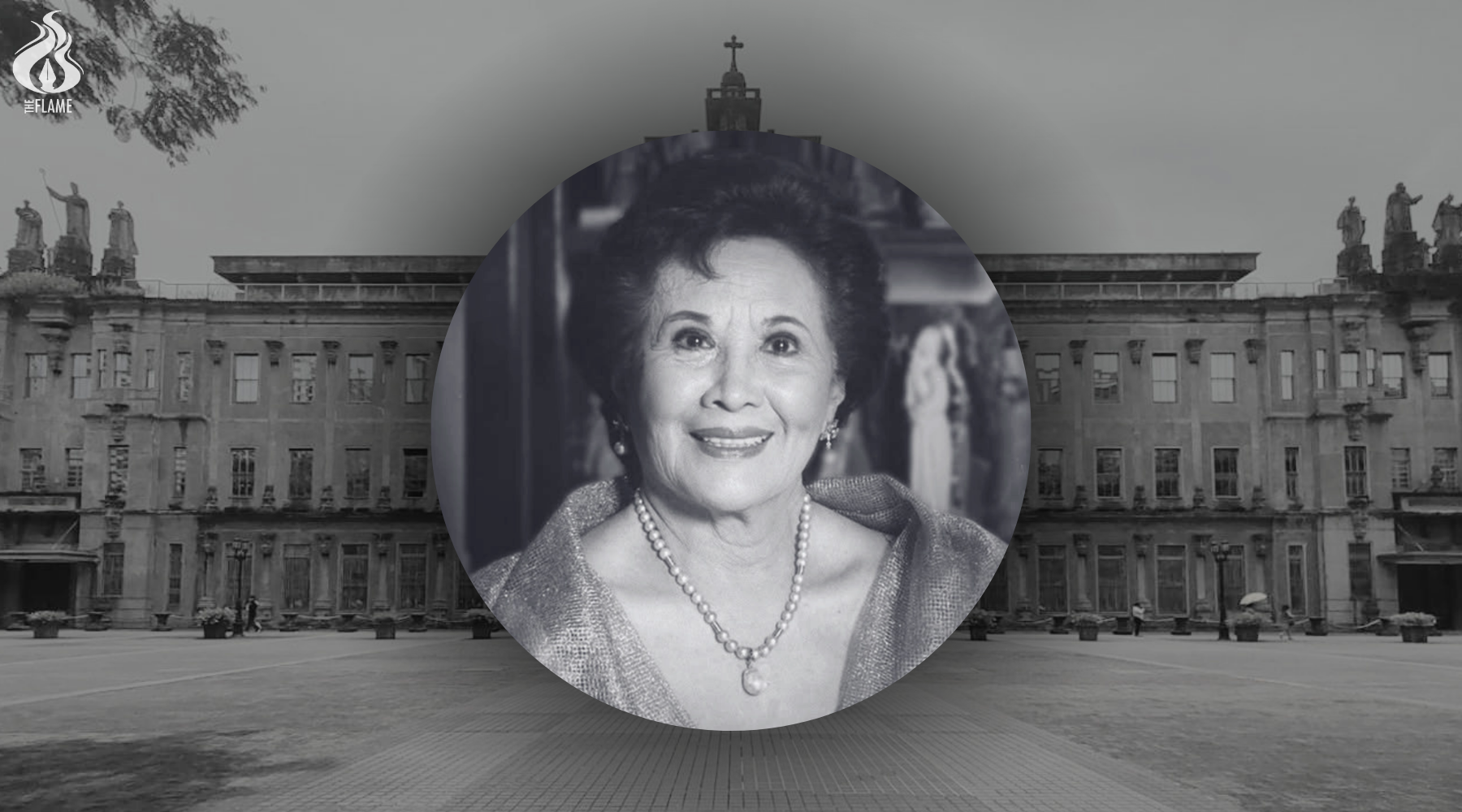
RENOWNED THOMASIAN journalist and Philippine Daily Inquirer founder Eugenia Duran Apostol, who championed press freedom during Martial Law and the Estrada administration, died on Sunday, Sept. 13.
She was 100.
Her death was confirmed by a family member and the Ramon Magsaysay Award on Facebook.
“Through her journalism, she gave Filipinos the information and voice they needed in a defining chapter of her nation’s history. With courage and unwavering integrity, Apostol showed the power of a free press to speak truth, serve the public, and uphold democracy,” the Ramon Magsaysay Award said in a statement.
“We are with the bereaved family, friends and colleagues of Eugenia Apostol, a celebrated Thomasian journalist and acclaimed press freedom icon. She was a Filipina publisher who vowed to pursue the truth and justice,” UST, Apostol’s alma mater, said in a statement
“I will always remember that many times she stood up for our reporters and editors and defended their right to expose wrongdoing, no matter how powerful the people involved,” Marixi Prieto, successor of Apostol as Philippine Daily Inquirer chair, said in a statement on Inquirer’s Facebook page.
Apostol was conferred the Ramon Magsaysay Award in 2006 for Journalism, Literature and Creative Communication Arts. It is Asia’s highest honor, given to individuals who have demonstrated selfless service to the community.
A former editor of the Inquirer who worked with Apostol described her as sociable and fun-loving.
“She would grace company anniversaries, bringing along bottles of her favorite red wine, and demand that the male editors dance ballroom with her. The editors were banó and would rather help her finish the bottles than dance,” Asst. Prof. Joselito Zulueta, chairman of the UST Journalism department, told The Flame.
Apostol graduated from the University of Santo Tomas in 1948 with a Bachelor of Literature in Journalism from the now defunct Faculty of Philosophy and Letters. She also wrote for The Varsitarian in 1946.
Apostol received the University’s Outstanding Thomasian Alumni Award for Media in 1999.
The respected journalist began her journalism career writing for Catholic publications before joining The Manila Times and later The Manila Chronicle, where she edited their women’s pages.
Apostol became involved in publishing Mr. & Ms. Special Edition, which circulated reports about the 1983 assassination of then-Senator Benigno “Ninoy” Aquino Jr.
In 1985, Apostol, Betty Go-Belmonte and Max Soliven founded the Philippine Daily Inquirer. The newspaper became a major source of independent coverage during the 1986 People Power Revolution.
Apostol later founded Pinoy Times, which reported on corruption allegations involving former president Joseph Estrada. The reports on Estrada’s undeclared wealth paved the way to a series of events that culminated in his ouster through the Edsa Dos revolt in 2001. F
EDITOR’S NOTE: The article has been updated to include the tributes of UST and former Philippine Daily Inquirer chair Marixi Prieto to the late Eugenia Apostol in place of Mari Sara Infante’s for accuracy.


