
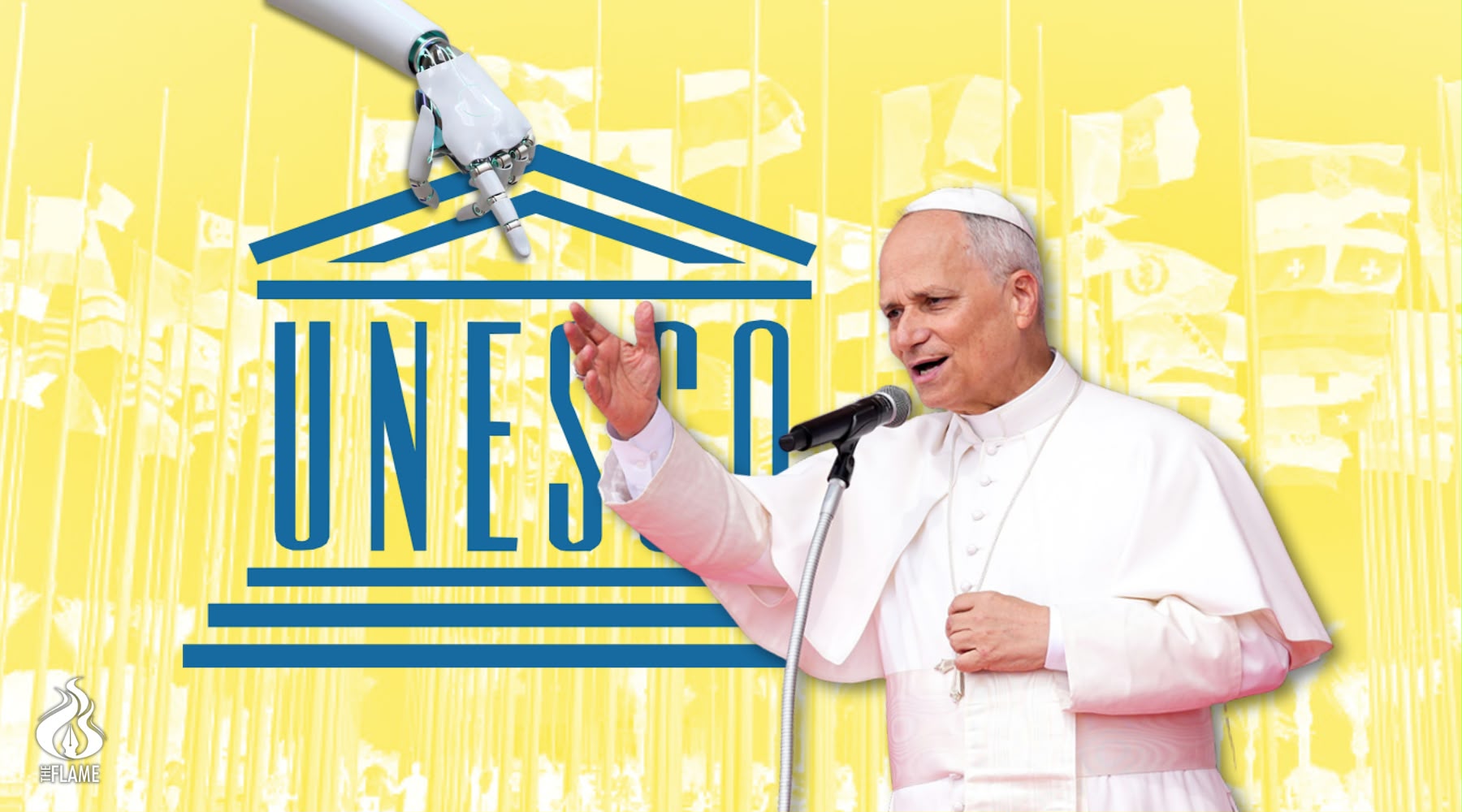
POPE LEO XIV lamented what he described as the “dehumanization” of relations and ideas in the age of artificial intelligence (AI) as he called on nations to use technology to educate the youth and promote human dignity.
Speaking before the United Nations Educational, Scientific and Cultural Organization (UNESCO), Leo noted that AI can process and correlate information but remains unable to address questions concerning the meaning of human life.
He added that the abundance of information does not necessarily amount to wisdom.
“More recently, certain artificial systems have even been given the name of our human faculty of thought: intelligence. At the same time, however, our ideas and relationships risk being impoverished by a process of dehumanization,” the pope, also an administrator of UST, said in a speech delivered last Sept. 25.
“The paradox has become increasingly evident: while ‘intelligence’ is attributed to computational systems, we struggle to recognize the inalienable dignity of human persons, whose lives are judged according to the criterion of efficiency and, when deemed no longer productive, are rejected and discarded,” he added.
According to the pontiff, the “painful reality” is an invitation to reflect both on the fragility of human nature and on the immense dignity of every human person, which he described as “undiminished even in the most vulnerable circumstances, even to death itself.”
Leo also warned that progress can become destructive when it loses its grounding in wisdom and truth. He called for greater attention to the moral responsibility that comes with scientific advancement, cultural development and education.
“Every science risks losing its proper meaning when pursued without ethics,” he said.
“Humanity had come to realize that scientific progress, when severed from wisdom, can turn into a weapon of destruction.”
He recalled the aftermath of the Second World War, when humanity came to recognize the dangers of separating scientific progress from wisdom.
“The most terrible of ‘human works’ is war, for then science itself is placed at the service of an inhumane will to destroy and to kill,” the pope said, pointing to war as the clearest example of this danger.
“New technologies must remain at the service of the human person, and not become instruments of domination or injustice,” he added.
Leo argued that abandoning the truth could turn education into an instrument for manipulating consciences.
“Culture, when subjected to ideology, can degenerate into falsehood and propaganda,” the pope said.
“I encourage the international community as a whole to devote particular attention to the protection of children and young people. In the digital age, their vulnerability must never become an opportunity for exploitation.”
The pope’s address was delivered during his official visit to UNESCO, which was described as a reflection on artificial intelligence, information integrity, education and peace.
The visit marked the first papal visit to the international humanitarian institution in more than four decades. F – Francia Migyel Violeta