
NEGLECTING ENVIRONMENTAL costs in public projects could inflate government spending and worsen the country’s economic vulnerabilities, economists and industry experts have warned.
Maria Carmela Capule, chief operating officer of CRL Environmental Corporation, said the degradation of the environment directly harms long-term economic productivity and requires costly and extensive rehabilitation efforts.
She cited the six-month closure of Boracay Island from April to October 2018 due to severe water pollution, which halted tourism activity, affected local establishments and forced the government to carry out clean-up operations.
“Before the pandemic, it was closed in 2018 because of the water pollution. Imagine the beaches having high concentrations of coliform bacteria, and once we absorb those bacteria present on the beach, it may cause various health-related diseases,” Capule said during the National Collegiate Economics Convention at UST held last Thursday, Nov. 5.
“Based on the monitoring conducted by the different regulatory agencies, the government was forced to close or rehabilitate the island, where about 200 establishments were penalized, affecting the tourism revenue of the island and costing the government a lot of money to rehabilitate,” she added.
Prof. Alain Jomarie Santos, chairman of the UST Department of Economics, said environmental protection is a means to reduce the financial burden posed by the country’s vulnerability to climate change.
“For the Philippines, where severe typhoons, urban flooding, agricultural losses, and high fossil-fuel dependency threaten the livelihoods of our most vulnerable brothers and sisters every day, this field (Environmental Economics) proves that protecting the environment is not a luxury or a financial burden, but an urgent moral responsibility and a smart investment in long-term economic stability,” Santos told The Flame.
“As a Thomasian, I see Environmental Economics as a vital moral and analytical tool that helps us manage our shared home by aligning our economic choices with truth and compassionate service,” he added.
Environmental Economics is a branch of economics that evaluates environmental policies and assigns financial value to natural resources.
Santos said conventional markets often treat pollution, deforestation and climate destruction as “invisible costs” as they measure economic success through short-term profit while ignoring their long-term damage.
Social costs, inflation
In the same forum, Department of Finance economist Elijen Love Saez said major public investments must be evaluated beyond their physical completion and budget approvals.
“For example, if funding for a windmill project is authorized, does that automatically mean users will receive a reliable energy source?” she said.
Saez, a UST Economics graduate, said hidden societal impacts—including land acquisition, displacement and livelihood disruptions—must be thoroughly measured to ensure that infrastructure projects would deliver genuine and long-term benefits to affected communities.
Addressing broader economic vulnerabilities, Fortunato Leynes, former president of the National Transmission Corporation, criticized the country’s energy policy structure.
He said about 98% of the Philippines’ crude oil imports originate from the Middle East, making the country vulnerable to geopolitical conflicts that trigger severe domestic price surges. The dependence is also expected to affect local electricity costs, transportation expenses and inflation and to places additional pressure on households and businesses.
“Before the war, diesel was about P50 to P60 per liter, and on March 8, it went up to about P130 per liter,” Leynes said.
To achieve genuine economic resilience, he called for a faster transition toward energy independence.
The convention also had reactor discussions featuring congressional district officer for the lone district of Samar Viviane Pugal-Alvarez and Asst. Prof. Leandro Estadilla.
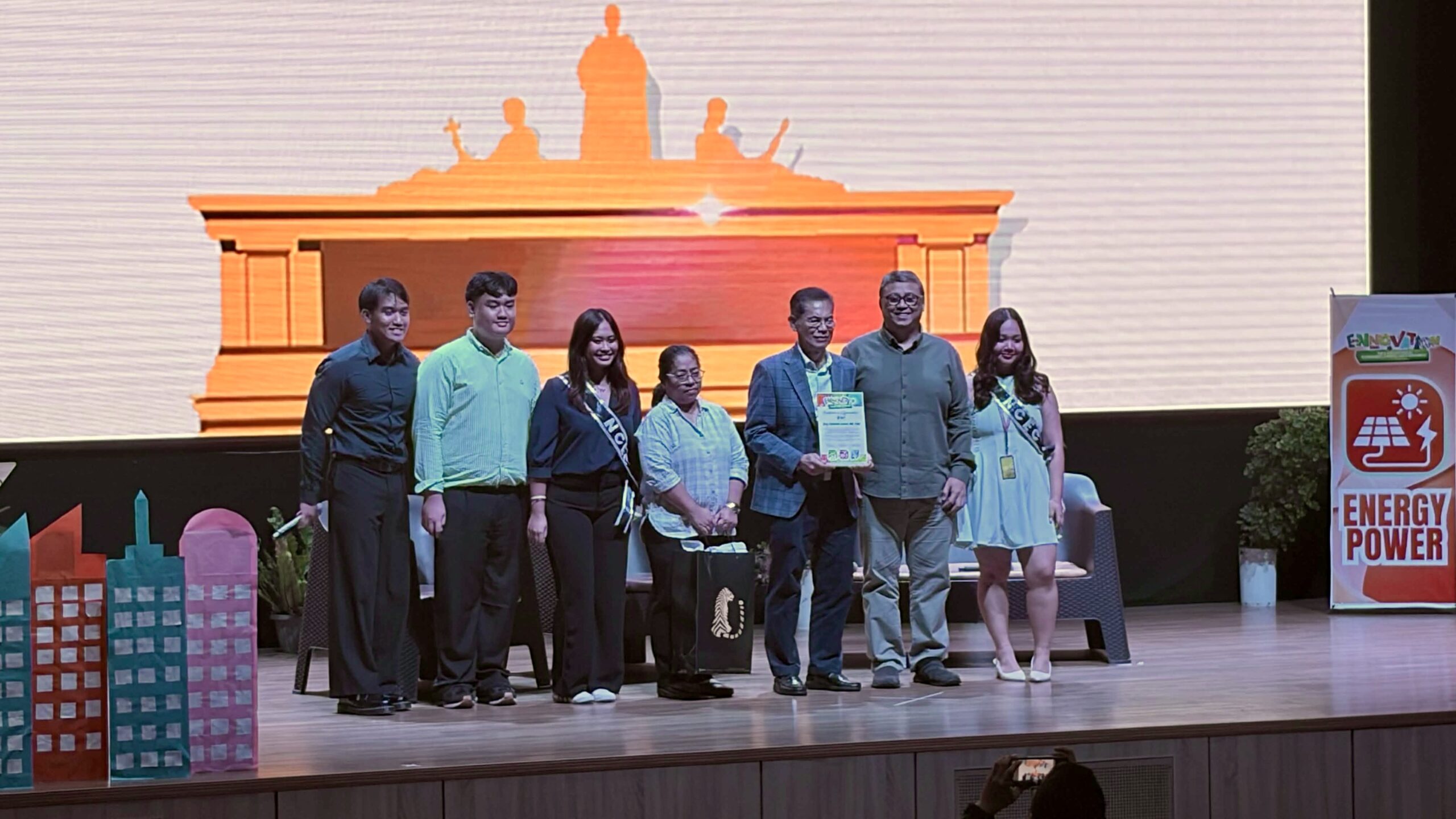
Organized by UST’s fourth-year Economics students under the theme “E-NNOVATION: The E-ntersection of E-conomics, E-nergy and E-nvironment,” the event gathered 420 delegates from various universities across the country. F – Amiel Gomez


