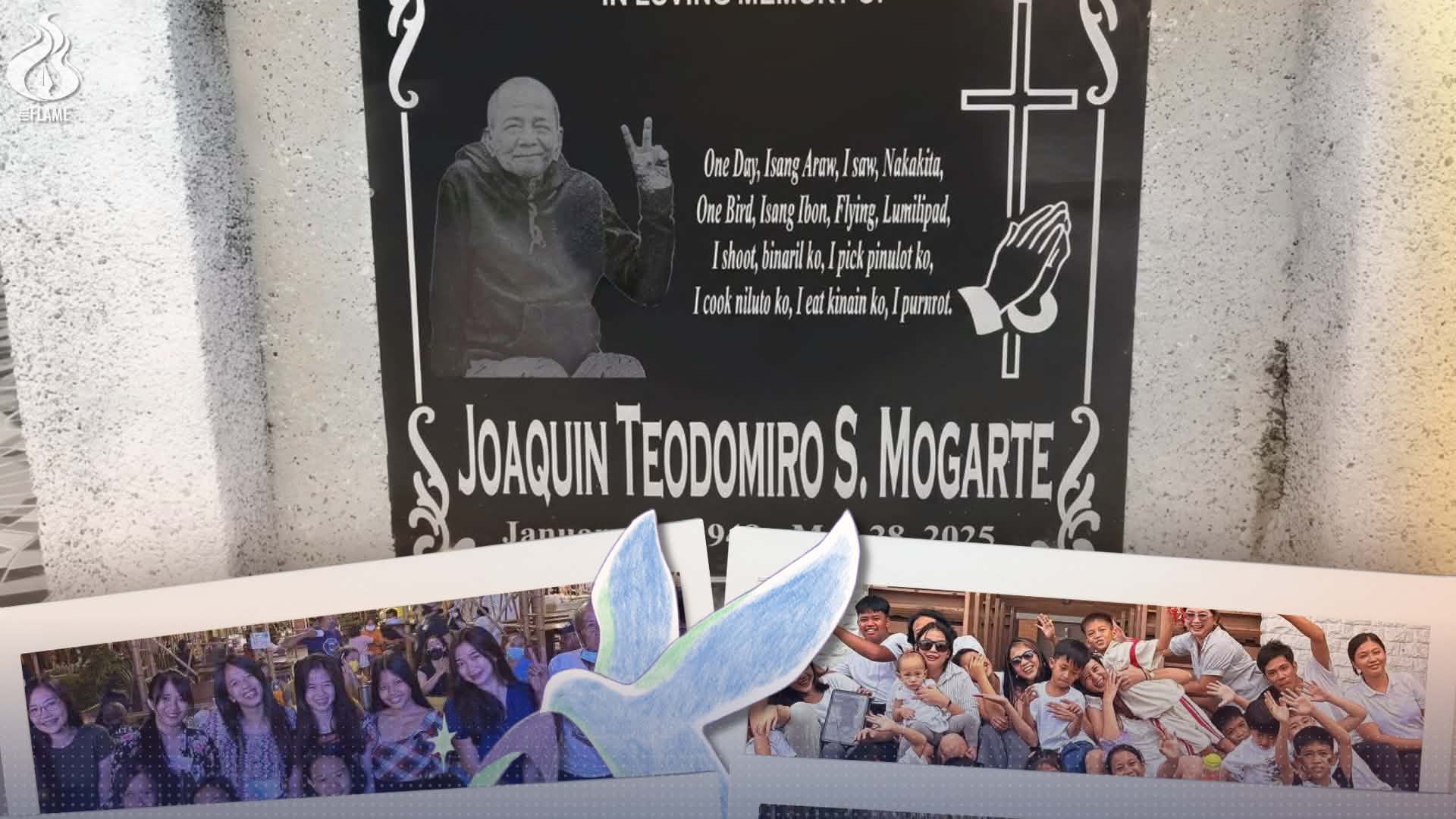
INSIDE A gated cemetery in Bocaue, Bulacan, one can find familiar verses etched on a lapida alongside the photo of the deceased.
“One Day, Isang Araw, I saw, Nakakita, One Bird, Isang Ibon, Flying, Lumilipad, I shoot, binaril ko, I pick pinulot ko, I cook niluto ko, I eat kinain ko, I pururot,” it read.
(One day, One day, I saw, I saw, One Bird, One bird, Flying, Flying, I shoot, I shoot, I pick, I picked, I cook, I cooked, I eat, I ate, I sputter.)
For Benedict Mogarte, son of the grave tenant, the inscription was more than an unusual sequence of words. It was a familiar piece of his childhood — one that brought back memories of his father, Joaquin Teodomiro “Ka Mireng” Mogarte.
Ka Mireng was a tricycle driver and a father of 10. His youngest daughter, Lourdes, remembered him as a man of few words who preferred to express himself more through actions. Before passing away on May 28, 2025, at the age of 77, he introduced the verses to his children.
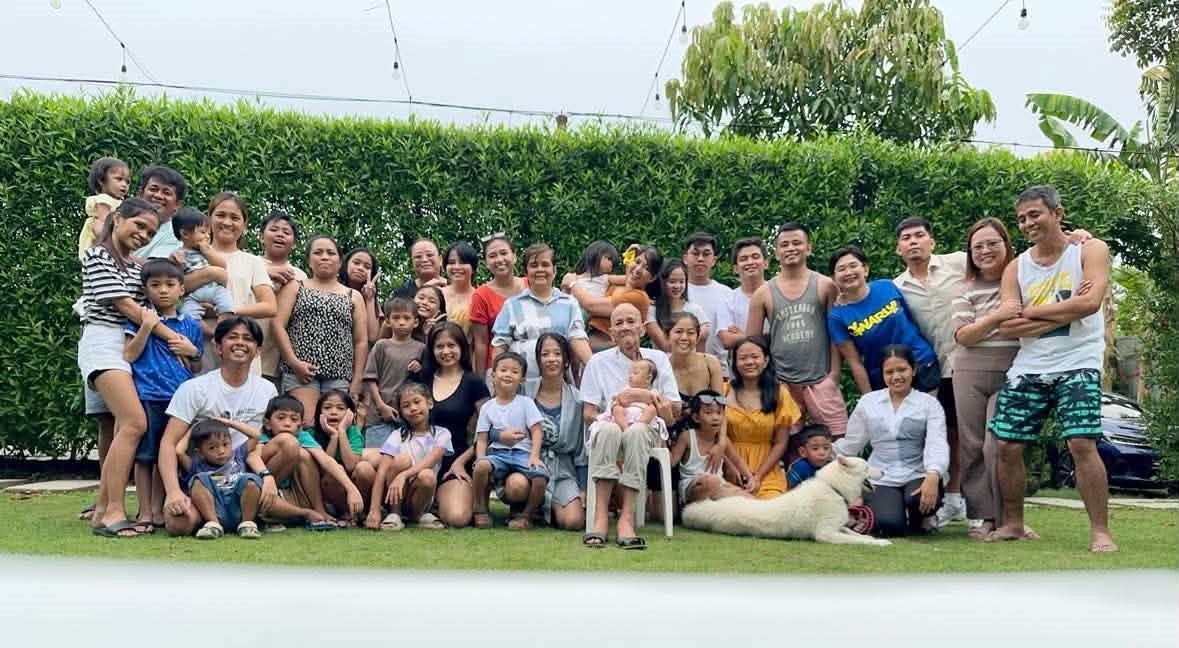
When Benedict was still a child, his whole family would cram into a single bedroom. Whenever darkness consumed the room during blackouts, everyone would hear Ka Mireng reciting the verses. His children would then reply with the last word, delivering the punch line and completing the family bonding.
“Core memory na para sa amin ‘yung gano’n,” Benedict told The Flame.
(It is a core memory for us.)
The familiar lines reached another generation through Ka Mireng’s grandchildren. Years later, the same words found a permanent place on his father’s grave.
Before the quotation was etched on the grave marker, Benedict had assigned one of his siblings to oversee the preparation of their father’s lapida. The family received several suggestions, ranging from famous quotes to Bible verses. Their mother grew impatient as her late husband’s grave remained unmarked for four months.
The siblings eventually had to visit a lapida store. They still had no specific inscription in mind.
Once there, Benedict noticed bird engravings on the sample grave markers. They reminded him of his father’s verses.
The bird engravings motivated Benedict to propose the first verse, which read: “’One day, isang araw, I saw, nakakita, one bird, isang ibon, flying, lumilipad.’”
(One day, one day, I saw, I saw, one bird, one bird, flying, flying.)
“No’ng sinabi na talaga namin ‘yong word na ‘yan, lahat talaga nag-agree na [‘yun ilagay sa lapida]. Wala nang ibang sinabi. Talagang ‘yan na nga ‘yong dapat ilagay natin.’” Benedict said.
(When we told them the word, everyone agreed [to put that on his grave]. No other suggestion was made, and everyone just decided that it was what we should add.)
Benedict initially wanted the verse to end with the image of the bird flying to symbolize his father’s passing. However, his siblings felt the poem was incomplete and insisted on having the entire quotation engraved, thus preserving the interaction they had with their father.
Engraved memories
Beyond marking the resting places of the deceased, epitaphs can also reflect how families choose to remember their loved ones.
In a 2024 study published in the journal Mortality, University of the Philippines Diliman Asst. Prof. Nicko Enrique Manalastas examined the communicative functions of epitaphs at the Libingan ng mga Bayani.
The study found that grave inscriptions can convey not only information about the deceased but also their relationship with the living. Through language, words of affection, religious references and visual elements, epitaphs become a means of expressing memory and remembrance.
This personalization is also evident in a lapida shop, Saraza14 Lapida Maker. Its store is just a short walk from the cemetery to the main road. Clients are usually greeted with a row of grave markers, while workers inside are busy crafting them.
Almarjun Miron oversees the production of grave markers, from preparing designs on a computer to cutting stencils and sandblasting granite. He inherited the lapida-making business from his father and learned the craft by accompanying him to job sites.
In Miron’s store, a standard-size lapida costs around ₱2,500, while additional charges for customization depend on the inscription’s length and size. Rush orders cost an additional ₱500.
For Miron, an epitaph is more than a label identifying the deceased.
“Minsan kasi epitaph…kung paano sila [clients] gano’n umalala, pinapalagay nila, pinapasulat nila kung ano ‘yung tao,” the 34-year-old businessman said.
(Sometimes, [clients] ask for epitaphs on how they remember; they ask for inscriptions that mirrored the person.)
He recalled a grave marker commissioned for someone who used to attend cockfights. The family requested marble line drawings of roosters on either side of the deceased’s photograph.
But most clients prefer traditional designs, often choosing standard templates featuring Bible verses or quotations including “In your memory” and “In remembrance of,” Miron said.
Among the unusual requests Miron encountered was a commission from a group of close friends for their deceased gay friend who had no surviving family to arrange his burial. The inscription captured the friends’ humor and closeness and morphed it into a lasting tribute.
“Bakit ka nauna, bes? Dapat sinabay mo na kami.’ Gano’n ‘yung nakalagay doon,” Miron said.
(I think the epitaph said, ‘Why did you go first, bestie? You should have taken us with you.’)
For Miron, such inscriptions are not necessarily meant to make fun of the deceased. Rather, they reflect the relationships and memories that the bereaved choose to preserve. However, his years in the business also taught him the importance of securing permission before sharing personalized grave markers.
“One time, hindi ako nakapagpaalam sa client [to post the grave marker online]. Nagalit ‘yung client kasi para bang ginawa kong advertisement ‘yung namatay na kapamilya nila,” Miron said.
(There was one time when I failed to ask the client for permission [to post the grave marker online]. That client got mad because it seemed as though I had turned their deceased family member into an advertisement.)
Since then, Miron has made it a point to seek his clients’ consent before using any grave marker or inscription for promotional purposes.
In loving memory
For the Mogarte family, Ka Mireng’s epitaph became a way to preserve a part of his personality. Even visitors of his grave would recognize the unusual quotation and be reminded of their father’s humor.
“Maski naman ‘yung mga dumadalaw [nagsasabi], ‘Oh, nakita ko si Ka Mireng, ah. Ang gara no’ng quotes niya.’ Natatawa na lang din sila,” Lourdes said.
(Even those who visited his grave would say, ‘Oh, I saw Ka Mireng’s quote. It was quite cool,’ then they would just laugh it off.)
But beyond making his family laugh, Ka Mireng is also remembered as a loving father.
When Lourdes became pregnant, her father reassured her with a few words that she would carry long after his passing.
“Ang sabi lang niya sa akin, ‘Kaya natin ‘yon,’ kahit wala na siya. I live by those words na kaya ko, kaya namin,” Lourdes said.
(He simply told me, ‘We can do it.’ Even now that he is gone, I live by those words – that I can do it, we can.)
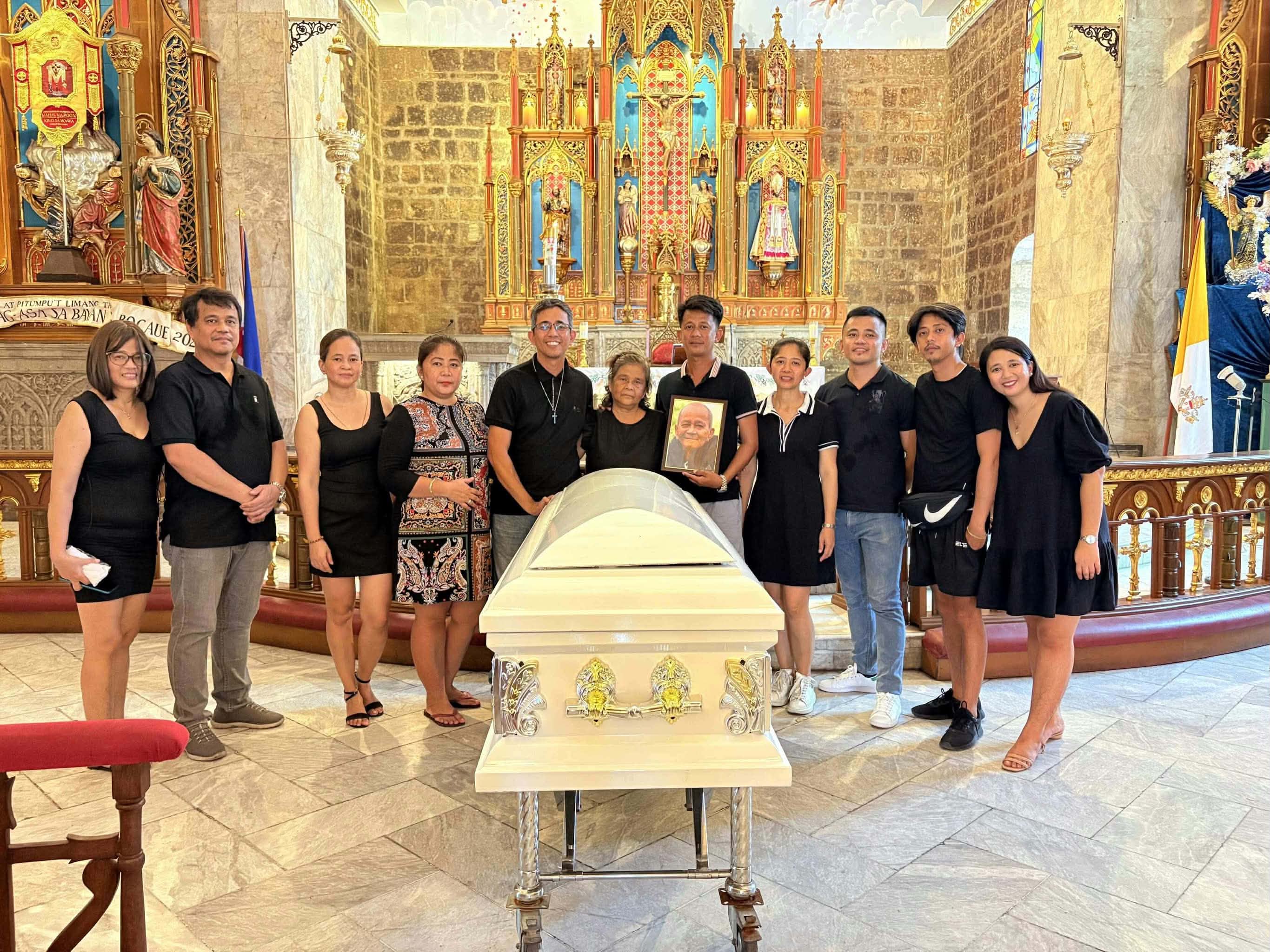
Both Benedict and Lourdes remembered their father as a hardworking man who was often quiet. However, at his wake, they were surprised to see the number of friends who came to pay their respects.
“Mabait na tao, mapagkaibigan, mapagbigay —’yun ’yung mga pinakakaraniwang sinasabi ng tao tungkol sa papa namin,” Lourdes said.
(Kind, friendly and generous – those were the things people most commonly said about our father.)
Although Ka Mireng would recite the same verses repeatedly, Benedict never grew tired of listening to them. Through the grave inscription, his voice still rang inside their heads as if he were there.
“Gusto nalang namin maalala ‘yung kuwento niya, ‘yung habang kinukuwento niya ‘yang words na ‘yan na ang lakas-lakas niya,” Benedict said.
(We just want to remember his stories, that whenever he tells us those stories, he was very energetic.)
Although Ka Mireng’s children are now scattered across the country and overseas, the lapida preserves the story of who their father used to be: someone who would pocket chicken takeouts or sit randomly on pavements, so much so that even passersby mistook him for a beggar. His children could still relive the father who used to throw an ‘OK’ or peace sign while smiling widely at them.
Benedict continues to share the verses with his own children, keeping the familiar lines alive long after the man who had first recited them flew to the other side. F