WHEN A person’s decision to take risks pays off and is handed power, will he use it to lead or to reign?
Political wheeling and dealing and the realities of power relations, including the seeds of patronage, were highlighted in “Quezon,” the final installment of the so-called Bayaniverse trilogy by TBA Studios that arrived in Philippine theaters on Oct. 15.
The historical drama film written and directed by Jerrold Tarog tells the story of the charismatic and scheming Manuel L. Quezon (Jericho Rosales), the first president of the Philippine Commonwealth.
Set during the American colonial period, the film chronicles Quezon’s rise to victory as the first President under the 1935 Constitution and the schemes behind it.
A theatrical introduction, mimicking 1930s western-style openings, sets the stage for the film, evoking a resemblance to the black-and-white silent films of Western media. It formally but briefly introduces Quezon’s journey from imprisonment to government service, culminating in his eventual rise to power—from lawyer, to governor, to senator, to Senate president and to Commonwealth president.
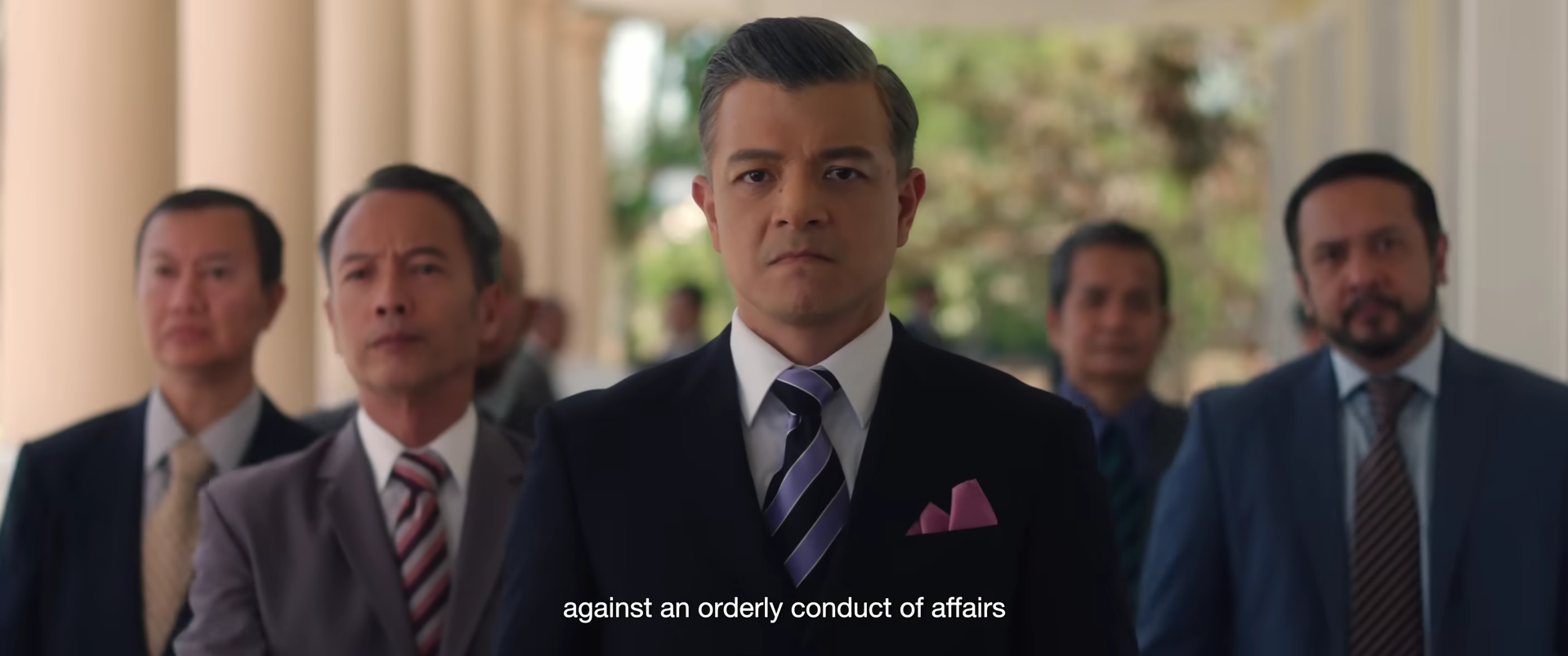
The movie occasionally switches between varying time periods, divided into acts. The year and significant events are also labeled each time a new ‘act’ is set in motion, an effective method to avoid confusion among the audience regarding the timeline being presented, although it has the tendency to spoon-feed.
Interestingly, this kind of introduction immediately gives the audience an idea of the movie’s production style: a silent, film-within-a-film concept intended to mimic a satirical narration, or, a farce.
This “film-within-a-film” aspect begins from the perspective of an older Joven Hernando (Cris Villanueva), the fictional journalist featured in the two previous films of the installment. In the movie, Hernando is depicted as a longtime friend of Quezon, having initially met him when the president was a wounded soldier during the Philippine-American war.
Throughout the movie, Hernando watches the promotional film made by his daughter, Nadia (Therese Malvar) for Quezon’s campaign. With Quezon’s support, these promotional movies — at least the ones that were publicly released — were produced to depict his heroism and to boost his electoral campaign.
A recurring motif evident in the movie is the usage of game strategies, ranging from board games to gambling games. A coin plays a key role in representing these ‘gambles’ and ‘bets,’ signifying Quezon’s scheming. This coin is constantly passed around between Quezon and Hernando, as if to represent the idea of one placing a bet. These elements seem to bring forth the proposition of politics being a game of and for power, alluding to how the film is marketed.
Though styled as a silent film, it only mimics certain elements of it. The movie is very much tone-appealing: Rosales’s portrayal and voice of the Commonwealth president greatly enhanced the charismatic authority the former president wielded. This voice also allowed Rosales to project Quezon’s double persona: an extremely charming leader and a player who reads and uses his cards too well.
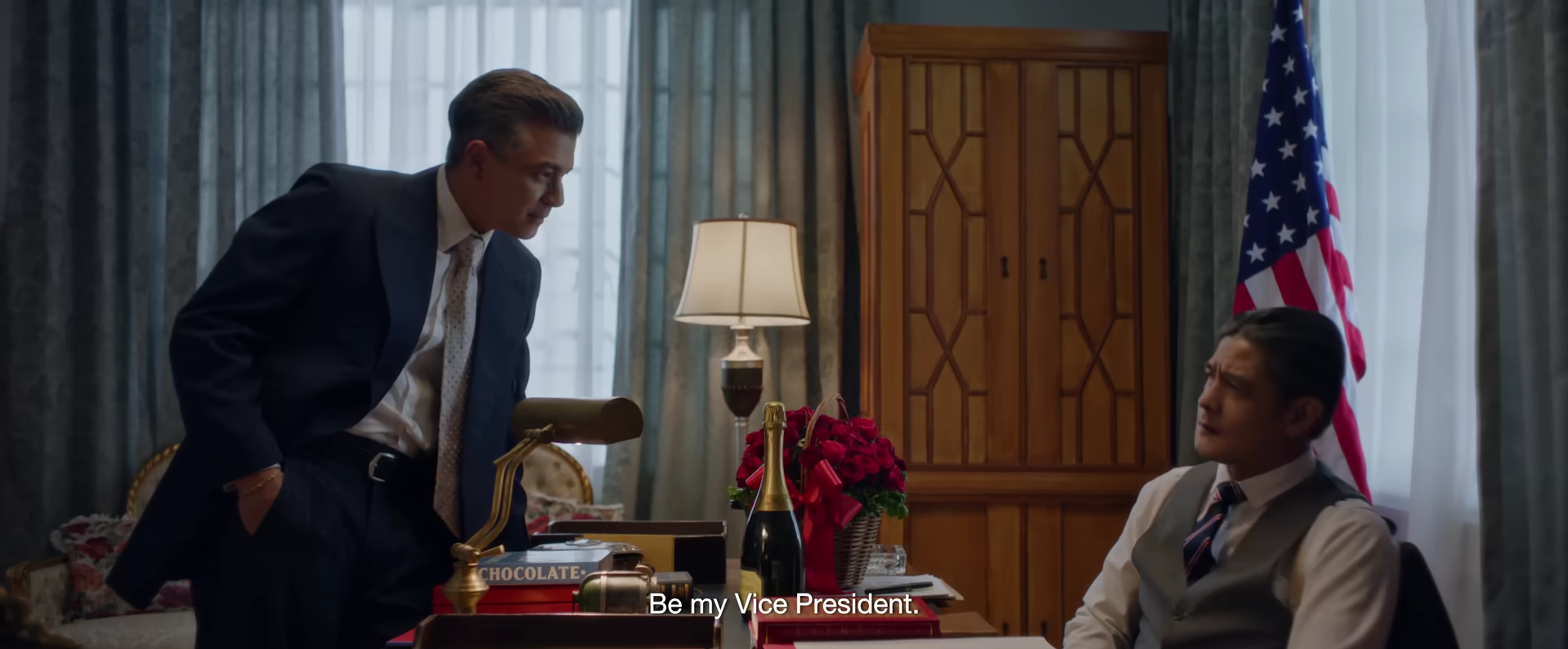
The film’s satirical aspect is apparent when it came to its presentation of Quezon and Sergio Osmena’s (Romnick Sarmenta) push-and-pull dynamic; from political rivals, to friends and eventually, to political tandems in the 1935 presidential elections. The comedic aspect of the film made it a point to outline the two leaders’ relationship. An instance would be their back-and-forth smear campaigns. While the scenes were packaged as a farce, the film is faithful enough to its historical storytelling, strengthening the audience pull.
Much of the film did not rely or lean on the auditory elements, but on the focused effort, production, acting and narrative. It is, agreeably, visually appealing; the color grading of the present-day Quezon in the film resembles one of a narrative that chooses to exaggerate luxury.
The usual muted tones in flashbacks, and the black-and-white filters whenever it pans out to Hernando ‘watching’ the ‘film’ reminds the audience of its film-within-a-film style. The lack of sound elements did not come as a weakness, as it allowed much of the actors’ abilities to shine.
What ultimately carried an already well-produced movie is Quezon’s star-studded cast. Rosales’ portrayal of Quezon is one where the character is constantly performing, which is exactly what the president was doing in the movie: playing a certain role as it benefits him or his situation. He can be a friend, an ally, or a fiery pursuant of Philippine independence; he can also be a manipulative, image conscious politician who is ready to resort to dubious means to achieve his aims. Meanwhile, Mon Confiado as Emilio Aguinaldo was solemn and upright, perhaps to paint the picture opposite to Quezon’s oozing charisma.
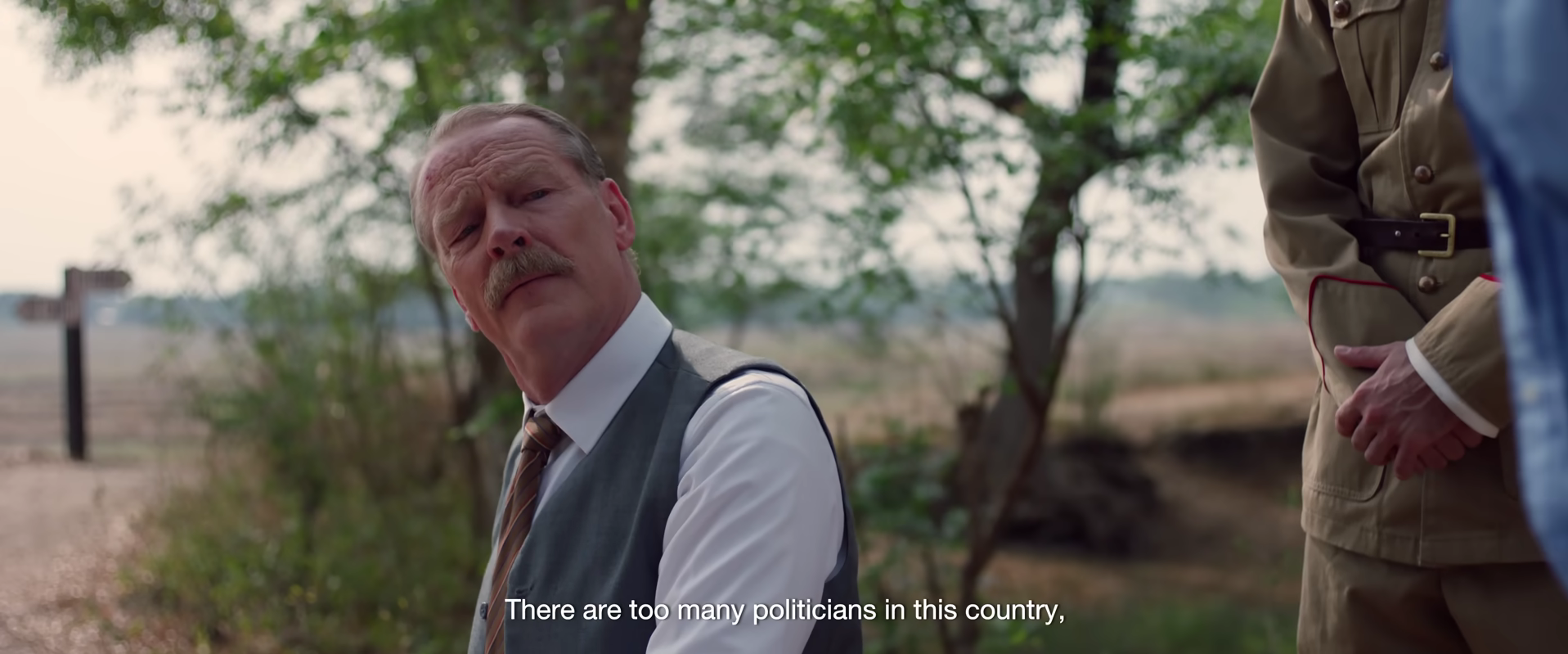
Notably, Game of Thrones star Iain Glen (who played Leonard Wood, governor-general of the Philippines at the time), made the movie more high-budget than it already appears to be, giving that Hollywood-esque vibe to the film through his portrayal of a stern and upright ‘Lenny.’ The rest of the supporting roles, such as Manuel Roxas (JC Santos) and Aurora Quezon (Karylle) were far from half-performing their characters.
While the film aims to demythologize political figures, it may have done the opposite with its narrative of the story of Emilio Aguinaldo, who was linked to the deaths of Philippine heroes Andrew Bonifacio and Antonio Luna. There was not much critical perspective given to his character, as he was simply portrayed as an old man who got coerced back into politics and a victim of Quezon’s maneuvers.
Depending on the audience, this could risk portraying him in a favorable light. The constant depiction of politicians as remorseful and weak still leaves little room for political idolatry. Though a risk, it is minor enough not to create any major controversies regarding the narration.
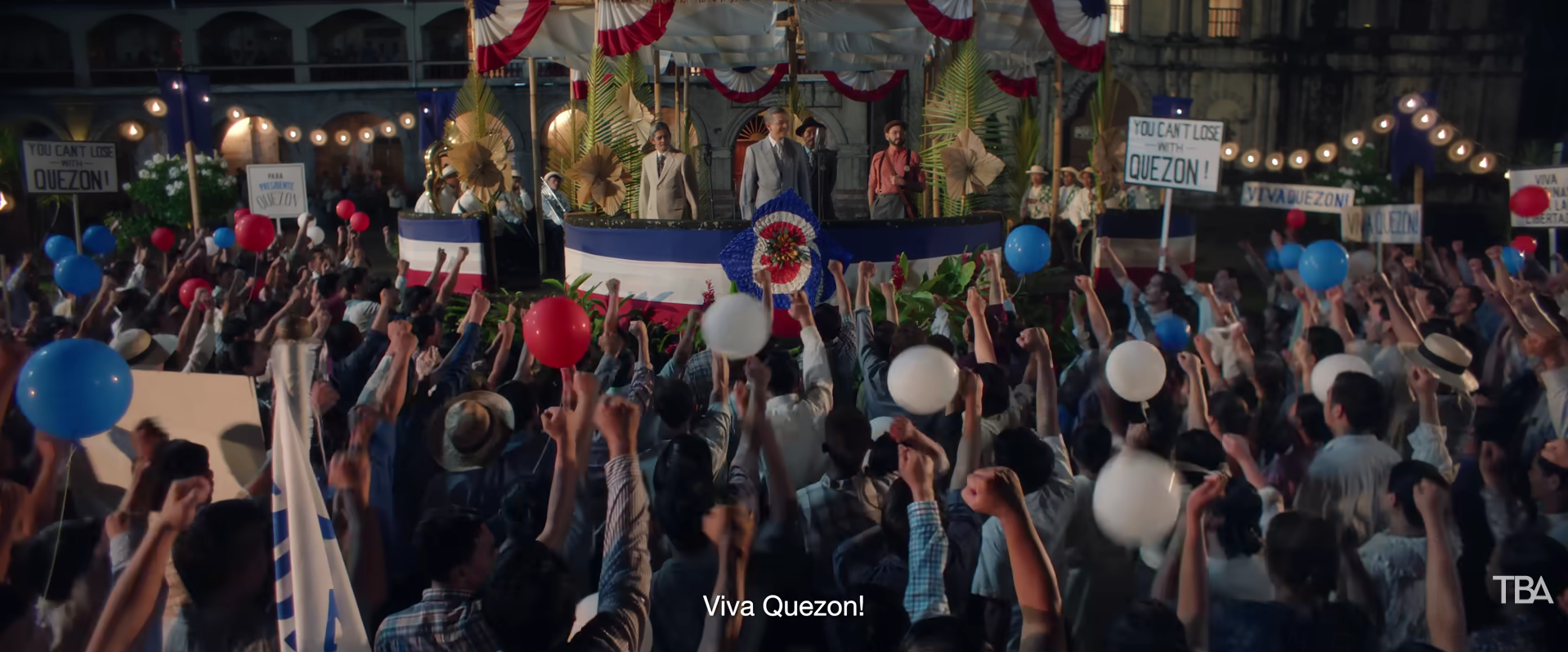
Still, Quezon is a must-watch film measured by its relevance in the Philippines’ current political landscape. The film intends to reveal what happens behind closed doors, reminding the audience that more often than not, everyone is a pawn in a game of men hungry for power.
Quezon, in its very core, is a film that presents itself as satirical, perhaps exposing the former president’s strategic approach in dominating Philippine politics. Did he really act in good-faith or was it all self-serving underneath?
One thing is clear, for Quezon. It was a game, and he did everything he could to win it. F