
HALF OF Filipinos expressed belief that President Ferdinand Marcos, Jr.’s administration is headed in the wrong direction after his fourth State of the Nation Address (SONA), according to a nationwide survey.
According to the results of the WR Numero 2025 Opinion Monitor, 50.4% of the respondents thought that the Marcos administration is on the wrong track while the remaining 49.6% said otherwise.
However, only 49% said they tuned in to the SONA delivered last July, while the remaining 51% disclosed that they did not watch it.
WR Numero’s poll, which asked 1,814 Filipinos about the President’s recent SONA and his administration’s performance, also suggested that 40% want the government to prioritize lowering the prices of food and basic needs.
It was followed by increasing workers’ wages (39%), fighting illegal drugs and combating poverty (29%), providing job and livelihood opportunities (28%), fighting corruption (23%).
Other issues mentioned were resolving the education crisis (16%), reducing taxes and government fees (16%), restoring government subsidies to the Philippine Health Insurance Corp. (14%) and strengthening the country’s justice system (8%).
During his fourth SONA on July 28, Marcos touted the country’s economic growth, infrastructure, and social programs and mentioned goals such as building 40,000 new classrooms, expanding the anti-hunger program to 750,000 families by 2027, and completing the construction of 200 power plants.
However, some sectors said these promises overlook persistent problems, saying the issues in education, flood control and corruption were not highlighted in the President’s address.
‘Alarming’ student performance
The Alliance of Concerned Teachers (ACT) partylist described as “alarming” the performance of Filipino students in international assessments, saying that these outcomes reflected deep-seated problems in funding, curriculum and teacher support.
The group branded the President’s speech as “palpak at pahirap” (failure and oppressive), citing the unresolved classroom shortages and what it described as inadequate salary hikes of educators.
“There will be no progress, and the education crisis will only worsen unless the shortages in classrooms, training and funding are urgently addressed,” the group said in a statement to The Flame.
ACT Teachers also accused the government of rolling out the ARAL Program without consulting teachers. The move forced teachers to create their own materials without government support, it added.
ARAL Program, a learning recovery initiative of the Department of Education, intends to provide remedial and enrichment sessions outside regular class hours to address students’ reading and mathematical competencies after the COVID-19 pandemic.
“At a time when they are already overworked, no adequate textbooks or workbooks were provided… so they had to manage on their own: buying, printing, photocopying, and binding materials, even making their own slide presentations,” ACT Teachers said.
Transparency sought
The ACT Teachers Partylist also raised concerns over the procurement of devices in the President’s plan to digitalize education, saying the government did not accomplish anything in its past computerization project.
Initiated during Vice President Sara Duterte’s term as education secretary, the project drew flak for its supposed failure to procure laptops or smart TVs despite fund allocations. The Commission on Audit also pointed out several issues involving the project, including chronic delays, unready schools and failed deliveries.
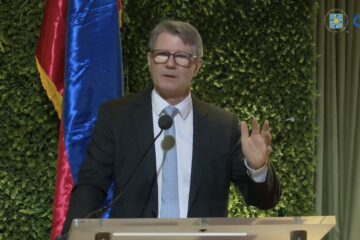
Council of Teachers and Staff of Colleges and Universities of the Philippines (CoTeSCUP) president Rene Luis Tadle called for transparency in implementing programs, saying this should have been addressed during the President’s speech.
“It’s not enough to roll out programs; we need transparency and accountability. Otherwise, these well-meaning efforts risk becoming another avenue for misuse of public funds.” the CoTeSCUP head told The Flame.
While digitalizing education is necessary for students to keep pace with technological advancements, Tadle said such efforts must go beyond distribution to include teacher support, equity and solutions to digital and literacy gaps.
“Gadgets help, but governance matters more. Real reform must go beyond distribution — it must include transparency, teacher support and a stronger commitment to equity across both public and private education,” he said.
Still ‘infrastructure-centric,’ discipline-dependent
Timothy James Cipriano, a geography professor from the Philippine Normal University, said while the President’s pledge to look into the supposed subpar and ghost flood control projects is a “critical” and “welcome” move, progress would only be seen through actions toward institutional reforms. He described the corruption in flood control projects as a “systemic problem in need of systemic reforms.”
“There should be an update on investigations…Because it’s easy to investigate, but in terms of addressing corruption, what are the institutional reforms that should be done after investigating or even auditing these projects?” Cipriano told The Flame.
He said the government’s flood control projects for the past years lack “non-structural elements,” describing the administration’s initiatives as “repetitive” and “performative.”
“Majority of our interventions, or even all of our interventions, are infrastructure-centric. When, in fact, it’s just regressing a particular type of flooding, or even a portion of the problem…The government must also explore nature-based solutions,” Cipriano said.
According to him, the infrastructure-centricity of the projects reflect poor understanding of flood management in the country as the problem ranges from massive land conversion, quarreling, pollution and the outdated drainage capacity in certain areas that is incapable of storing huge amounts of stormwater due to increased rainfall.
He added that the consecutive years of flooding experienced in the country, from typhoon “Karina” in 2024 to typhoons “Crising,” “Dante” and “Emong” this year, have proven that the government’s flood control efforts are ineffective and are largely “performative.”
Cipriano cited the need for the passage of the National Land Use Act, which seeks to create a national system for managing land use and physical planning and to provide a systematic way of addressing competing demands.
Corruption probe overdue
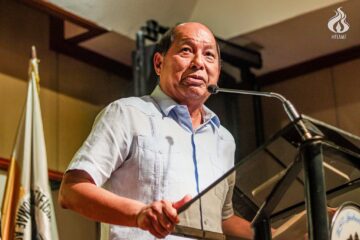
For political analyst Froilan Calilung, Marcos’ directive to conduct an investigation on the alleged corruption in flood control projects was overdue, given that disasters are a recurring and seasonal issue. He added that once the weather improves, government priorities and public attention may shift, only for the problem to resurface next season.
“He could and he should have, you know, requested for a list of this for a very long time already. I mean, months before the SONA, it should have been given to him or at least requested by him because the president needs to have access to information like this,” Caliliung told The Flame.
“But right now in the SONA, you’re just telling us that heads will roll. And we know for a fact that this problem with disaster, it’s a seasonal thing.”
In 2023, COA’s annual report flagged delays and deficiencies in flood control projects, including 3,047 locally funded projects translating to P131.57 billion in unused or misallocated funds under the public works department. The report cited inadequate planning, detailed engineering, supervision and monitoring as causes for non-implementation.
Calilung said fighting corruption has never been a strong priority for the Marcos administration, noting that one of the President’s first acts was to abolish the Presidential Anti-Corruption Commission (PACC) through Executive Order No. 1 in 2022. The PACC, formed under the Duterte administration, had been tasked with ensuring accountability of public officers and taking effective measures against graft and corruption in the public sector.
UST Department of Political Science Chair Dennis Coronacion said the administration must move beyond political messaging and begin resolving the urgent problems that have persisted through the President’s first three years in office.
“Maybe nothing is wrong if among corrupt political leaders, one of them would tell the others to change.. He (Marcos) should set the example,” Coronacion said.
Beyond recognizing these problems, Calilung said the administration must ensure that its programs would produce measurable improvements that. directly benefit marginalized communities.
“The challenge here will always be how these economic imperatives will be able to reach the marginalized. These are the people who are supposed to be feeling… the inclusivity of the government’s programs. If they’re not able to feel this, then there’s… a bit of disconnect,” he said. F — Titus Reaiah Dayrit, Mc Neil Zyh Serrano, Nicole Anne Bautista, Anna Asuncion and Alyanna Ysabel Sacramento