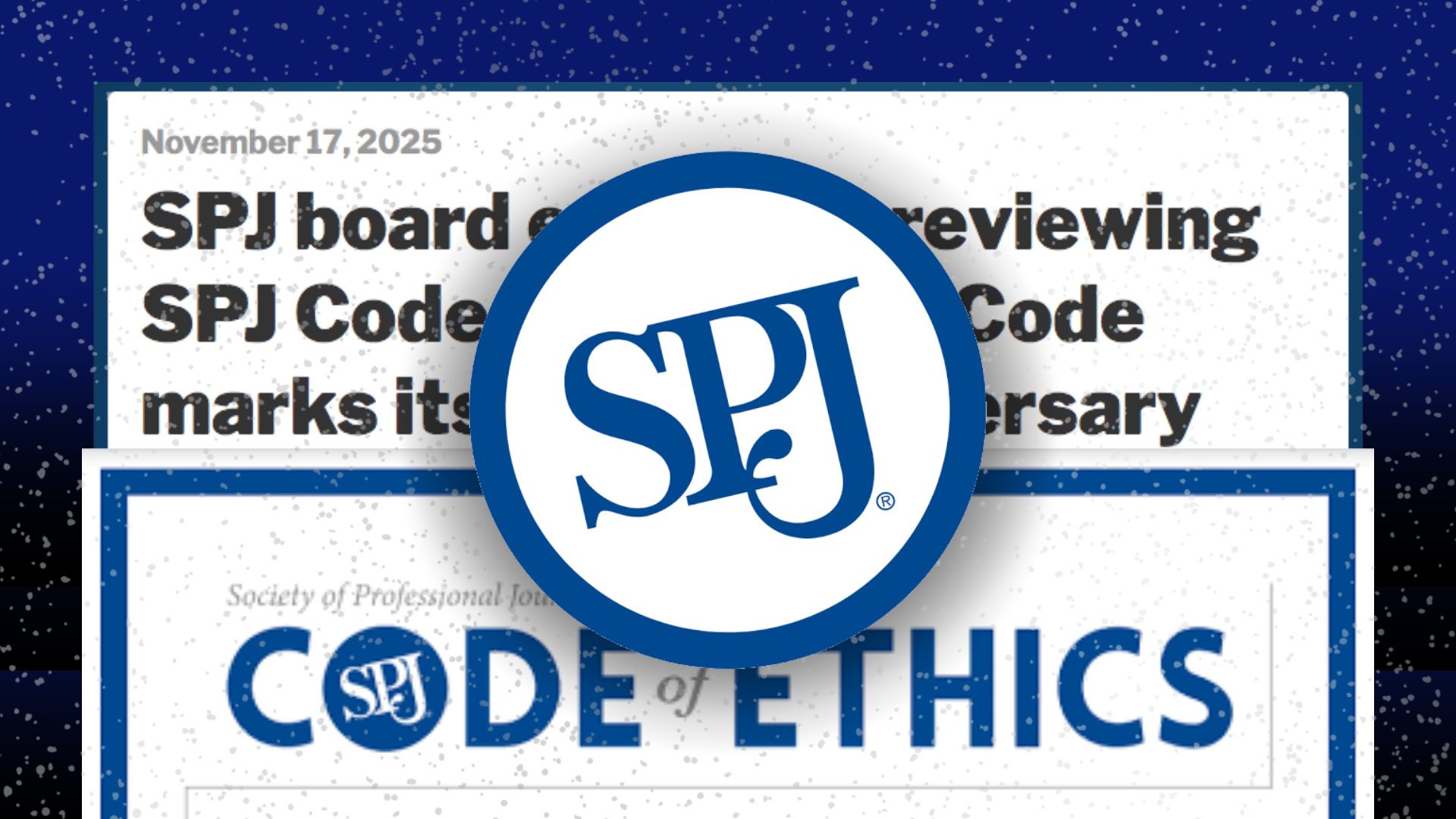
The Society of Professional Journalists (SPJ) has allowed the sixth round of reviews for its nearly century-old ethics code, which is among the most cited in the industry and a fundamental source in the UST Journalism department’s curriculum.
According to SPJ, its board of directors voted on Friday, Nov. 14, to enable its ethics committee to recommend changes to the code, which will be presented to the board for approval by the end of 2026, followed by a vote by the society’s members.
The upcoming review marks the sixth attempt to revise the code since SPJ first adopted the now-defunct American Society of News Editors’ Code of Ethics in 1926, with past revisions done in 1973, 1984, 1987, 1996 and 2014.
“For five generations, the SPJ Code has been the starting place for young adults seeking journalism careers to learn the minimum standards and aspirational expectations for journalism, and for the public to know what to expect from its journalists,” Chris Roberts, the ethics committee’s vice chair, said.
“As technology and society change with each generation, SPJ takes a fresh look at its code to ensure its values reflect the fundamental principles of ethical journalism,” he added.
The revisions will also include updates to the interactive online version of the code, incorporating links to other resources with supplementary guidance and ethics case studies.
The ethics committee will be comprised of leading media ethicists in the United States, seasoned journalists and academics, and current and former leaders of SPJ and other journalists’ organizations, including Investigative Reporters and Editors, Radio Television Digital News Association, National Association of Hispanic Journalists, National Association of Black Journalists and Association for Education in Journalism and Mass Communication.
Heading the committee as its chair and vice chair are former reporters Dan Axelrod and Roberts, who have a combined 32 years of experience in teaching media ethics in higher education.
The SPJ said the committee will gather feedback from special advisors, including Margaret Sullivan, executive director for the Craig Newmark Center for Journalism Ethics and Security at Columbia Journalism School, and Tom Rosenstiel, co-author of the media ethics book “Elements of Journalism.”
It will also consider suggestions from anyone who aims to improve the ethics code, in pursuit of a transparent and inclusive revision process.
“The SPJ Code of Ethics is the world’s most valuable tool for teaching and practicing ethical journalism. There is no ‘free press’ without a journalistic commitment to the ethical, accurate, timely collection and dissemination of a full and fair account of the day’s events,” SPJ national president Chris Vaccaro said.
“Some believe ‘media ethics’ are oxymoronic in an instant information age in which powerful sociopolitical, technological and financial forces too often obscure the truth, but ethical journalism remains a requisite for a free, self-governing citizenry,” Axelrod said.
Established in 1909, the SPJ is a US-based organization that aims to educate journalists on best ethical practices and professional standards, promote freedom of the press, and recognize the achievements of news organizations and practitioners through awards. F