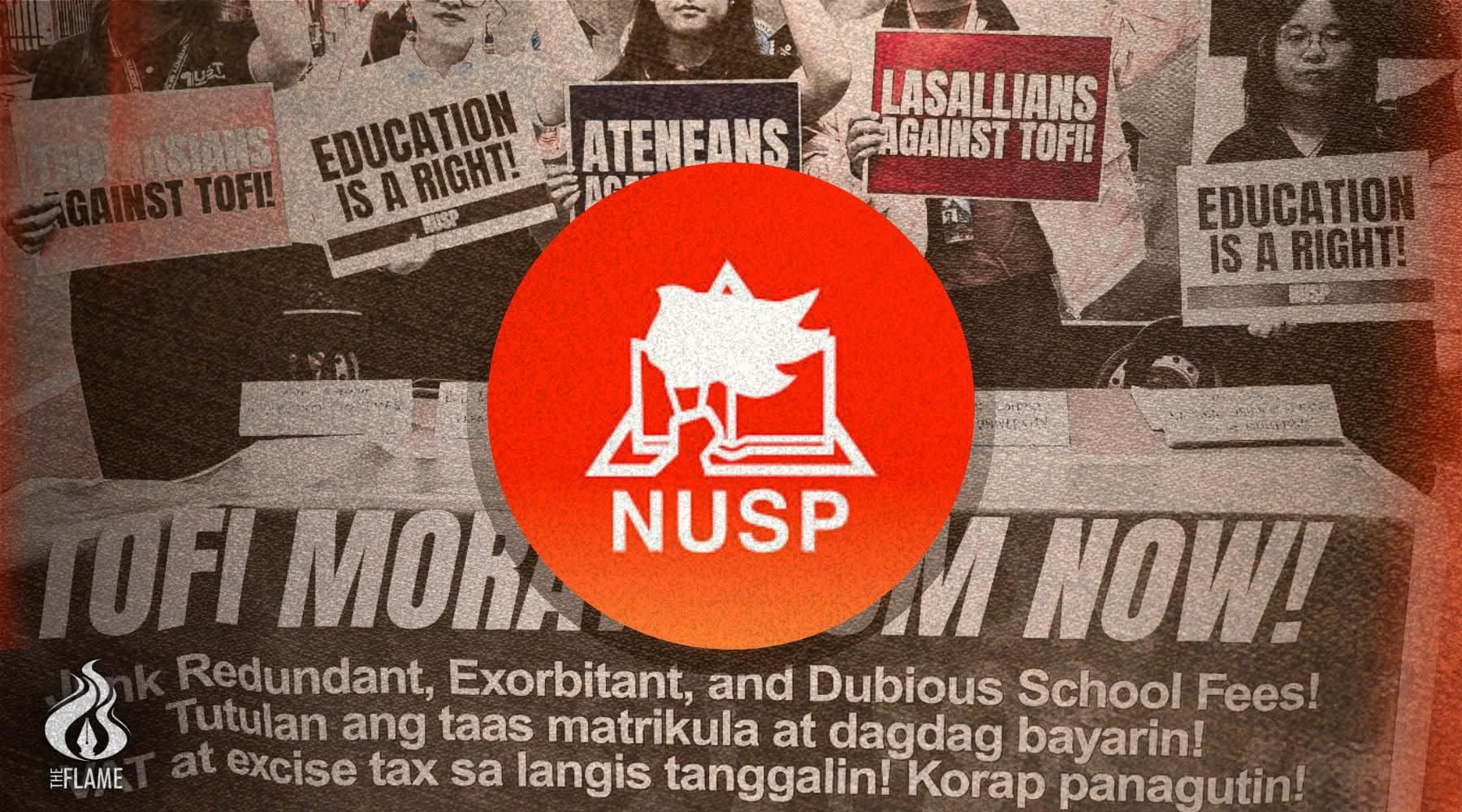
STUDENT COUNCILS from various universities have called on the Commission on Higher Education (CHED) to suspend tuition and other fee hikes for the next academic year, saying the additional costs would augment the financial burden brought about by the war in the Middle East.
In a recent position paper, the National Union of Students of the Philippines (NUSP) said the CHED can deny proposed tuition hikes from universities since it is constitutionally mandated to promote the right to quality and accessible education.
“We respectfully call on the CHED to implement a moratorium on tuition increases and abolish redundant, questionable, and excessive school fees. Education must remain accessible and affordable to all and should not be treated as a commodity for profit,” the NUSP said.
The NUSP added that higher educational institutions continue to propose tuition increases despite the “existing struggles of the Filipino youth.”
According to the group, 17 universities across the country, including Ateneo de Manila University (ADMU) and Mapúa University, have already proposed tuition and school fee hikes ranging from 2% to 10%. Such additional expenses add to the financial burden caused by the ongoing geopolitical conflict, it added.
In a press conference on Tuesday, April 7, at the CHED office, the NUSP and different student leaders, including Sean Capalar of the UST Central Student Council (CSC), reiterated their call for the moratorium.
UST CSC has no affiliation with the NUSP, according to a member of the council.
Also present during the press briefing were Kabataan partylist Rep. Renee Co and student leaders from UST, ADMU, De La Salle University, University of the East and Far Eastern University.
In the same position paper, the group emphasized that education must remain accessible despite worsening economic conditions.
While free tuition policies exist in state universities, these benefit only a limited portion of the population, as only 14% of higher education institutions are public, the student union said.
NUSP also noted that financial difficulty remains one of the primary reasons students drop out, citing data from the Second Congressional Commission on Education, which reported that 44% of students quit school to work while 20% do so due to financial struggles.
The rising costs of education “disproportionately affects” underprivileged students, NUSP said, as it warned that additional costs could force more students to juggle work and studies or drop out entirely.
Student leaders also sought stronger transparency measures from private universities through full disclosure of financial records and usage of previous tuition hikes.
“Private universities have often justified tuition fee increases by citing inflation, facility improvement, and higher compensation for faculty and personnel. However, students continue to suffer from outdated facilities, lack of laboratory equipment, and poor campus services despite paying higher fees every year,” the NUSP said.
“Students and parents or guardians deserve to know where their money goes, and if they go where they are meant to go,” it added.
The group cited CHED Memorandum No. 3 issued in 2012, which mandates schools to allocate 70% of tuition hikes to improvements for employee salaries and campus facilities and to conduct dialogue with students on proposed tuition increases.
“Should universities fail to prove this, CHED has the capacity to regulate and oppose proposed tuition fees increases,” the student union said.
NUSP claimed that schools often hold “token” consultations, during which proposals are “merely presented” to students, whose concerns are “not genuinely considered.”
“Such practices amount to a superficial or token form of consultation, often conducted only “for information” purposes regarding Tuition and Other Fees Increases (TOFI) and to demonstrate compliance with CHED requirements,” it said.
UST holds an autonomous and deregulated status from the CHED, giving it the leeway to set and adjust tuition and other school fees without prior government approval.
The University’s status, which also exempts it from regular CHED monitoring and evaluation, will last until September 2027.
Established in 1957, the NUSP is a nationwide alliance of student councils, unions and governments in the country. F