

ONE MAY picture the image of a class valedictorian as someone shrewd and straight-laced — one who strictly keeps his nose deep in textbooks.
Not Brandon Lance Capiña, who recently finished his Bachelor of Arts degree in Creative Writing with a 1.064 general weighted average (GWA).
Capiña, whose GWA is the highest among Faculty of Arts and Letters (AB) valedictorians in the past two years, is almost synonymous with glittering costumes and worn-out dance shoes, defying the school achiever stereotype as he strutted his way to academic greatness.
But before he would lead the entire graduating class of AB, the dancer was already rehearsing worst-case scenarios in his head.
“Paulit-ulit lang (It keeps repeating). [Academics], training, overthinking. [Academics], training, overthink,” he told The Flame.
With furrowed brows hanging over his glasses, the top student constantly worried about whether taking on more responsibilities would stretch him too thin. Commitments piled up alongside the pressure to excel. While the same drive propelled him forward, it also became a source of his anxiety.
Yet even when those fears were justified, Capiña kept showing up, be it on the dance floor, in the classroom and everywhere in between.
First steps
Growing up in the island province of Marinduque, Capiña was used to a life that moved at its own pace. There were no traffic lights, just a few convenience stores and devoid of the constant rush that defined city life.
The province’s sleepiness left room for curiosity. Throughout high school, Capiña tried different things, including ballroom dancing. He started to put on his dancing shoes in 2018.
When he was a ninth grade student in Marinduque State College Integrated High School, an intramural dance sports competition was looking for a pair to represent their respective classes in the Latin American category. Many of Capiña’s classmates were hesitant to join. Even for him, the prospect of facing higher year levels was intimidating.
But when one of his friends suggested they try, the invitation was difficult to refuse. Soon enough, the two found themselves standing on the dance floor.
“For some reason, kami ang nanalo kahit beginner lang talaga kami (we won despite being total beginners),” he said, a hint of disbelief in his voice.
The unexpected victory did more than pull Capiña to ballroom dancing. He believes it was also at the time when he began holding himself to higher standards.
“High school pa lang, mataas na expectations ko sa sarili (Ever since high school, I already have high expectations for myself),” he said.
As opportunities came, Capiña became increasingly driven to prove himself. Much of this drive, he admitted, stemmed from a need for validation.
“Ang mindset ko lang naman lagi is I need to do well sa lahat ng ginagawa ko kasi people pleaser ako na uhaw sa validation (My mindset is that I need to do well in everything I do, because I’m a people pleaser who is thirsty for validation),” he added.
The following year, Capiña competed in formation dance competitions across the island province to represent his school. Their training sessions were often held in places that could barely pass as dance studios for others.
The team practiced wherever space was available: on the stage at the quadrangle, in the covered court or even in open areas outside the junior high school classrooms. Without mirrors to properly review formations, the team often relied on recorded videos to see whether their blockings were working.
“ ‘Pag nagti-training kami, sobrang init, and then ‘yung floor hindi siya smooth, so talagang nagagasgas ‘yung sapatos mo,” he said.
(Whenever we trained, it was so hot, and then the floor was not smooth, so your shoes would definitely get scratched.)
Sometimes, training would stretch late into the evening. With few vehicles traversing the road at night, dancers occasionally stayed over at one another’s homes before heading back the next day for a class.
In his first two years as a budding competitor in ballroom dancing, Capiña earned himself two different medals.
But things unexpectedly came to a halt.
“Biglang nag-pandemic kaya natigil [ang pagsasayaw],” he said.
(The pandemic came, so we stopped dancing.)
Since the dance sport that relied on close physical contact and group practices, ballroom dancing was among the activities disrupted by lockdown restrictions.
Reverse turn
Around the time Capiña was entering senior high school, life began to follow a different rhythm.
When he pursued the Science, Technology, Engineering and Mathematics strand, instead of rehearsing routines, he spent his days memorizing formulas and scientific concepts.
“Nawalan ako ng ganang mag-aral (I lost the motivation to study),” he admitted.
To regain his drive, Capiña pirouetted and chose a college degree far from the sciences.
After his old teacher recognized his potential as a writer in a school reflection paper he wrote, Capiña decided to take his chance at writing. Around that time, he also began cultivating an interest in books as he scrolled through BookTok, an online book community in Tiktok.
“Gusto ko lang talagang i-express ‘yung mga hinanakit na nararamdaman ko ng mga panahon na ‘yon. Naisip ko na magagawa ko ‘yan sa pagsusulat,” Capiña said.
(I just really wanted to express what I was feeling during that time. I thought that I could do that through writing.)
In 2022, he pursued Creative Writing in UST. Little did he know, his time in the University would help him reunite with an old passion.
During his second year in 2023, he took up social dance for his Physical Activity Towards Health and Fitness (PATH-Fit) course.
It was then when he first heard about Ola Bayle, an annual dance competition organized by the Institute of Physical Education and Athletics (IPEA). His course instructor at the time was offering final exam exemptions to those who would participate.
Encouraged by a friend, Capiña joined the competition and began training, thinking little of it at first. Soon enough, he and his partner found themselves in the final round.
For the first time since the pandemic, Capiña was counting beats before an audience. The groove and the movements he had left behind for years returned like lyrics to a song he had not heard in a long time.
“Dahil nami-miss ko nang sumayaw, [naisip ko], ‘What if sumali ako dito sa Sinag?’ (Because I missed dancing, I thought, What if I joined Sinag?)” Capiña said, referring to the Sinag Ballroom Dance Company, the University’s official ballroom dance troupe.
By his third year, Capiña joined the tryout and became an official member, specializing in Latin dance.

One of the biggest crowds Capiña performed for was during the opening ceremony for the University Athletic Association of the Philippines Season 88, which drew thousands of spectators.
“Ibang level ng satisfaction ang dala no’n (It brought a different level of satisfaction),” he said.
Kicks and flicks
Compared to the provincial competitions that taught him how to love dancing, Sinag would teach him what it meant to stay committed to it.
Training would always start at 6 p.m. and took place three times a week. By then, Capiña was already moving from one commitment to another — attending classes in the morning, tending to organizational work in between, before ending his days in rehearsal halls late into the night.
To save time, Capiña carried his training clothes and dance shoes with him throughout the day. Arriving straight from class, he often found that drills had already begun. He would just slip into the routine already in motion without catching his breath.
On some afternoons, he stood in front of younger dancers, demonstrating routines they had yet to master. He would stay after practice to answer questions or help teammates polish a difficult sequence.
“Siya ang pinakamadaling lapitan. If need mag-step up for the team, always willing to help siya,” Kim Punzalan, Capiña’s “Sinag best friend” who also graduated the same year, said of the valedictorian.
(He’s the most approachable member. If someone has to step up for the team, he is always willing to help.)
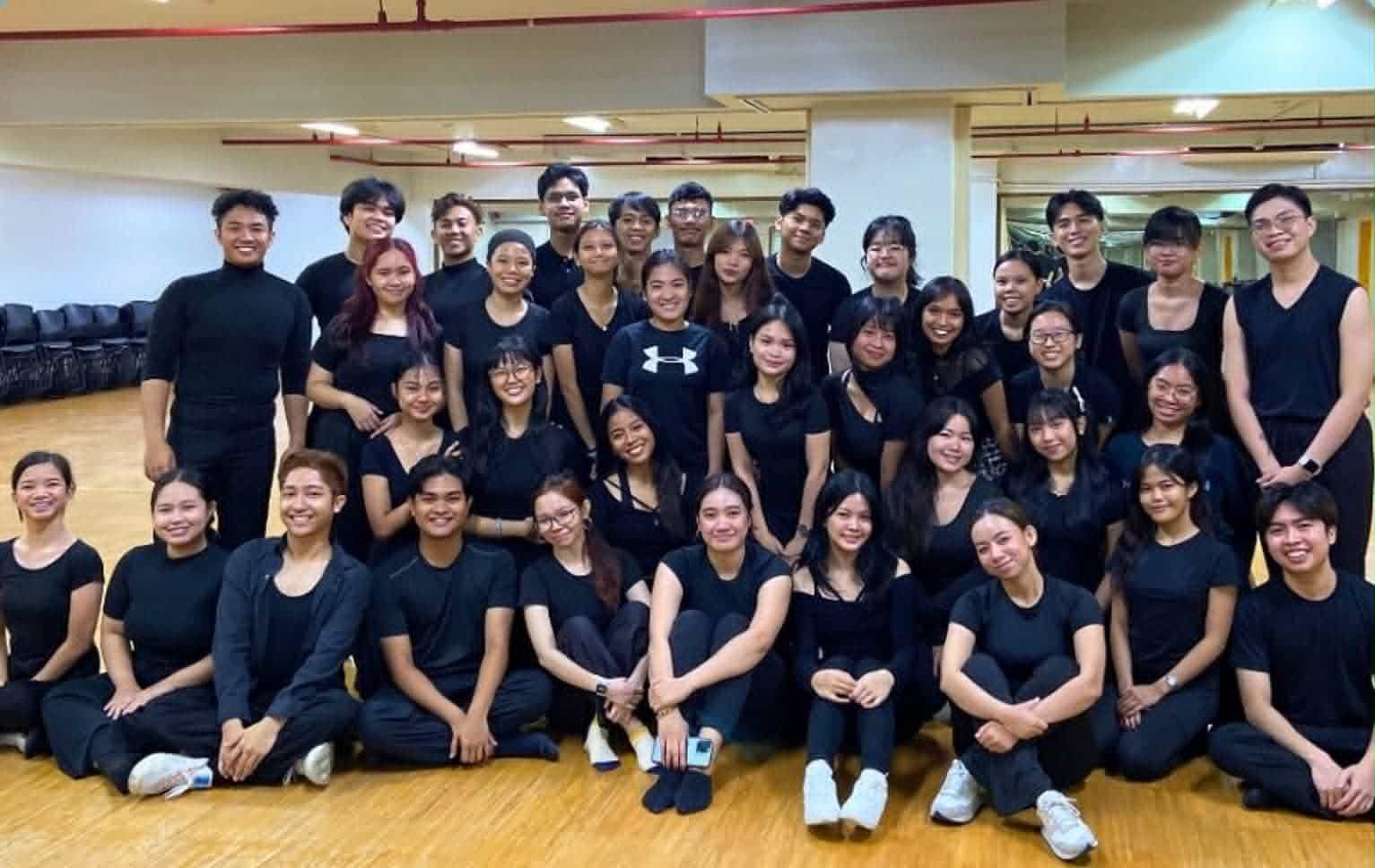
With training ending by 9 p.m., Capiña’s shirt was always damp with sweat. His legs were sore from hours of rehearsing the same routines over and over again.
But after arriving at his dorm in Dapitan Street, his day would be far from over. He still had to push through a few pages of readings for next day’s class.
On top of academics, Capiña had student council work to deal with. When four vacancies left the MaKatha Circle (MKC), the student governing body for Creative Writing majors, short of officers, he was among the few to take on a position. He served as interim treasurer during the second term of the academic year 2023–2024.
Alongside blockmate Rosemarie Uy, Capiña helped craft a financial manual to help future officers document transactions despite his little experience in finance.
“[Capiña] helped me realize that we needed to step up and do the most as long as we held the interim positions. And we did,” Uy told The Flame.
This diligence carried over to his thesis on Marinduque’s literature. His thesis adviser, Kisha Abuda from the Department of Creative Writing, revealed he would spam her with updates on his progress, sometimes faster than she could respond.
“Medyo mahirap nga no’ng nakaraan kasi update siya nang update. Ako medyo busy ako, so hindi ako nakakapag-reply agad sa kaniya (It was a bit difficult in the past because he was updating after updating. I was a bit busy, so I couldn’t reply to him right away),” Abuda said.
“[But] I think that’s a good problem for any adviser to have.”
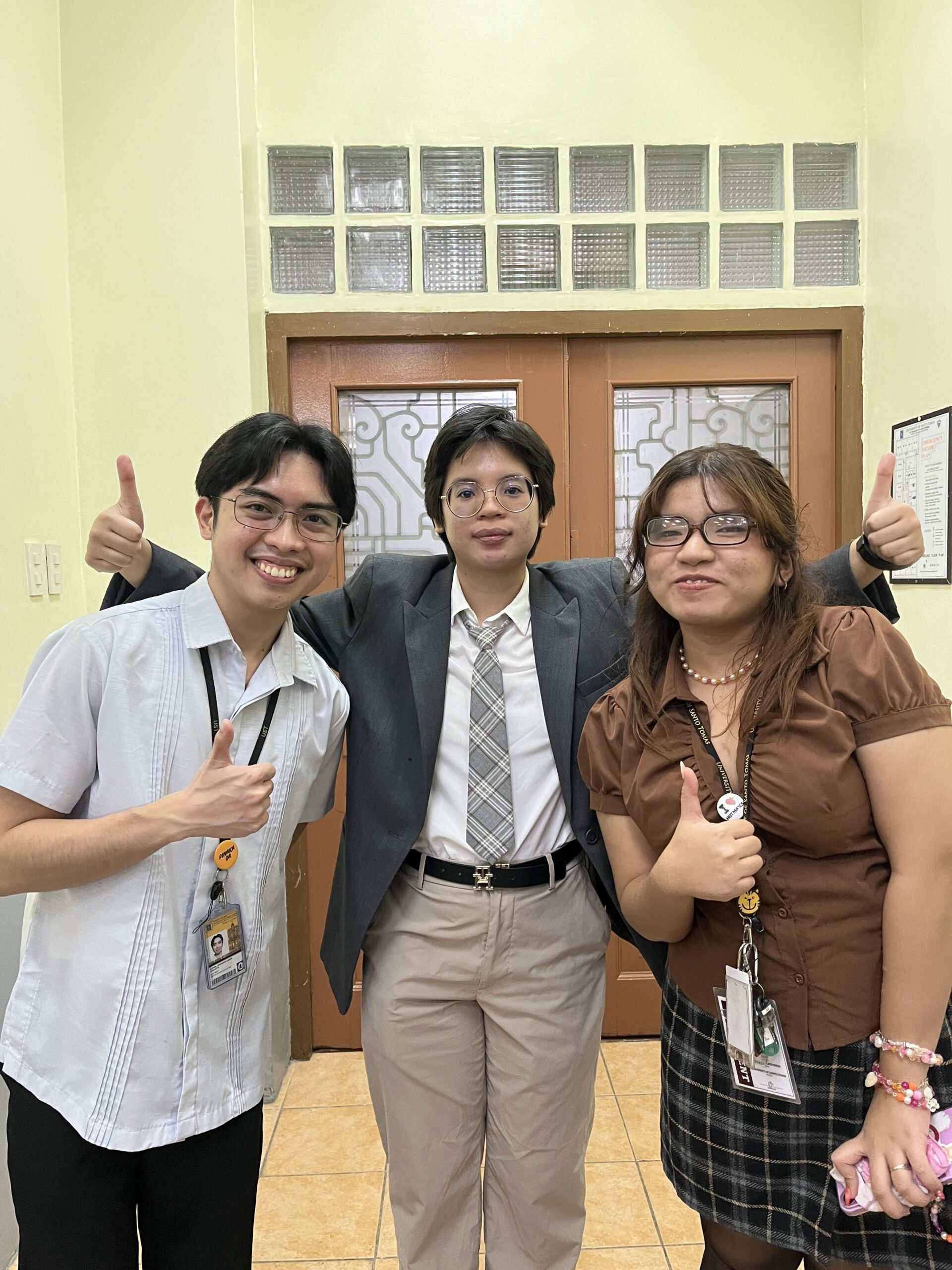
His best friend, Steven Laranjo, fellow Creative Writing graduate, called themselves “cramming buddies,” for they often messaged each other late in the evening when chasing a deadline. Even when both of their tasks were done, the night stretched longer for Capiña who still has to catch up with his own work.
“ ‘Ba’t gising ka pa? Magpahinga ka na lang (Why are you still awake? Just rest),’ ” Laranjo once told Capiña through online messaging at 1 a.m.
“ ‘May kailangan pa akong i-submit na ganito. Kailangan kong tapusin ‘tong ganiyan (I have to submit this. I have to finish that),’ ” Laranjo recalled him replying.
Keeping the pace
As course requirements became more difficult with each passing school year, fusing academics and extracurriculars became harder to keep in step.
Capiña remembers one stressful time during his senior year. It was for the troupe’s performance during Paskuhan 2025, one of the University’s biggest events. By then, he was racing through his program’s final requirements while attending rehearsals.
Once their set was over for the year-end celebration, Capiña could not even pause to breathe in the glory of a successful number, as a half-finished Current Trends in World Literature exam, due the very next day, begged for his immediate attention.
Instead of staying for the festivities, Capiña met with some of his blockmates, said his goodbyes and headed home.
“Pagkauwi ko no’n, kumain lang ako, nagpalit ng damit, tapos diretso laptop na,” he recalled.
“Antok na antok ako. Pinilit ko na lang para matapos na.”
(When I went home then, I just ate, changed clothes, then went straight to my laptop. I was so sleepy. I just forced myself to finish the work.)
Even though ballroom was a passion of his, being a dancer also meant learning to deal with frustration while navigating self-imposed pressures. Every breakthrough came moments of stagnation, leaving him to wonder whether he was improving at all.
“Part ang dancing sa insecurities ko,” Capiña said. “Feel ko noon ‘di ako nagi-improve. It felt like wala naman akong choice but to step up kapag kailangan.”
(Dancing became one of my insecurities. It felt like I’m not progressing. It felt like I didn’t have a choice but to step up because it’s needed).
In 2025, Capiña once again tried his hand at Ola Bayle, believing he had a strong chance of winning. He attended training sessions religiously, sometimes even delaying his trips home just to practice. The competition, however, ended with him placing fifth. Thoughts of not being enough began echoing in his mind.
“ ‘Yung mindset ko kasi is ang galing-galing kong sumayaw, tapos na-humble lang ako. After all of that effort, wala pa rin,” he said.
(My mindset was I thought I was good enough, but then I just got humbled. After all that effort, I got nothing.)
Staying afloat
Capiña, however, rarely wore his burdens on his sleeves. Once he enters the studio or walks into the classroom, it is always straight to the task with no telling of what he was carrying beyond the doors.
“Hindi mo mapapansin na may mga readings or pendings pa siya. Pagdating niya [sa studio], sasabay siya sa drills or diretso help siya with turo sa ibang members,” Punzalan said.
(You would not notice if he had readings or pendings. When he arrives in the studio, he goes straight into the drills or he would help teach the other members.)
Once he takes off the dancing attire, his grace onstage switches off to afternoons spent staring blankly at a laptop screen inside his dorm. Many of his mornings began with dread. To escape it, he often disappeared into hours of scrolling on his phone or watching YouTube, rarely finding a reason to leave his unit.
“Pagkagising ko pa lang no’n, gusto ko na agad matulog kasi ayaw ko nang pagdaanan araw ko… Ang pinakamahirap lang talaga gawin no’n is maging masaya,” he said.
(When I would wake up, I immediately wanted to go back to bed because I didn’t want to go through the day… The hardest thing to do back then was to be happy.)
His self-loathing ran so deep that Capiña became fixated on changing his appearance, even shaving his head in hopes of becoming someone he could finally accept.
With his high expectations leaving him gasping for air, his negative emotions even manifested in extremes.
Whenever he traveled from Manila to Marinduque, the sea always greeted him as he would have to ride a boat to reach the island province. Aboard the ferry, there would be very little to do aside from staring at the water. The waves crawled against the vessel with every crash, only to recede to the deep blue, as if reaching out to Capiña.
“Gusto ko lunurin sarili ko that time dahil hate na hate ko ‘yung sarili ko n’on (I wanted to drown myself around that time because I hated myself so much),” he said.
But no matter how often the sea beckoned, Capiña still held on, moving through the currents of daily life despite the downward pulls. He sought out ways to keep himself afloat before he could be completely swept away.
One of them came in the form of paper boats.
In 2025, there was an academic requirement for their Art Appreciation course where they had to create an exhibit. Given the freedom to tell their own stories through their work, Capiña decided to make his art deeply personal.
“My mental health was so bad around that time, and I thought I needed a distraction,” he said.
One day, while scrolling through YouTube, he stumbled upon an origami tutorial for a paper boat. Curious, he followed along meticulously, paying close attention to every fold and crease as a plain sheet of paper slowly transformed beneath his hands.
“I ended up enjoying it,” he said.
That prototype would be the first of thousands. For his art work, Capiña transformed years of old receipts into 1,070 paper boats, representing the 1,070 weeks he had lived so far. Receipts from late-night meals, grocery runs and clothes bought on impulse were folded into tiny vessels.
He began making them one by one, a process he described as therapeutic, and placed them inside a plastic container. Watching the container slowly fill up, he realized that he had come farther than he thought.
“Gusto ko lang talaga siyang gawing reminder sa sarili ko na malayo na yung narating ko, na masyado na akong maraming weeks na naipon para lang sayangin dahil sa mental health ko sa panahon na ‘yun,” he said.
(I wanted to make it a reminder to myself that I came so far, that I lived so many weeks, too much to lose just because of my mental health at that time.)
‘Small things’
Beyond the paper boats, Capiña kept finding more sources of buoyancy in his life.
With Sinag, Capiña first feared that dancing would pull him down. But the dance floor instead became the place where he learned to trust himself and, occasionally, step away from the pressure of constantly performing.
Whenever writing left him staring at the same page for hours, dancing offered a different kind of challenge. Instead of chasing fresh ideas to put on the page, he chased the timing of his steps. The exhaustion morphed into something more physical than mental.
Training also gave him people to vent to, laugh with and spend time around after long academic weeks. Some nights ended with late dinners with teammates along Padre Noval or Dapitan Street.
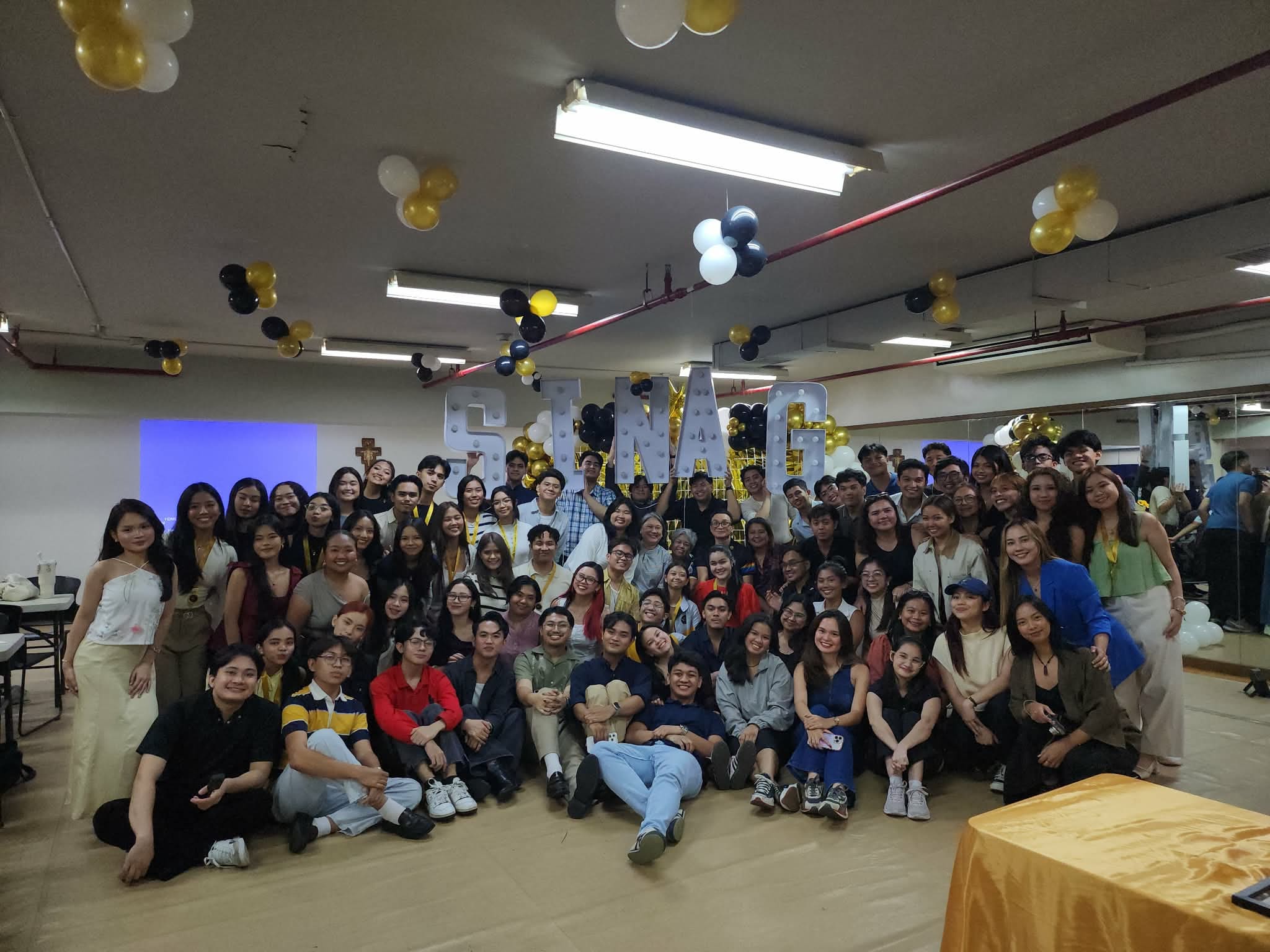
“Kapag kaya ng schedule, kumakain kami after training, and nakakawala siya ng stress. Do’n ko rin nararamdaman na hindi lang naman puro trabaho ang buhay,” he said.
(When my schedule allows it, we eat after training, and it releases stress. It helps me feel like life is not just about work.)
When it comes to his block in Creative Writing, blockmate Lauren Tagle regards him as “one of the funniest people” she knows.
“May tendency siya (He has the tendency) to prank us here and there,” she said.
Another memorable thing Capiña did was when his circle of friends stayed behind after an early dismissal in October 2024, where the photobooth on Tagle’s Macbook ended up capturing cute poses of the group.
That night, Capiña made a group chat just to thank them, saying he did not want to send the same long message one by one.
“Just want to say thank you, guys, for our silly photoshoot earlier. It was so fun, and it reminded me that life is still worth living because, hey, small things like that do exist [or] happen,” Capiña said in his message.
One night when, instead of heading home, several of their blockmates decided to stay together on campus. As daylight faded over the Quadricentennial Square, they spread out their readings, reviewed for class and worked through whatever requirements remained unfinished.
Hours slipped by between pages and conversations, often lasting until the campus’ final Angelus prayer echoed across the square above the steady rush of the fountains. They had stayed because they enjoyed each other’s company.
“We’ll always try everyday to find even very tiny reasons to stay afloat. We keep each other afloat in those ways. I’m really proud of him for holding on,” Laranjo said.
The final act
Capiña learned of his title as AB valedictorian mid-work-out at the gym. After reading the email from the dean’s office, he could barely contain his emotions.
“Nanginig talaga ako. Para akong tanga doon sa gym, na parang may nakuha akong good news,” he said. “Well, good news naman talaga.”
(I was really shaking. I looked like a fool in the gym, as if I received good news. Well, it really was good news.)
Laranjo had always recognized Capiña’s potential as early as their freshman year through the discipline he brought even outside the dance hall.
“I really saw him as a contender for valedictorian. Brandon’s notes are so concise, like he really gets the whole lesson,” Laranjo said.
According to him, his best friend was usually armed with a refillable notebook scribbled with a handful of keywords, brief quotations and simple connections between concepts that could capture entire lessons in just a few lines.
The day of June 8 came by quickly. A sea of black and blue spread throughout the Quadricentennial Pavilion. Capiña went up the stage, standing before a crowd. Instead of wearing a costume from mesh or velvet, he wore the AB toga. The gold medal hanging from his neck was the only thing that glittered.
“Sa naging four-year journey ko, marami-rami naman akong nakamit. Gayunpaman, napagtanto kong aalis akong masaya, hindi dahil marami akong naging panalo, kundi dahil mas marami akong nakilala,” he said in his address of thanks.
(In my four-year journey, I achieved many things. Nonetheless, I realize that I will leave happy, not because I had many victories, but because I made many friends.)
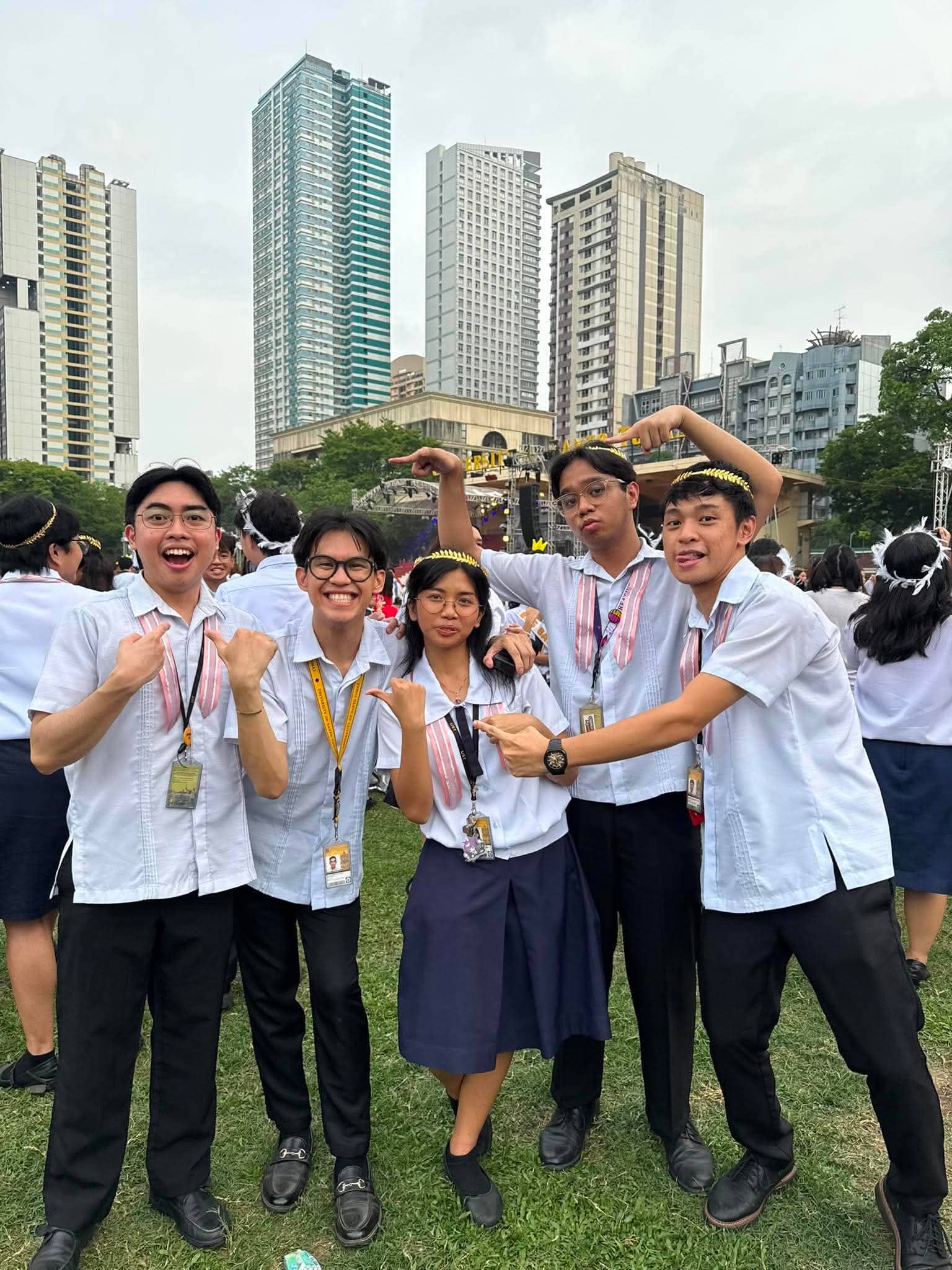
No title could have offered Capiña greater validation than being named valedictorian, but he denied this distinction.
For him, it was never about reaching the top. It was about the crowded practice rooms, late-night conversations and the comfort of knowing he never had to dance through it all alone. Among the seated graduates, Capiña’s companions listened intently.
“Hindi ‘yong mismong achievement ‘yong special, eh. Sila, sila na hindi ako iniwan sa bawat hakbang, na kahit kailan ay hindi nawalan ng tiwala sa ‘kin. Isang malaking karangalan ang pagdaanan ang buhay nang may kasama,” he said.
(It’s not the achievement itself that’s special. It’s them — those who never left me at every step, who never lost faith in me. It’s a great honor to go through life with someone.)
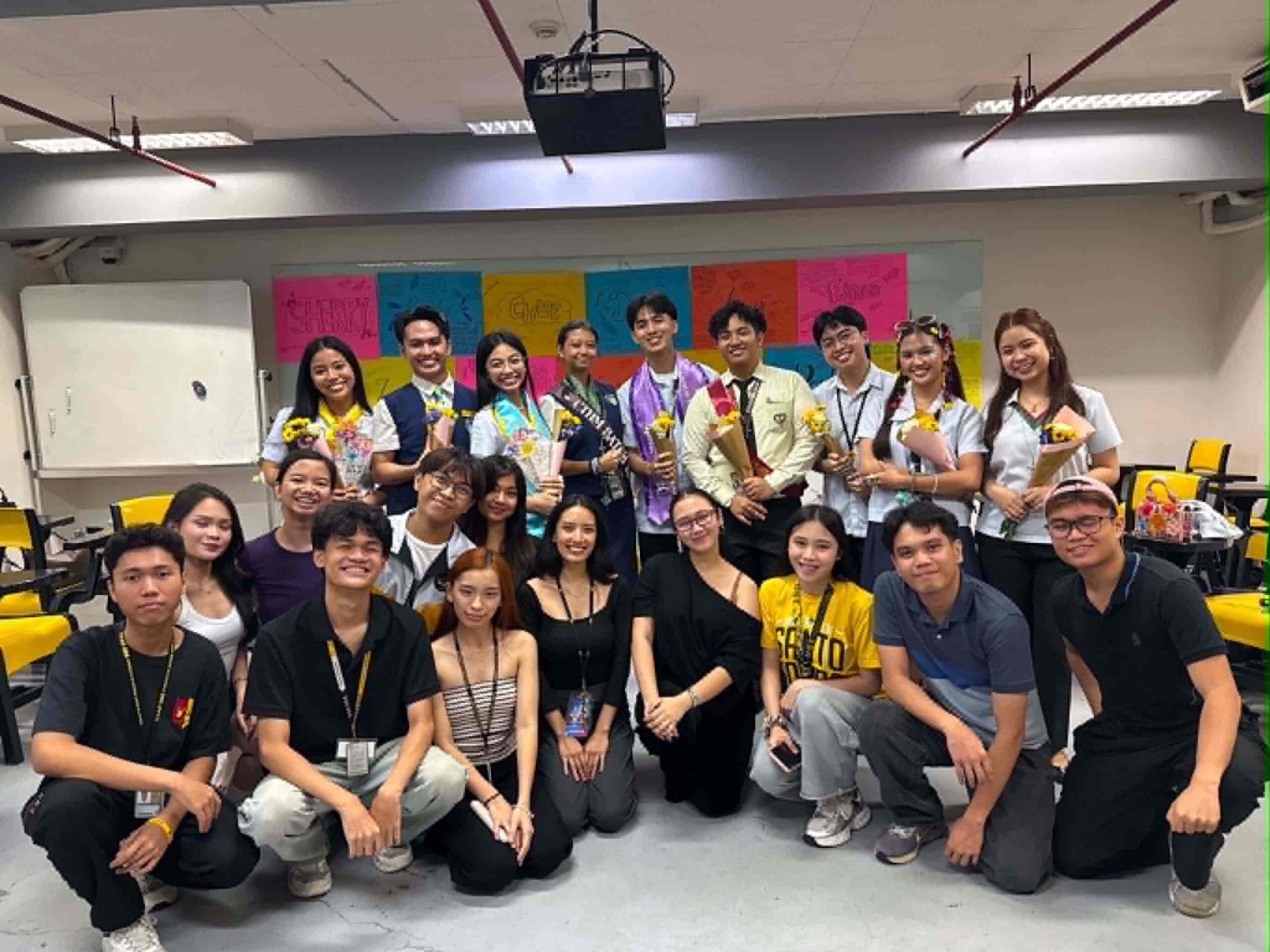
As of now, there are no detailed plans or carefully mapped-out future waiting for Capiña after graduation. First things first: he plans to celebrate with family, share a few drinks with friends and return home to Marinduque for the time being.
He chooses to take the pause in stride, trusting that, as in dance, the next step will reveal itself in time with the hopes of exploring other career possibilities while searching for what he calls his true “calling.”
“I want to find a stable job that can provide for me and help me give back to my family and everyone who has supported me, so I can live a peaceful and happy life,” he said. F