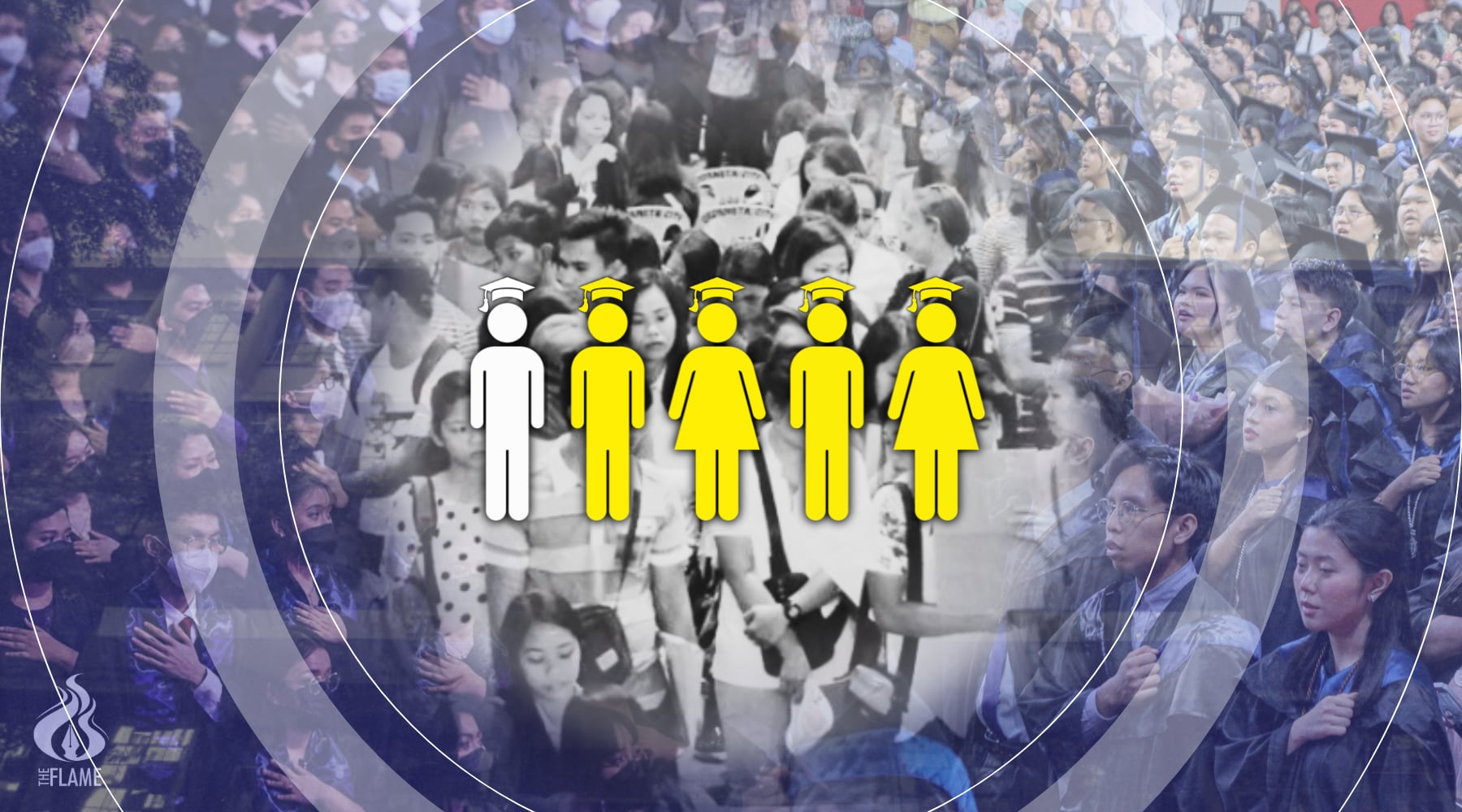
MORE THAN a third of Artlets alumni respondents of a graduate tracer study reported being unemployed or pursuing another academic endeavor from 2022 to 2024.
A Thomasian Graduate tracer study (TGTS) survey data obtained by The Flame showed that of the 742 respondents from the classes of 2022 to 2024, 138 or about one in five Artlets alumni reported having no jobs.
The study also found 188 respondents saying that they are pursuing another academic undertaking, including post-graduate education and licensure exam preparations.
Overall, 326 responders or more than a third of the study participants reported being jobless or embarking on educational pursuits.
The survey depends on voluntary and self-updated responses, which may not represent the current employment status of graduates.
The percentage of respondents who reported having no jobs increased, from about 5% in Class of 2022 (12 out of 237) to almost 20% in Class of 2023 (51 out of 257) and 30% in Class of 2024 (75 out of 248).
According to AB Assistant Dean Assoc. Prof. John Manuel Kliatchko, the figures may reflect shifting post-graduation priorities rather than a straightforward lack of jobs.
“Right now, finding jobs might not be the definite thing graduates want to do after school,” Kliatchko told The Flame.
“Some of them also take gap years… not because they cannot find a job, but because they want to rest for a while,” he added.
Seeking other options
The survey data showed that there is an increase in graduates who pursued other paths after finishing college from 2022 to 2024.
The percentage of respondents who reported these activities rose from more than 16% (40 out of 237) in the Class of 2022, to over 28% (74 out of 257) in the Class of 2023 to almost 30% in the Class of 2024 (74 out of 248).
Kliatchko said some Artlets graduates increasingly view further studies as a way to strengthen their credentials and competencies.
“On a bachelor’s level, it is sufficient in the sense that CHED (Commission on Higher Education) requires certain competencies. But the demands are increasing further. Graduates themselves are the ones really considering that they still need more than what is foundational,” the assistant dean added.
Faster job hunting
Recent Artlets graduates have found jobs faster compared to those who earned their bachelor degrees before the pandemic, specifically from 2014 to 2018, according to Kliatchko.
Of the 270 survey respondents from the Class of 2022 to 2024 who answered the employment timeline question, 229 or nearly 85% said they secured jobs within six months after graduation.
Kliatchko said graduates’ motivation and readiness to enter the workforce remain major factors in how quickly they secure jobs. He also attributed the quicker hiring timeline to improved job preparedness, familiarity with digital recruitment platforms, mock interviews and networking opportunities.
The AB assistant dean added that the introduction of electives in 2018 allowed departments to respond more quickly to shifting industry demands by offering additional courses without overhauling entire curricula.
“I think the number of students being hired in less than three months is a good indication that graduates are hired immediately. Of course, that does not say they were hired for the right job, but [instead] it means our graduates are also competitive,” he said.
To further support students, AB is looking at recalibrating its curriculum and internship programs and integrating teaching-learning activities and virtual learning. The measures seek to enable students to further develop their interpersonal, cognitive and adaptive skills, which Kliatchko said is being sought after by employers.
“Our logic here is we should be able to change it (subjects) because we want the graduates to be more capable of adapting to what industry would demand,” he added.
The TGTS survey allows Thomasian alumni to encode their data when they apply for an alumni card, which is available six months after graduation, or when they enter the University for postgraduate studies. The encoding of data remains voluntary and can be updated by alumni through monthly email blasts sent by the Office of Alumni Relations. F — Dave Justine Desilos and Tessa Gia Lapig


