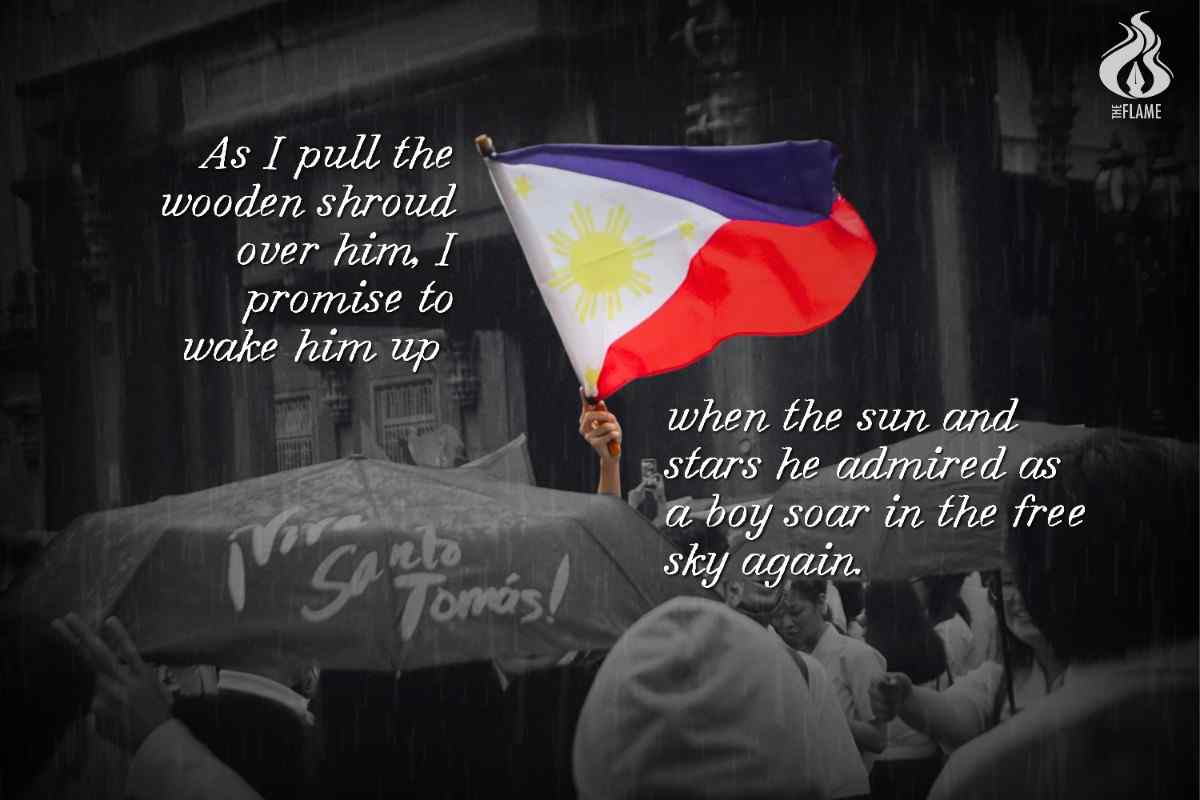
WHEN I asked my friend his age, he revealed it was as young as our independence. He told me that he had seen the sun and three stars when it was first hoisted up among the clouds.
That day signaled freedom for his brothers, but for him, those yellow threads became his only semblance of daylight.
Despite our years of friendship, he refused to disclose his life. When I inquired how he went on for years, he said “like everyone else.”
It was bloodshed that ended and later gave back his life. Violence sentenced him to the curse of brutality, a power he could easily inflict. Anyone else would have used that advantage.
Yet it did not change him—nor did he use his powers to persuade. Not once did he use it to swindle or to spellbind his way to a life of opulence or comfort.
“You could’ve been filthy rich,” I said once.
He simply replied, “No human should be.”
Instead, he toiled around his farm despite the afternoon heat pricking his skin, a small sacrifice for the life he chose over luxury.
He ate the meat from his own livestock against the revolt of his desire for true flesh. Unlike the rest, he’d rather his livelihood sink than butcher his neighbors.
He was more human than any of the men I saw on television—the men in silk barongs who were as immortal as he was, through their family names and bloodied legacies, whose lies were more hypnotizing than the powers bestowed upon him.
Now, as he lays in his tomb, I know after all these years why he spared me.
As I pull the wooden shroud over him, I promise to wake him up when the sun and stars he admired as a boy soar in the free sky again. F