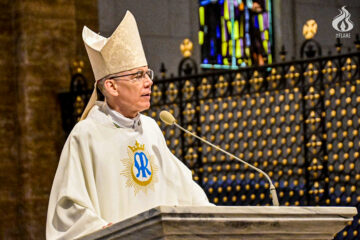
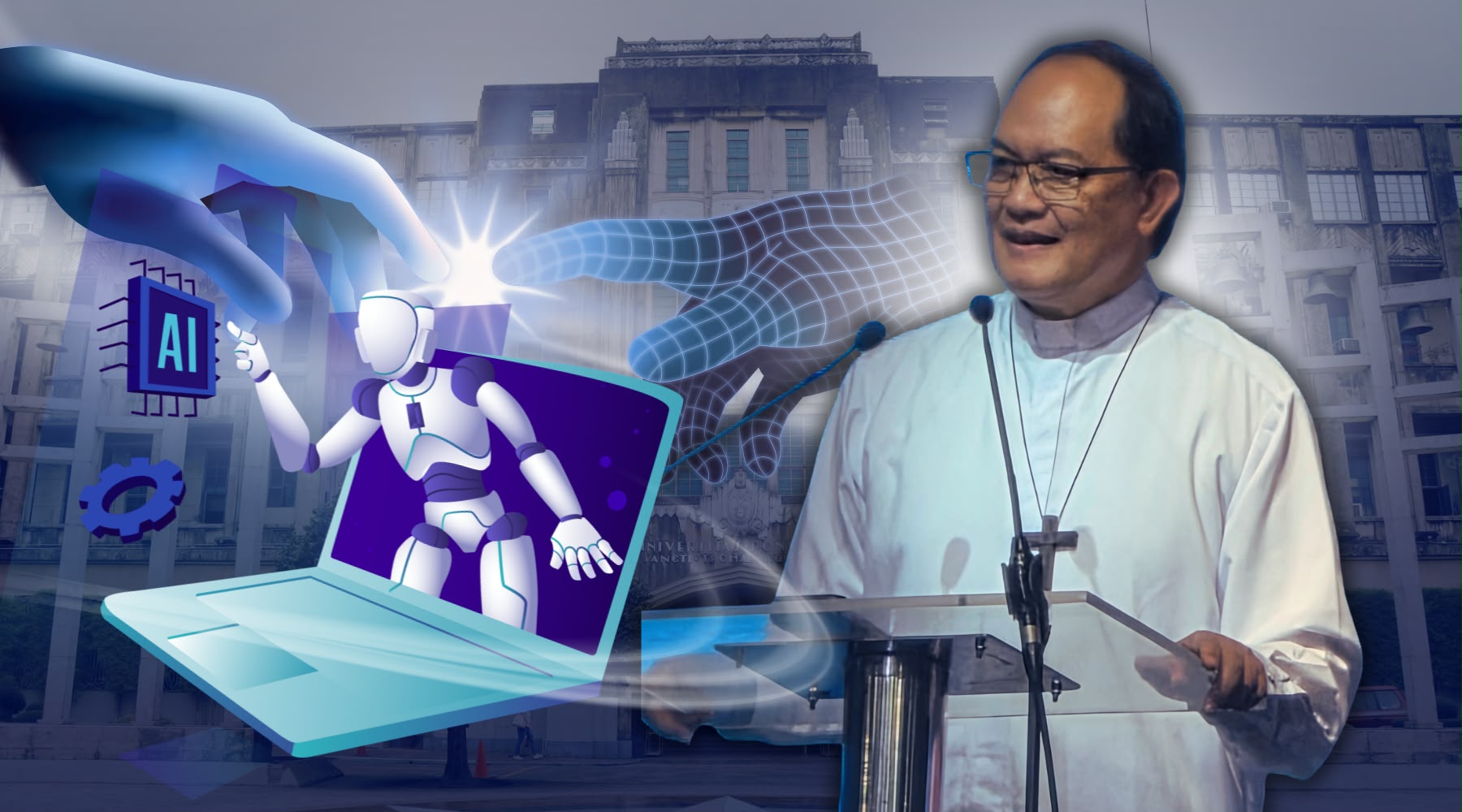
TECHNOLOGICAL ADVANCEMENT should be guided by moral and spiritual wisdom that seeks the common good and upholds human dignity as the society continues to feel the transformation caused by artificial intelligence (AI), a prelate said on Tuesday, Aug. 5.
Kalookan Bishop Cardinal Pablo Virgilio David reminded Thomasians that the greatest threat posed by AI is not intelligent machines but people who lose the wisdom to use them responsibly.
Critical thinking and discernment can determine whether innovation truly benefits others and reflects Christian values, he added.
“Technology answers the question, ‘What can we do?’ But only moral and spiritual intelligence can answer the more important questions: ‘Should we do it? Will it serve the common good? Will it respect and uphold human dignity?'” David said during the homily for the Misa de Apertura at the Santissimo Rosario Parish.
David described AI as one of humanity’s greatest achievements, but emphasized that it is neither good nor evil as its direction ultimately depends on the person who uses it.
“The greatest danger today is not that machines are becoming intelligent. The greater danger is that human beings become highly intelligent, but no longer wise,” he said, warning that technological progress without wisdom may lead people away from responsible decision-making.
Citing the Book of Isaiah, the prelate explained that the prophet portrayed the Messiah as Someone who possesses wisdom, understanding, counsel and knowledge that one’s gifts should not be met with judgment.
David pointed out that social media often encourages people to react before they reflect, fostering a culture of judging others based on appearances, headlines, edited videos, rumors, and algorithms that reinforce existing beliefs rather than the truth.
“Don’t judge by appearances. Don’t decide by hearsay. Learn to be discerning. That is spiritual intelligence,” the cardinal said.
“Isn’t that what a university should teach, first of all? Not merely how to think, but how to discern,” he added.
The Kalookan bishop urged Thomasians to cultivate what he described as “spiritual intelligence,” which he defined as the ability to see reality as God sees it.
He then cited the Gospel, explaining that Jesus’ proclamation of the Beatitudes reveals how spiritual intelligence enables people to judge not by society’s standards of success, influence or power, but by God’s vision of what it means to live a truly meaningful life.
“The truly blessed person is not the one who possesses the most, but the one whose heart has become most like God’s,” he said.
David also urged Thomasians to seek not only intellectual growth from their studies but also the wisdom that comes from the Holy Spirit as the University opens the academic year.
“Never forget that the highest form of intelligence is not measured by grades, publications, rankings, or even by artificial intelligence. The highest form of intelligence is the wisdom that comes from the Holy Spirit,” he said.
“The wisdom to discern truth from falsehood, good from evil; […] not to judge by appearances, not to decide by hearsay. The wisdom to recognize the gifts of others, and to place our own gifts at the service of the common good,” he added.
The Misa de Apertura formally opened the University’s academic year 2026–2027, gathering students, faculty members, administrators, non-teaching personnel and members of the Dominican community in prayer before the start of classes. F