A DOMINICAN priest has cautioned Thomasians against gauging people’s worth using technological capacity and productivity, reminding them of the value of compassion, love and truth that make one “fully human.”
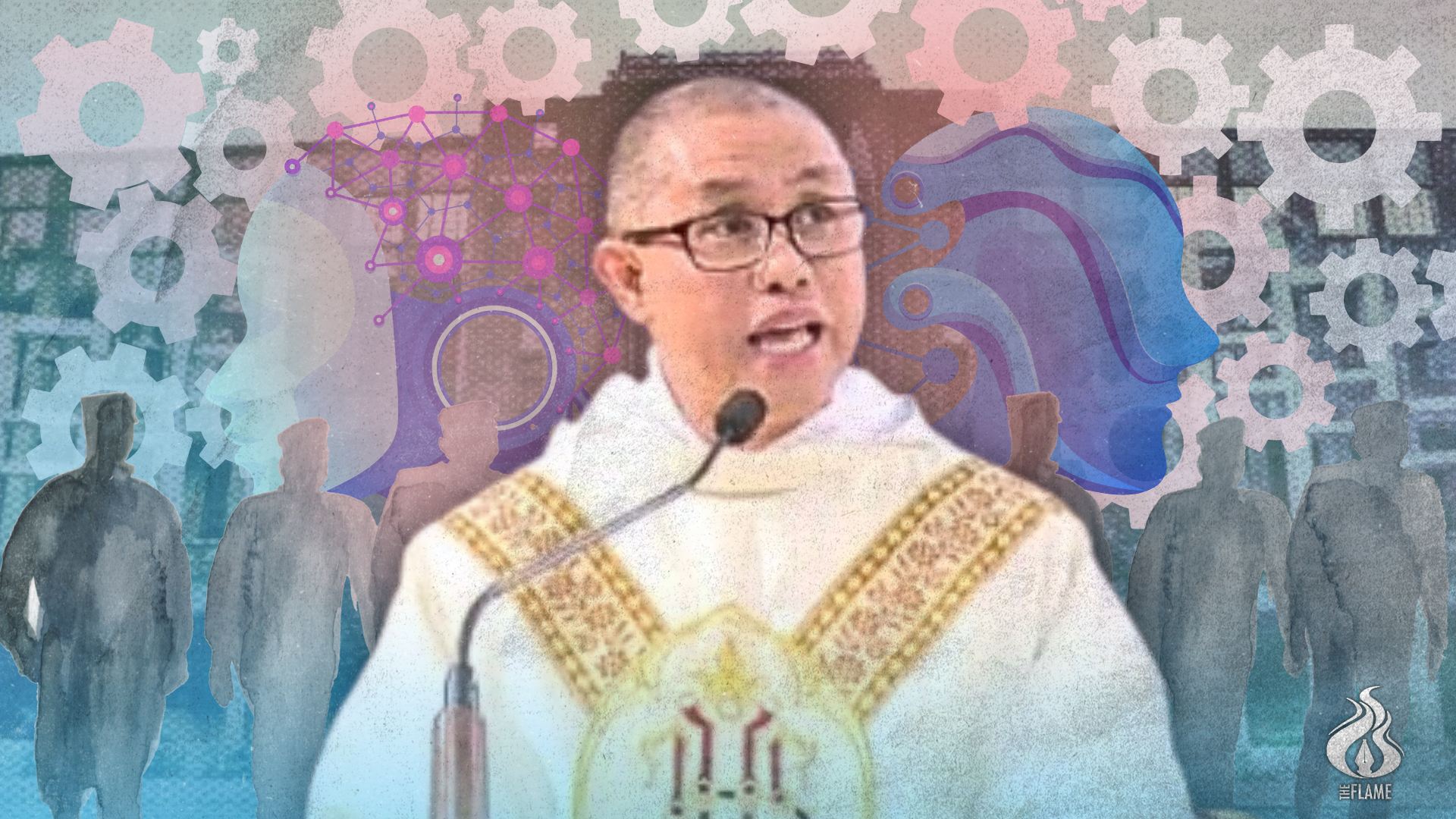
Citing Pope Leo XIV’s encyclical Magnifica Humanitas, Fr. Christopher Jeffrey Aytona, O.P. said human dignity should not be based on productivity, efficiency, or technological capability, especially in an age increasingly shaped by artificial intelligence (AI).
“There is [a] subtle temptation today to measure ourselves according to the standards of machines. We admire speed more than wisdom, efficiency more than compassion, information more than contemplation, and productivity more than relationships,” Aytona said during the second day of the triduum mass in honor of St. Dominic de Guzman on Thursday, Aug. 6, at the Santisimo Rosario Parish church.
“Artificial intelligence may process information with astonishing speed, but it cannot love as a mother loves her child. It cannot forgive an enemy from the heart It cannot console a grieving friend with genuine compassion. It cannot adore God in prayer,” he added.
Aytona said true greatness is not found by becoming more “machine-like,” but by transforming one’s image and likeness of God into a vocation.
“[It is] not by replacing our humanity, but by allowing God’s image within us to shine more brightly. It is already in us. We just have to reveal it to others,” he added.
According to Aytona, a vocation is not just about becoming holy, but emulating how Christ acts and reflecting His image to other people.
“Our Christian vocation is not to become less human in order to become holy. Rather… we become truly holy precisely by becoming authentically human according to God’s design,” the priest said.
Reflecting on the Gospel of the Feast of Transfiguration, where Jesus shone like the sun before three of His apostles on Mount Tabor, Aytona explained that Christ did not become someone else but instead revealed the divine glory that has always been present within Him.
Aytona connected this to the life of St. Dominic, the founder of the Order of Preachers who spent his life leading others to Christ. He said authentic preaching begins with contemplation.
“Dominic contemplated the face of Christ so deeply that he himself became a transparent witness to Christ. People did not simply hear Dominic speak; They encountered him in the mercy, humility, and truth of Jesus,” Aytona added.
“To become fully human is to become more loving. To become fully human is to become more compassionate. To become fully human is to become more truthful… and to reflect Christ Himself,” Aytona said.
The priest concluded his homily by advising students to pursue knowledge and embrace technological innovation without sacrificing their natural intelligence, moral conscience and capacity to love.
“Never allow knowledge to eclipse wisdom. Never allow information to replace contemplation. And never allow artificial intelligence to diminish you,” he said.
Aytona also reminded the University’s teacher that education fulfills its mission when it shapes both the intellect and the heart.
“The mountain experience was never meant to become an escape. It was meant to become a mission,” he said.
“Like Saint Dominic, we descend the mountain as preachers of truth. May others see in our faces not our own glory, but the reflected light of Christ. May they hear in our words not empty opinions, but the voice of the gospel.”
The mass marked the second day of the Triduum in honor of the Solemnity of St. Dominic de Guzman on Aug. 8. It was celebrated under the theme “St. Dominic Preacher of Truth, Herald of Magnifica Humanitas.” F – Marcus Roshaun Holman