A YOUNG priest walked barefoot along the dusty roads of southern France, carrying little more than the clothes on his back and the Gospel he longed to preach.
Rather than debate from behind cathedral walls, he chose to eat, travel and live among ordinary people, convinced that truth could only be proclaimed credibly if it was first lived.
That priest was St. Dominic de Guzman.
Born in Caluerga, Spain in August 1170, Dominic is remembered as the founder of the Order of Preachers and the Dominican Order.
From an early age, his life was shaped by a deep faith. At 14 years old, he left home to study at the University of Palencia, where he pursued theology and the liberal arts.
This marked the beginning of a journey that would lead him to proclaim the Gospel through unwavering pursuit of truth.
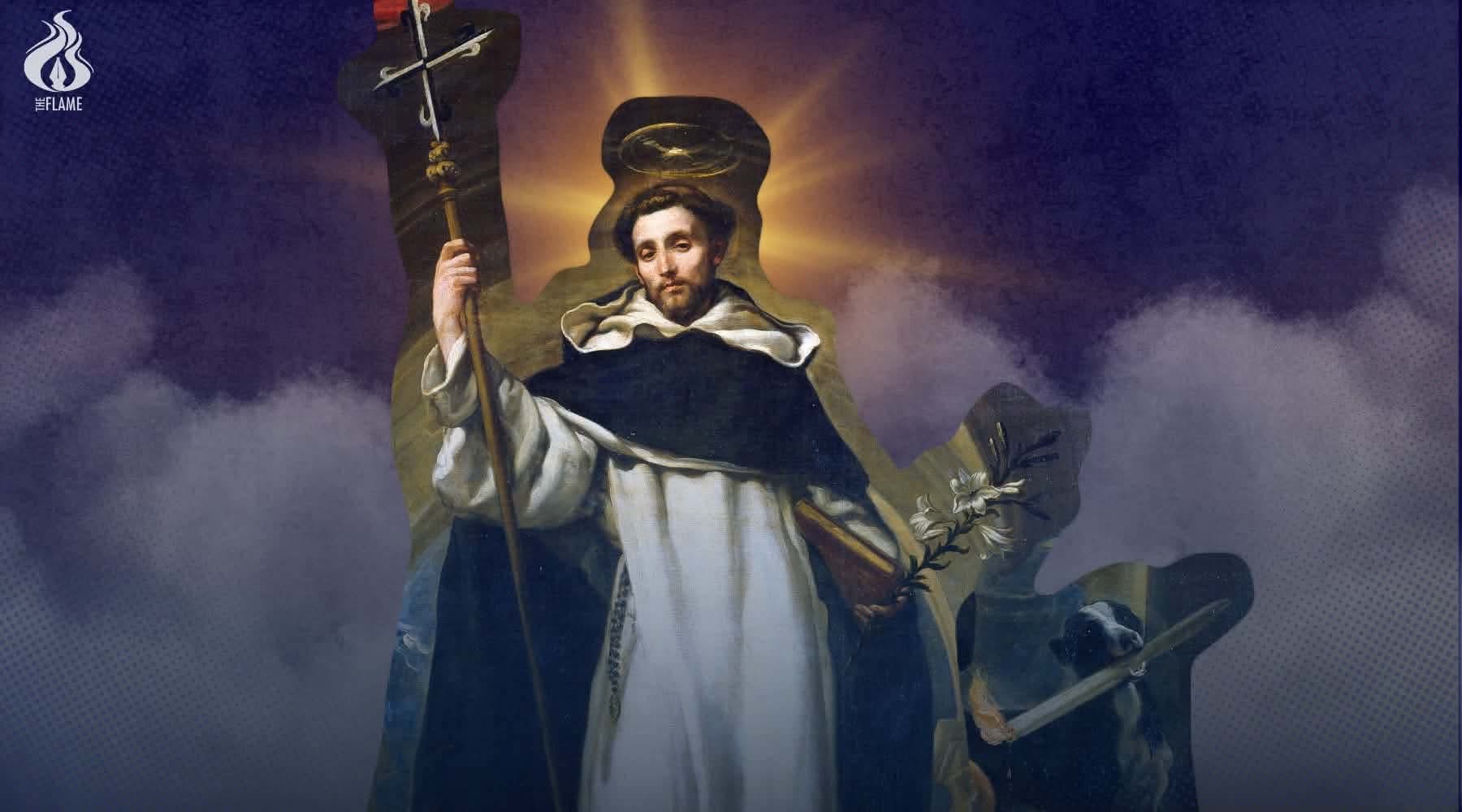
Eight centuries later, the image of the saint in a white habit remains painted in cathedral walls. But behind that image was a man known for his compassion and humility.
A preacher before anything else
As heretical movements increased in southern France, particularly following Bishop Diego de Acebo’s death in 1203, Dominic believed the Church needed well-formed preachers who could proclaim the faith through reason, example and dialogue rather than force.
He then founded the Order of Preachers in 1216, where he envisioned a community devoted to proclaiming the Gospel through study, contemplation and compassionate witness.
For Dominic, truth was never a weapon used to defeat others. It was a gift meant to lead people toward Christ.
This vision became the foundation of the Dominican Order, whose members devoted themselves to deep study and ministry of the Word. Their motto, Veritas (truth), continues to define Dominican spirituality today.
More than 800 years later, Dominican friars, sisters, nuns and lay members continue this mission through schools, universities, parishes, mission and other apostolates around the world.
A dream that set the world ablaze
Before he founded one of the world’s biggest religious orders and called for the pursuit of truth, St. Dominic was already destined to become a preacher.
His mother, Blessed Jane of Aza, dreamed of a dog carrying a torch while she was pregnant with Dominic. According to her dream, the dog ran around the world and set everything on fire with the torch.
Jane sought the help of a monk in the monastery in Santo Domingo de Silos in Spain, who later interpreted the dream as a sign that her son would become a great preacher who would “set the world on fire” with his words.
Though the story is a legend, the dog and torch became one of the most recognizable symbols tied to St. Dominic, becoming also enduring symbols of Dominic’s preaching mission and the Dominican call to spread the Gospel.
Lived the Gospel before it was preached
Dominic understood that eloquent preaching alone could never convince hearts.
He embraced a life of simplicity, poverty and humility, believing that a preacher’s greatest sermon was the witness of his own life.
Rather than seek comfort or prestige, he walked from town to town, preaching like Christ and relying on charity while accompanying the people he served.
His approach distinguished the early Dominicans from many religious communities of his time. They were not called merely to possess knowledge, but to allow that knowledge to transform the way they lived.
A saint who wept for souls
Historical accounts describe Dominic spending long hours in prayer after the day’s work had ended.
While others slept, he remained in churches praying for those who had wandered astray from the faith. Accounts of his life described him shedding tears as he interceded for sinners, asking God to show them mercy and lead them back to the Gospel.
His deep prayerful life revealed that preaching was never about winning arguments. It was about loving people enough to seek their salvation.
That balance between contemplation and action would later become one of the defining characteristics of Dominican spirituality.
A Marian preacher
St. Dominic’s preaching was deeply rooted in his devotion to the Blessed Virgin Mary.
Although the Rosary developed over centuries, Catholic tradition closely associates Dominic with promoting Marian devotion as a means of drawing the faithful closer to Christ.
Dominican tradition also holds that Mary encouraged Dominic to spread the Rosary as a means of meditating on the mysteries of Christ’s life.
For the saint, devotion to Mary was never separate from devotion to Christ. The Rosary became, in this tradition, a way for the faithful to contemplate the Gospel through the eyes of the Blessed Mother and deepen their relationship with her Son.
Centuries later, the Dominicans continued this mission through their preaching and the Rosary Confraternity, preserving a Marian tradition that remains an enduring form of Catholic prayer.
A preacher of truth
Long before universities became centers of Catholic intellectual life, Dominic recognized that the pursuit of truth required rigorous study alongside fervent prayer.
He insisted that his followers be well-formed in theology, Scripture and philosophy so they could share the Gospel with clarity and compassion.
That vision helped shape the Dominican Order’s enduring role in education.
Over the centuries, Dominicans founded schools and universities across the world, producing renowned theologians, philosophers, scientists and educators, including St. Thomas Aquinas, whose works continue to influence Catholic thought.
Today, Dominic’s legacy lives on in Dominican institutions such as the University of Santo Tomas, where his commitment to Veritas continues to inspire students to seek truth not only in the classroom, but also in service to the Church and society.
The Roman Catholic calendar celebrates the feast of St. Dominic annually on Aug. 8.
More than eight centuries after he walked the roads of southern France, St. Dominic’s pursuit of truth continues to echo in Dominican classrooms, pulpits and missions, reminding the faithful that the Gospel is proclaimed most convincingly when it is first lived. F