
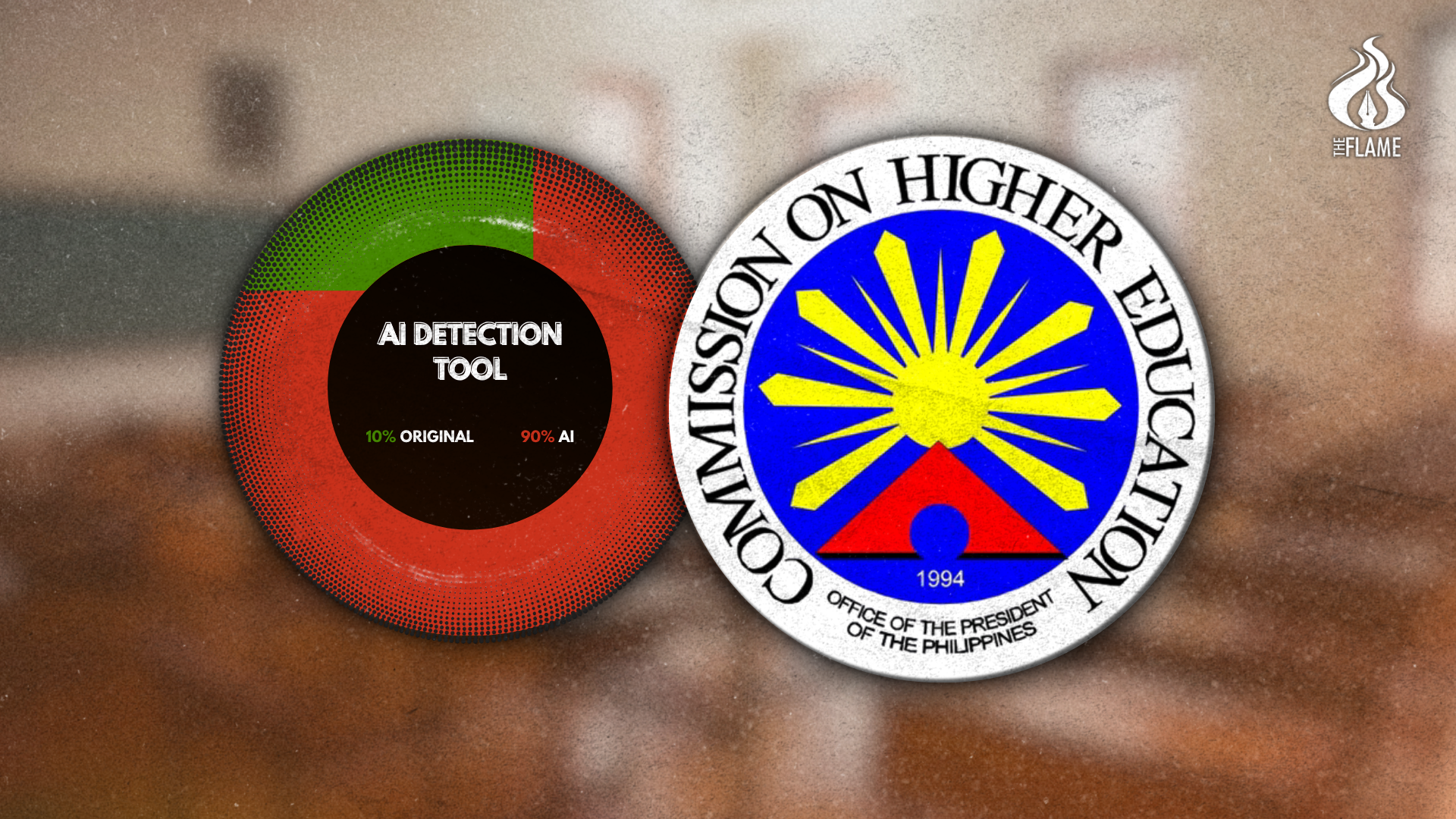
COLLEGES AND universities may not use artificial intelligence (AI) detection tools as the only determinant of academic cheating, according to a new policy adopted by the Commission on Higher Education (CHED).
Under CHED Memorandum Order No. 21 dated July 21, 2026, schools are not required to enforce mandatory AI detection for every student submission or fully document every instance of the use of technology in academic outputs.
However, students must disclose their use of AI in academic submissions, a requirement strictly mandated for major scholarly work such as theses and dissertations.
“Al detection tools, where used shall not be the sole basis for determining academic misconduct,” the memorandum, which was made public this week, read.
“HEls (higher educational institutions) and academic units are encouraged to redesign assessments where appropriate through authentic, process-based, oral, reflective, performance-based, or contextualized assessment strategies.”
Higher educational institutions may determine appropriate academic responses for non-disclosure consistent with their academic policies and due process.
The memorandum laid out guidelines for the ethical integration of “human-centered” AI in education and rejected a strict, complete ban on its use. It defined AI as a digital system or tool that supports tasks normally associated with human intelligence.
At the classroom level, faculty members are required to explicitly state in their course syllabi when AI tools are permitted or restricted.
To ensure fair and responsible use, the guidelines place firm boundaries on “high-risk” AI systems, such as those used for grading, college admissions and scholarships. The policy also states that no AI system should autonomously determine academic outcomes without meaningful human review.
It also cited the need to secure human oversight exercised by a qualified person with the authority, competence, and opportunity to understand, question, validate, modify, or override AI-assisted recommendations before consequential decisions are finalized.
“Faculty and administrators must be trained in responsible AI use and data governance. Safeguards are not obstacles to innovation – they essential to maintaining public trust,” CHED said in the memorandum.
The policy also encouraged higher educational institutions to support Al use in research activities that strengthen research competitiveness and international collaboration.
It also emphasized the need for students to be prepared for AI-driven jobs, saying higher education must not only teach you he technology but must also “responsibly build and deploy it to solve national problems.”
“Universities must function as engines of Al-enabled innovation,” the memorandum added.
Educational institutions were directed to develop Al-related programs, offer stackable credentials and micro-certifications, and integrate Al competencies across disciplines. Higher education must prepare students not only for current jobs, but for evolving roles shaped by automation and advanced analytics, CHED said.
“Graduates must emerge either as Al technical experts or as Al-literate professionals capable of responsibly applying Al in their respective fields,” the memorandum said.
To protect data privacy, schools are barred from uploading confidential student or research information to unsafe public AI platforms.
CHED clarified that it would not burden universities with “excessive universal regulations.”
“Rather than imposing a one-size-fits-all approach, it gives HEIs (higher education institutions) and faculty the flexibility to determine how AI can best support learning and institutional needs within their own contexts,” the commission added.
Last year, UST adopted its first ever formal guidelines and policy on the use of AI in academic research and publication to ensure that all scholarly works are compliant with ethical standards.
READ: UST issues AI policy on research and publication
The policy is grounded on four core principles, namely accountability, transparency, ethical responsibility and scientific rigor. F – Yimrhaq Mariano


