
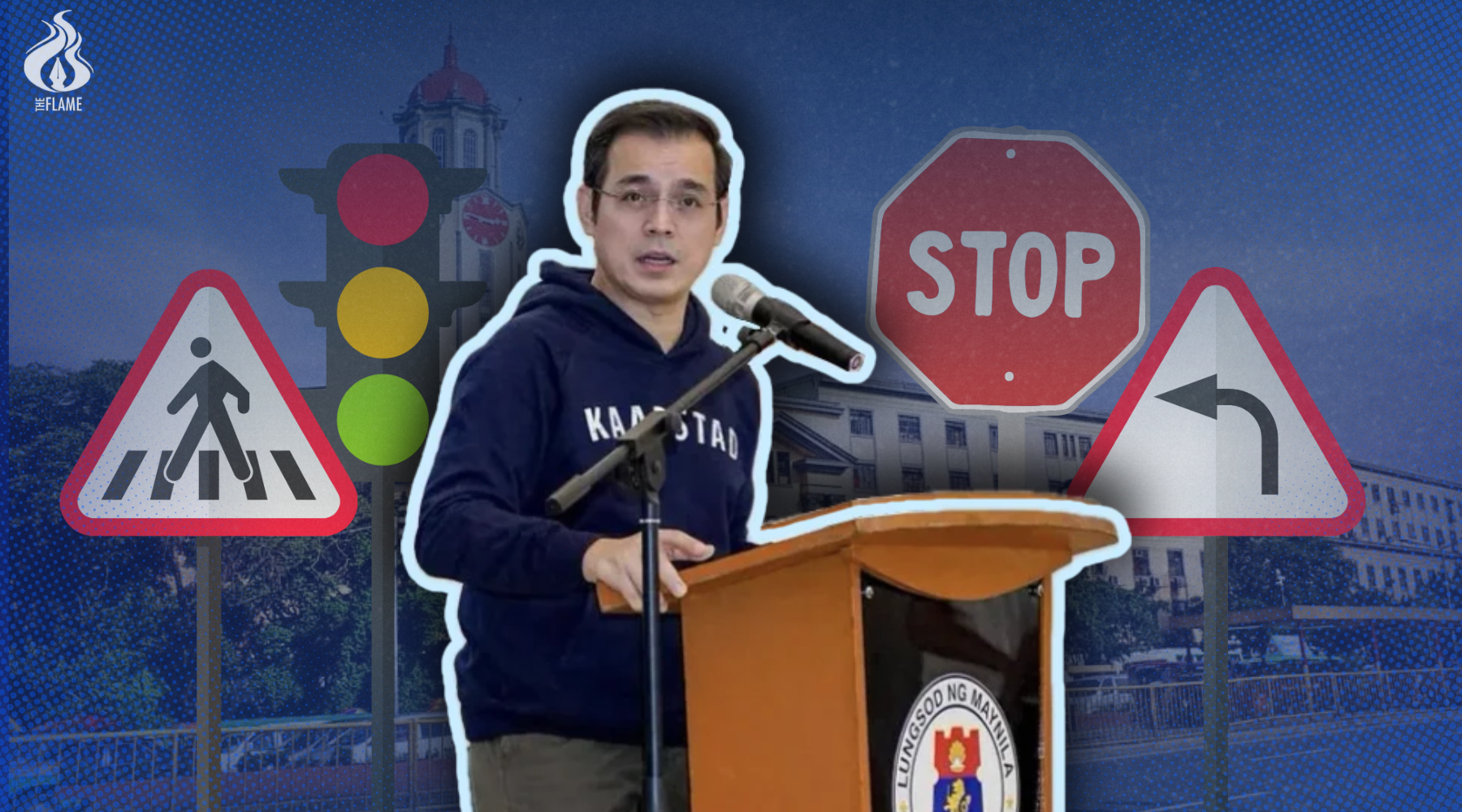
MANILA MAYOR Francisco “Isko” Moreno Domagoso said that drivers cannot contest or settle their way out of penalties through the enhanced No Contact Apprehension Program (NCAP 2.0), which captures traffic violations with upgraded cameras
“Some of our fellow citizens really lack discipline when it comes to driving. You cannot argue with technology. We may argue with our enforcers, but with technology, you’re caught with no escape,” he said during the flag-raising ceremony at the Manila City Hall on Oct. 5.
“So, be careful when driving because we will gradually achieve certainty in the enforcement of our rules. There will be no enforcer you can ask for a favor or negotiate with,” Domagoso added.
NCAP 2.0 is currently being implemented in Manila, Quezon City, Muntinlupa and San Juan. However, the program’s implementation was postponed in Valenzuela City and Parañaque.
Valenzuela City Mayor Wes Gatchalian said that implementation was paused due to ongoing road construction and changing traffic conditions, while the program remains under further review of the Parañaque local government.
NCAP was initially launched during Domagoso’s first term as mayor in 2020, but was halted in 2022 when the Supreme Court issued a temporary restraining order (TRO) after multiple petitions were filed challenging the program’s constitutionality.
Petitioners claimed that the program violated due process as penalties were applied to motorists without immediate notice, while registered owners were considered violators despite not being the driver who committed the violations.
Issues were also raised regarding the program’s penalties, its conflict with the Land Transportation and Traffic Code, the collection and use of motorists’ information and the local government’s authority in penalizing violators. Petitioners were concerned about the cities’ readiness, considering unclear lane markings and conflicting road signage.
The Supreme Court later dismissed the petitions and lifted its restraining order in July after the Metro Manila Council adopted the Metro Manila Traffic Code of 2023. The 2023 traffic code placed a new system in reviewing and tagging violations, additional data privacy safeguards and rules on authorization processes.
Resuming operations on Oct. 5, the enhanced NCAP now uses high-definition cameras to detect traffic violations that will be verified by authorized city personnel before a formal notice of violation is issued.
Fines and penalties, still ranging from P500 to P2000, will be imposed for violations and can be paid either online or at the local government unit where the violation occurred. Failure to pay fines within seven days may bar vehicle owners from registering their vehicles.
Domagoso cautioned violators that ignoring notices would result in accumulating penalties.
“Do not ignore the notice that will arrive at your home because you can no longer run away from it, and the penalties will only accumulate,” the Manila mayor said. F