
AT UGBO 24/7, a bowl of broth and guts tells a deeper story—one of comfort, memory and unfiltered flavor.
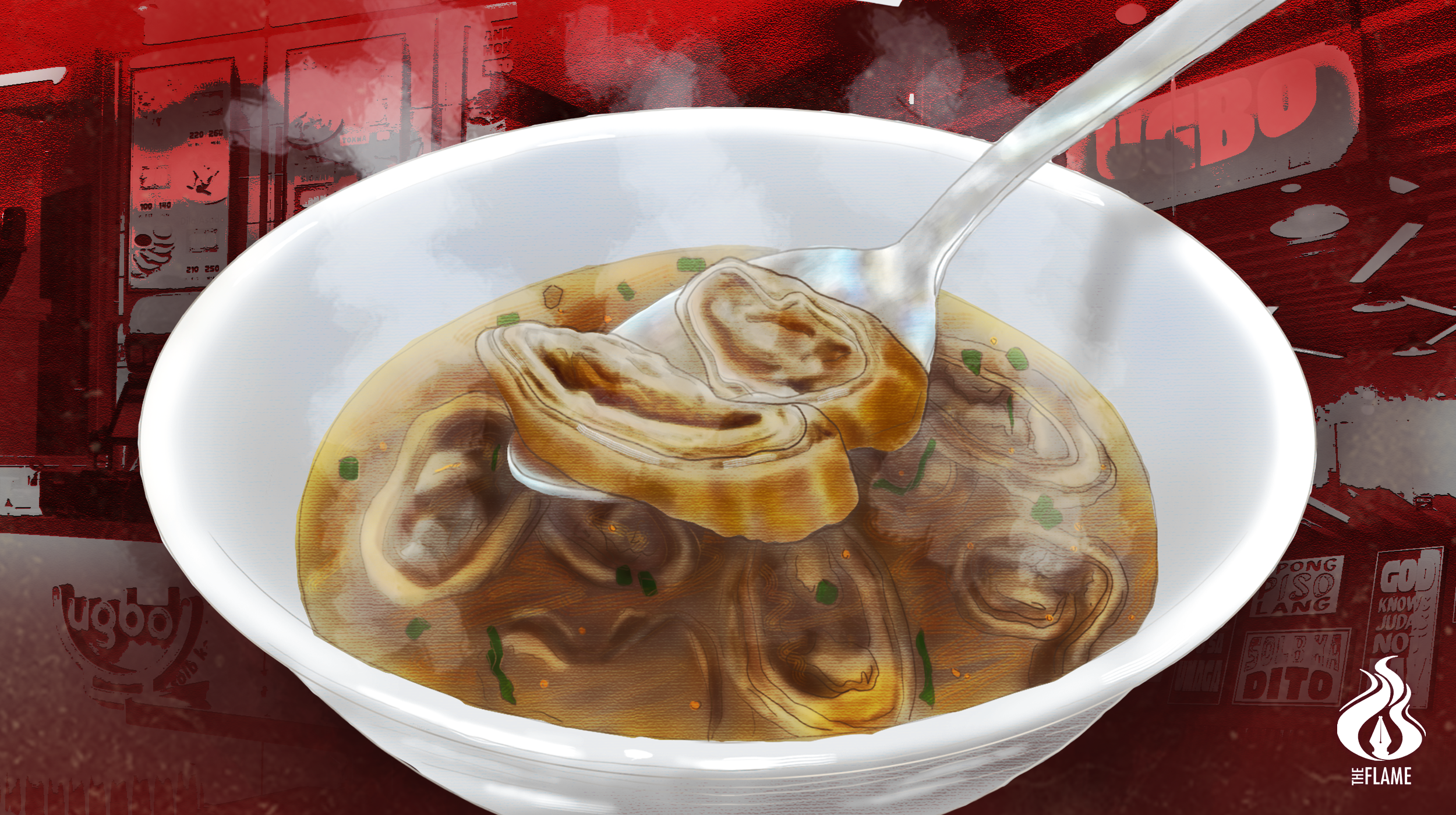
It arrives steaming, peppery and bare, the intestine slices peeking through golden broth like coiled ribbons daring you to flinch.
Before the first sip, there’s the scent: rich, garlicky and deep with pork. The broth releases a kind of heat that doesn’t just rise—it settles into the room, into your clothes, into the parts of your memory where home cooking resides. There’s no softening here. No lemon, no herbs to dress it up. Just bone and spice. It’s not delicate. It’s not reinvented. It’s real.
This is the heart of Ugbo 24/7, a late-night eatery stationed at the edge of Upper McKinley Hill.
Opened in February 2024 by returning Manila mayor and former actor Isko Moreno, the restaurant is named after Ugbo Street in Tondo, where food doesn’t tiptoe. It lands—hot, fast, and full of flavor.
Here in Bonifacio Global City, a space better known for its high-end bistros and brunch menus, Ugbo feels like a transplant from a tricycle stop, but it holds its ground with grit and red lights.
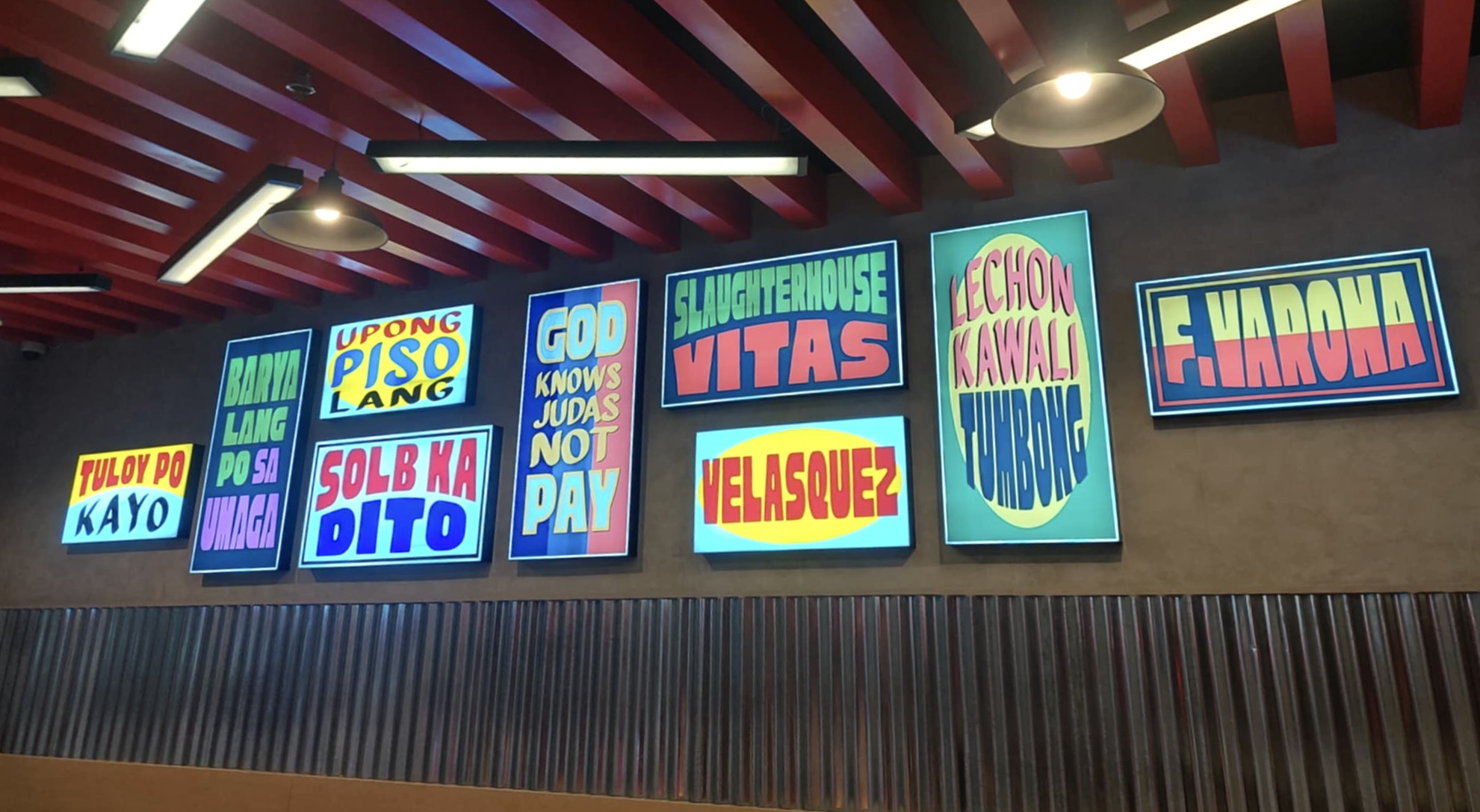
At night, it’s hard to miss. Its bright red façade is lit up with jeepney-style signage: Tuloy po kayo (come in), Takeout meron na (takeout now available) and God Knows Judas Not Pay. The humor is familiar, comforting—a deliberate nod to street-side stalls and old-school karinderyas(eateries).
Inside, metal chairs scrape tiled floors, steel tables hold plastic trays and the wall menu lists only three items. There’s air-conditioning, OPM playing on loop and a TV screen showing how the food is safely prepared—a subtle reassurance to the hesitant.
And yet, it’s the tumbong soup that captures the room.
A dish born from need
Tumbong—pig’s large intestine—is a dish that emerged from thrift and resourcefulness. Long before “nose-to-tail” eating was a culinary philosophy, it was just everyday life in many Filipino households. Every part of the animal had to count. Offal, or laman loob, was never glamorous, but it filled stomachs and fed families, especially in working-class communities like Tondo.
Some culinary historians believe early Filipinos, long before Spanish colonization, ate with ingenuity and incorporated local produce and the whole animal into their diets. Spanish influence introduced new cooking methods, but the Filipino hallmark remained: waste nothing.
What began as a necessity gradually became tradition. In places like Ugbo Street, where stalls cooked what they could afford, tumbong soup found its place not just as a fallback meal, but as a staple. In these kitchens, flavor was coaxed from bones and scraps, not bought in spice jars. Tumbong, once seen as among the pig’s “undesirable” parts, turned out to be one of its most flavorful—if prepared properly.
Ugbo 24/7 doesn’t hide this history. It embraces it.
The art of labor
Tumbong is not a quick dish. It’s not something you rush. The entire preparation process is quiet, careful work—a minimum of four hours from raw to ready.
It starts with thorough cleaning: the intestines are soaked in salt and water, then scrubbed, flipped, and rinsed to remove grit and odor. They are then boiled once to loosen any remaining impurities, and boiled again, this time with aromatics like garlic, pepper, and bay leaf, to begin flavoring the meat and broth. The second boil alone can take 90 minutes to two hours. And that’s only if everything goes perfectly.
One wrong step, one careless rinse and the whole pot turns bitter or funky. There’s no shortcut. And that’s what you taste in the broth—the hours, the caution, the labor no one claps for but everyone benefits from.
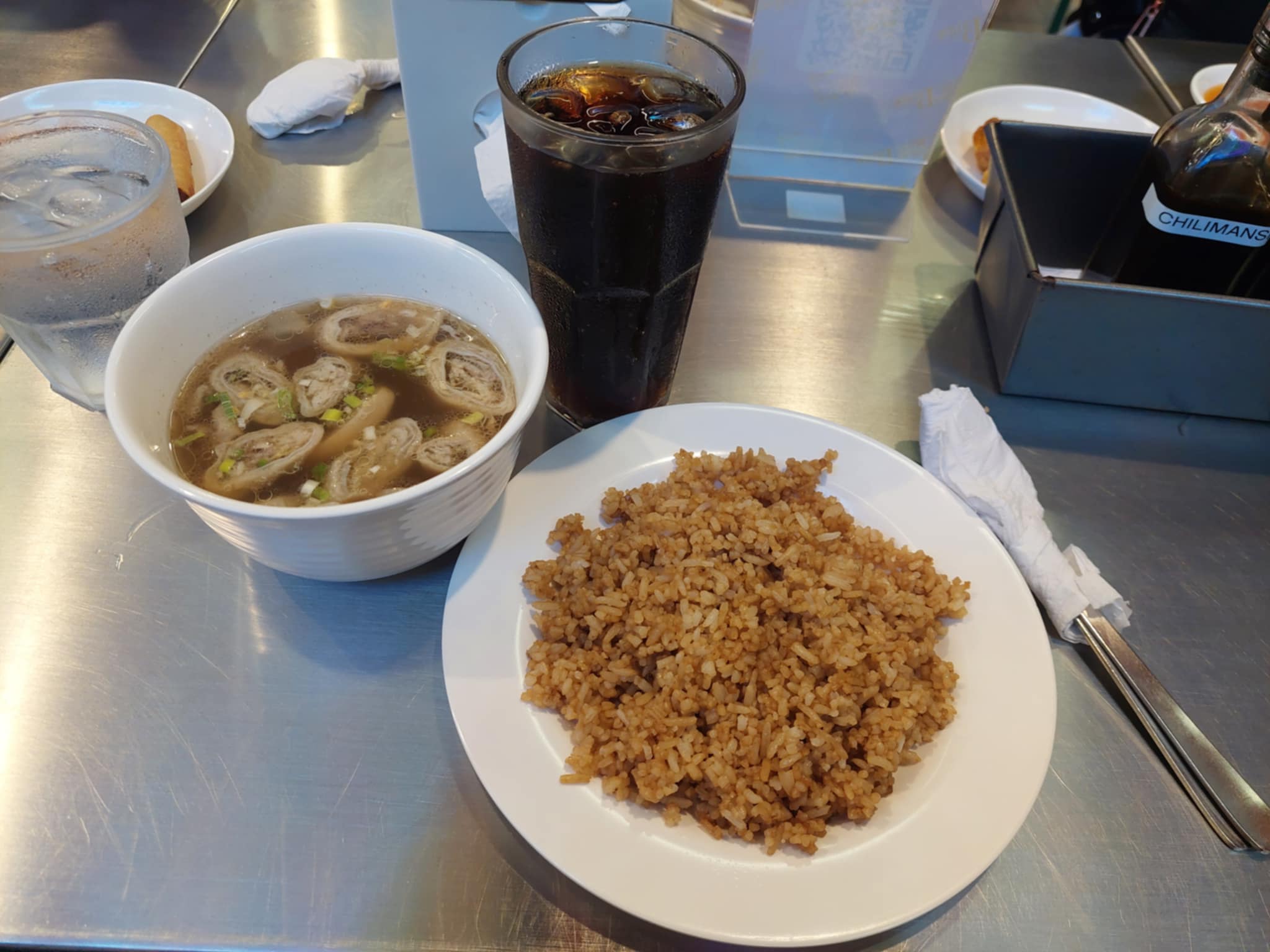
The soup is served in a plain white bowl, paired with a matching plate of rice. Fried garlic and chopped onion chives float on the surface, adding color and crispness to an otherwise pale, golden broth. A little oil circles the top—not too much, just enough to carry the scent of roasted garlic. Beneath the surface, the tumbong slices are curled and tender, folded like soft scrolls waiting to be read.
The first sip tells you everything. It’s hot—temperature-wise, spice-wise, memory-wise. The broth is garlicky, salty, and bone-rich, with a peppery sting that blooms in the throat. It’s not thick, but it lingers. The kind of broth that warms you from the inside out—ideal for rainy days, and even better after a long shift.
The tumbong meat is surprisingly mild. No bitterness. No funk. The flavor leans close to papaitan, minus the liver. It’s chewy but not rubbery when done right. Fresh-tasting, full of broth, and just fatty enough to coat the tongue. The soup tastes like care. Like time. Like something passed down, not just cooked up.
And yes, the soup is unlimited. A quiet flex.
The target market is clear. Most tables are filled by people in uniforms—bank tellers, call center agents, and delivery riders catching a break. It’s the only restaurant still glowing at 2 a.m. when the rest of McKinley is asleep. The setup is intentionally no-nonsense: functional, fast, but with a personality that hums from the walls. One laminated poster reads: Solb ka dito (You’re content here). Another: Upong piso lang (one-peso seat). The jokes are old, but they still land.
And behind the counter? Cooks who know what they’re doing.
Not curated, just cooked
The dish has found a strange kind of crossover success here. In a city where food often has to be curated or rebranded to gain respect, tumbong soup stays true. It’s not “reimagined.” It’s not drizzled with anything imported. It just is. And that’s what makes it quietly radical.
There are no buzzwords on the menu. No truffle oil. Just lechon kawali, beef camto and tumbong soup—available solo (P150), with rice (P180), or as a full meal with drink (P220).
And of the three, it’s the last one that lingers the longest—not just in taste, but in memory.
Tumbong soup at Ugbo 24/7 is the kind of dish that doesn’t try to convert you. It doesn’t need to. It simply shows up, hot and whole, and lets you decide whether you’ll meet it halfway. It’s a test of trust. One that often ends in surprise.
Because if you let it, this bowl of broth and offal offers something more than flavor. It offers perspective. On what food used to mean before it was curated. On the meals that fed us when money was tight, but the pot still had to boil. On what gets overlooked—and what’s worth reclaiming.
It may not be your first pick. But it might be the one you remember most. F