IF YOU were a senior citizen who has met famous personalities and has gained recognition and respect in your field, how would you spend your twilight years?
There are many ways to answer the question, but enrolling in a master’s degree program with a thesis requirement is not likely to be among the most common responses.
But that precisely was what retired American journalist Richard Agata did after realizing that he still has more to learn about his craft.
However, his reason for returning to school was not purely academic. Even serious scholarly endeavors can be borne out of something romantic.
Eleven years after moving from Los Angeles to the home country of his Filipino wife Jenny and his stepchildren, Richard had been working hard the previous year to make his dream of attaining a master’s degree in Journalism a reality.
In August of last year, he looked no further than the alma mater of his beloved wife. Her children and sister also attended UST, home of the oldest Journalism school in Southeast Asia.
“There’s a very popular movie called The Blind Side. When they finally asked [the main character] the direct question [about choosing which college to study in], he said, ‘Because my family went there,’ ” Richard, a lover of films, said in an interview with The Flame.
“That’s my answer. Why am I here [in UST]? Because my family went here.”
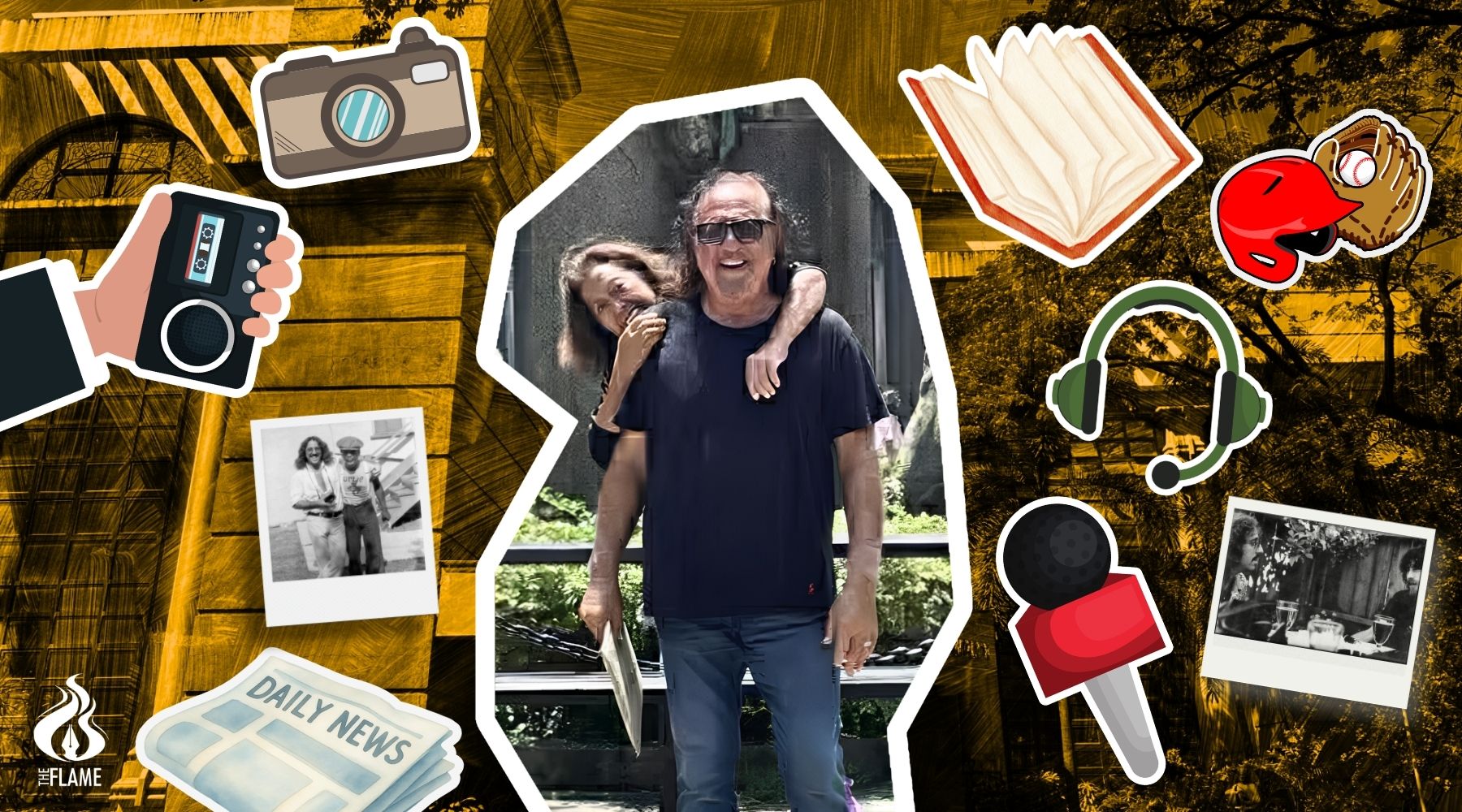
The 70-year-old graduate student stood out among the crowd at the Thomas Aquinas Research Center, being six-foot tall with a defined nose and a wavy hair that has grayed over the years reaching over his shoulders.
Born in 1955 in the warm suburbs of San Fernando Valley, California, Agata spent much of his adulthood as a writer.
“The whole nature of journalism is just an honorable, noble profession,” he said.
“From whistleblowing bad people, politicians, holding the fire to their feet, to providing information and worthwhile thoughtful opinions.”
Richard carried with him over 20 years of experience in the Californian journalism scene.
Senior freshie
Richard had always dreamed of achieving a master’s degree in journalism. So when he was filled with a certain restlessness and yearning to pursue graduate studies, he did not hesitate to enroll.
Quoting Robert Browning’s 1855 poem Andrea del Sarto, Richard said, “A man’s reach should exceed his grasp, or what’s a heaven for?”
Richard took pride in never missing classes nor showing up late. With a yellow highlighter, he read every assigned text twice or even thrice. He took notes during his classmates’ discussions and spoke his mind.
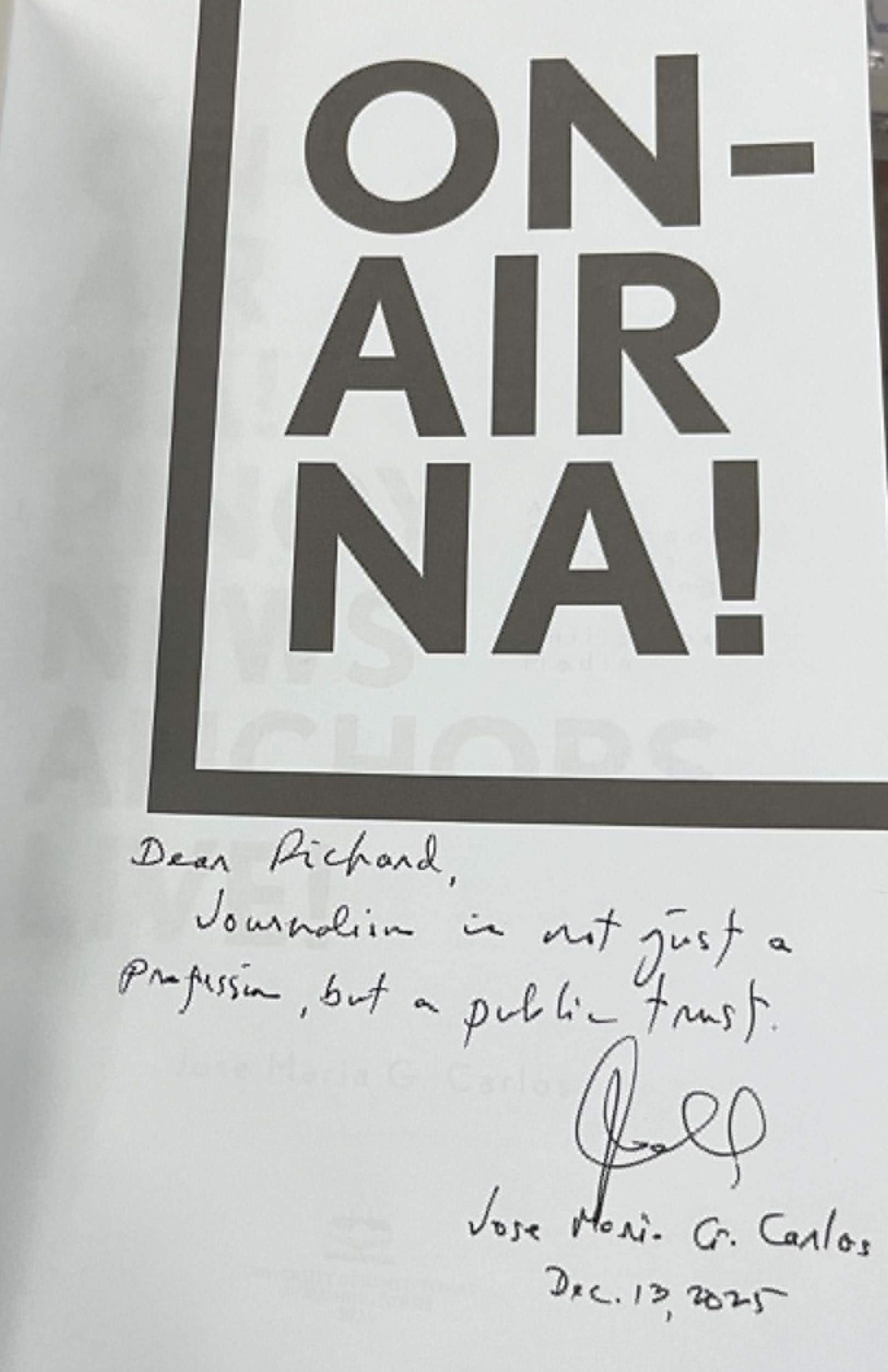
In one meeting, Asst. Prof. Jose Maria Carlos of the Department of Journalism was criticizing a student’s presentation in a media management class. Carlos then turned to the expat and said, “Okay, Richard. Your turn. I know you’ve got a lot to say.”
Being close to Richard’s age at 71 years old, Carlos lauded the retired reporter’s eagerness to share his insights to his classmates who are just in their 20s.
“It’s good that there is this engagement — this involvement between students and professor. I think it’s a very healthy, meaningful engagement that we have,” Carlos told The Flame.
The respect between the two journalists was a two-way street.
“[Carlos] was extremely influential to me. I think he’s actually a year or two older than me, which was kind of nice. Refreshing to have somebody actually older than me,” Richard said.
Richard’s motivation to fully participate in class dates back to his time as an educator at the University of Southern California (USC) Annenberg School for Communication and Journalism. There, he taught advertising from 1992 to 1995. He remembered once teaching unresponsive students and found it dull. That memory replays in Richard’s mind whenever he finds himself among a similarly quiet class.
“So as a student, I feel for the professor,” Richard said.
Without his mentors, such as Carlos, Journalism department chair Prof. Jeremaiah Opiniano and Literature Prof. Maria Luisa Reyes, Richard claimed his student life would have been incomplete.
“He reminds the younger generation, who is short in attention span, [that] this is graduate school. You have to study. You have to go back to the basics, which is to read. Even thick stuff,” Opiniano said of Richard.
When it comes to his classmates, Richard was often the oldest in the room, but this age difference did not block his ability to connect and share stories with fellow Tigers.
“My dad died when I was 19. So, there is a part of me that’s 19 forever,” Richard said in a more solemn voice.
Even after his parents divorced, Richard’s love for his father endured.
“I look in the mirror and I see a 70-year-old man,” he said, then pointed to his heart, “But here, I’m still 19. And that’s the thing that you learn as you age — that you are every age you ever were… So I’m still 19, and 70 and 30. All of it at the same time, but 19 forever.”
Journalism as a sanctuary
As Richard grew into adulthood, journalism in his home state was also growing and evolving.
In the 1970s, a classmate at Granada Hills High School invited him to join the first ever journalism summer school in USC. Then 17-year-old Richard was already interested in writing, so he gave it a shot.
The class consisted of 13 students who were tasked to produce a weekly newspaper. They were the only ones out of 49 local campus publications that published regularly and consistently.
With Richard thrusted into the responsibility of being sports editor, he watched his stories be published using metal typesetting.
“It’s been utterly fascinating, from junior high school, taking print shop [class] and setting type by hand like Johannes Gutenberg in the 1400s — through hot type and cold type, then film, negatives, plates and finally digital,” the retiree said.
Soon, Richard bagged numerous campus journalism awards, like Most Outstanding Overall Journalist and Most Column Inches, all while being student body president, an honor student and an athlete.
“[I was] young, energetic and, you know, it was just so fun,” he said.
“It was my sanctuary. When a story needed to be written, I was there and I wrote it.”
Thanks to his shining extracurriculars, he got into USC in 1973.
After just two days in the campus, Richard reached the front page of the Daily Trojan, the university-wide independent newspaper, for a story about a restaurant called The Grill. This feat earned him the nickname “Freshman Flash” among his peers.
“[USC is] like UST in the sense that it’s a big school,” Richard said.
“I gravitated towards like-minded people. A number of them are still friends today — journalists and writers and creative people and photographers.”
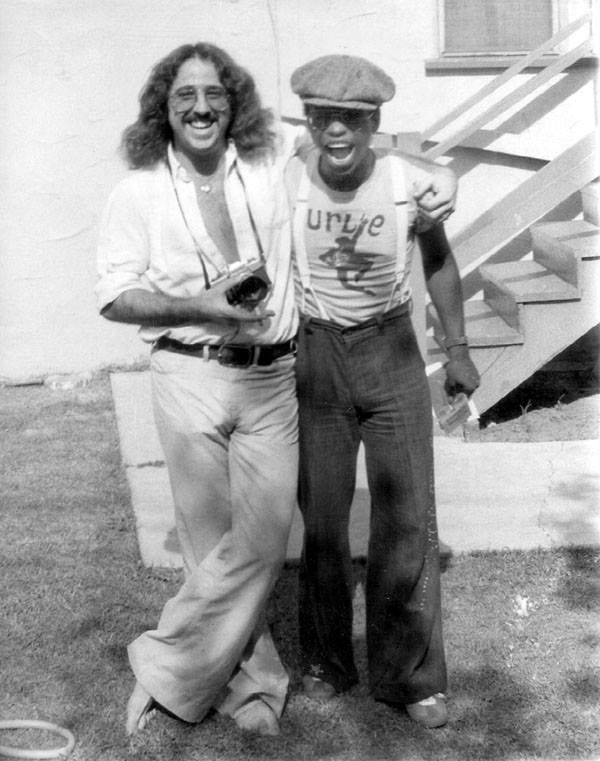

Richard was on a roll ever since his college days. His appreciation for his work had him coming at full force.
“One of the things I love the most about [journalism] is interviewing people of all walks of life. I love writing about people,” he said.
After leading and starting publications, he created his own magazine, called It’s Our Turn Now. He then joined the California-based production crew of radio and music newspaper Radio & Records right after graduation, where he eventually rose to become its art director.
There, he shook hands with numerous celebrities, from music royalties like “King of Pop” Michael Jackson to Buzz Aldrin, the second person to walk on the moon, and several heavyweights in American sports.
Twenty years as a journalist taught Richard three important lessons: be prepared, be respectful and be diplomatic.
At the age of 59, Richard could have retired quietly. However, fate had more exciting plans. And it unfolded on a seemingly ordinary day of April in 2014.
Reporter-turned-lover
It was never too late for Richard to find love again — and even move to a whole new continent.
He was a divorced father of one back then. Through a dating website, Richard met Jenny Soria when she was also living in California. Jenny, who was 55, owned a store with her sister.
In a Mexican restaurant located in Santa Monica, California, the pair had their first date.
“Naturally, I was thrilled and nervous before our first date,” he said.
At the three-hour dinner, he sat across from her in his favorite, most comfortable outfit: black shirt, blue jeans and boots. The date ended with him gifting her a card and a CD of his 2007 album Let’s Call It Hope.
“She listened to it, and that was it,” Richard said while grinning.
On what he loves about his wife, he answered, “Just everything. [She is] just so beautiful, so kind, so creative.”
Three months after their date, the couple married in Las Vegas and have been together ever since.
Their family’s affection runs deep, as the couple refers to their children from previous relationships as “our kids,” rather than calling them stepson or stepdaughter.
In February 2018, the couple bought a property in Panglao, a quaint island town in Bohol. Deeply in love with the white sand and clear waters, Richard also grew to care about the community as much as he cares about the sights.
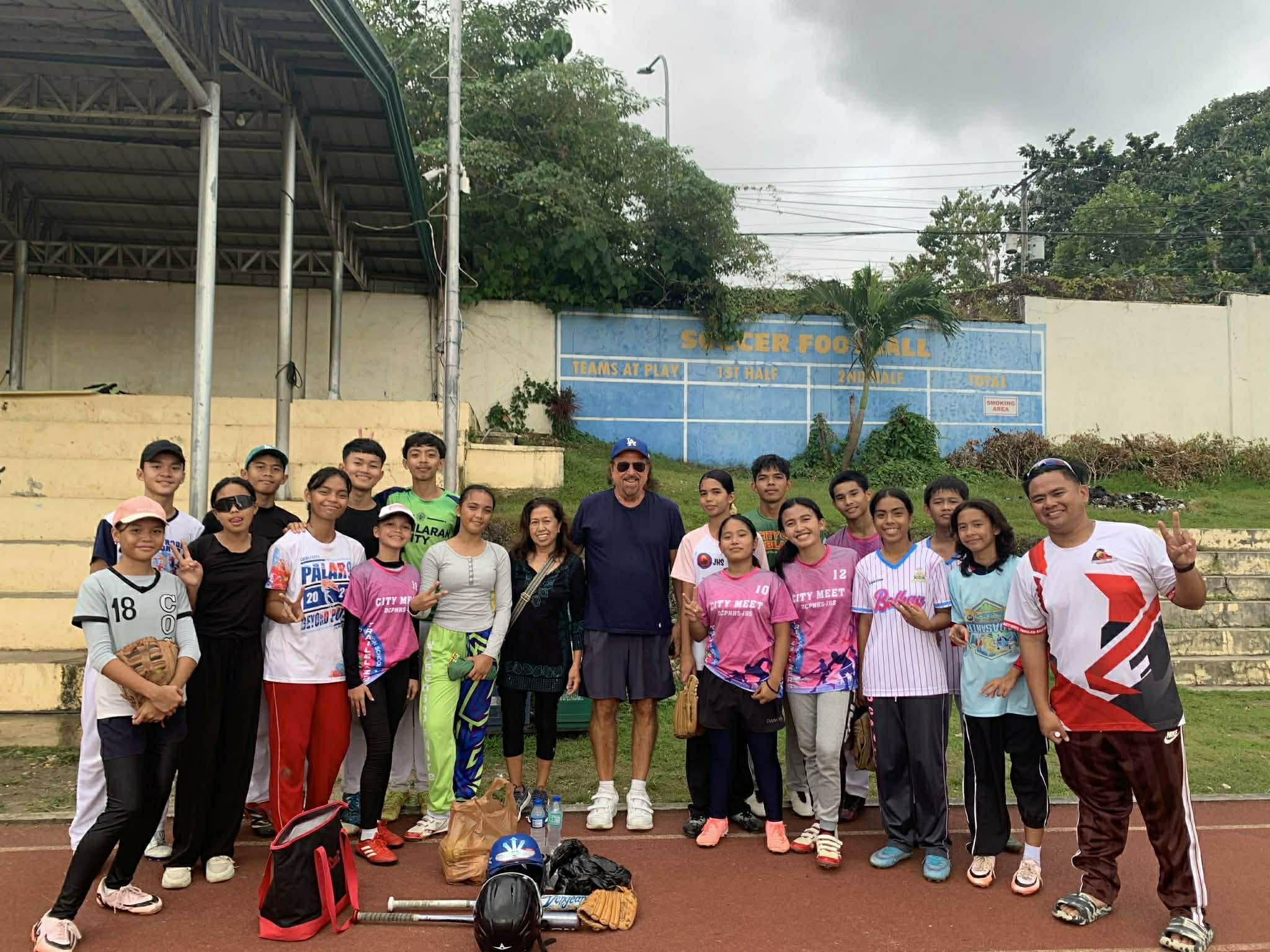
As a baseball fan who saw the untapped talent of Filipinos outside of Manila, Richard began training and coaching children in Panglao. He and Jenny would greet the locals with boxes full of baseball equipment and, sometimes, fast food.
“The kids are phenomenal. The kids are great,” he said.
Taking a break
From being the “Freshman Flash” in college and an active writer in the Californian journalism scene, Richard is now “Lolo Rico” to his grandchildren. At UST, he is the “Richard” that his graduate school peers have come to know.
After finishing last term with high marks, Richard is determined to pursue that which he started out of love. But he decided to put a pause on his studies for now.
“I was hoping to do four classes every semester so I could graduate within two years. [But] they were only offering two courses [per semester],” Richard said.
“And it just didn’t seem like the best way to spend my time right now.”
When exactly Richard plans to return to UST is still up in the air, but he promised to “keep [his] finger on the pulse.”
With his academic pursuits currently on hiatus, he and Jenny have their hands full overseeing the construction of their Panglao home and coaching baseball. Even with so much to do, Richard finds time to walk six miles around the island and kick back at the beach.
Dipping his toe back into the media industry, Richard has been working on his own radio show These Days With Lolo Rico. The radio show, held every Saturday afternoon, was named after a Jackson Browne song.
Richard was able to pitch his idea to Tagbilaran-based radio station DYTR thanks to a project for his media management course, where he and a classmate made a website for the station.
Once he gets back on track and finishes his master’s degree, Richard plans to teach English to Boholano students, preferably in the local university.
“I’ve taught all subjects, and I make sure that nobody leaves until we get it, until everybody gets it. It’s like that old expression, ‘No child left behind.’ I make sure nobody’s left behind,” he said.
The 70-year-old’s word of wisdom to his fellow life-long learners?
“Do a little bit every day. Exercise your body. It’ll make your head feel better. Don’t overeat. Drink a lot of water. Get rest,” he said.
“Don’t give up. Never give up.” F