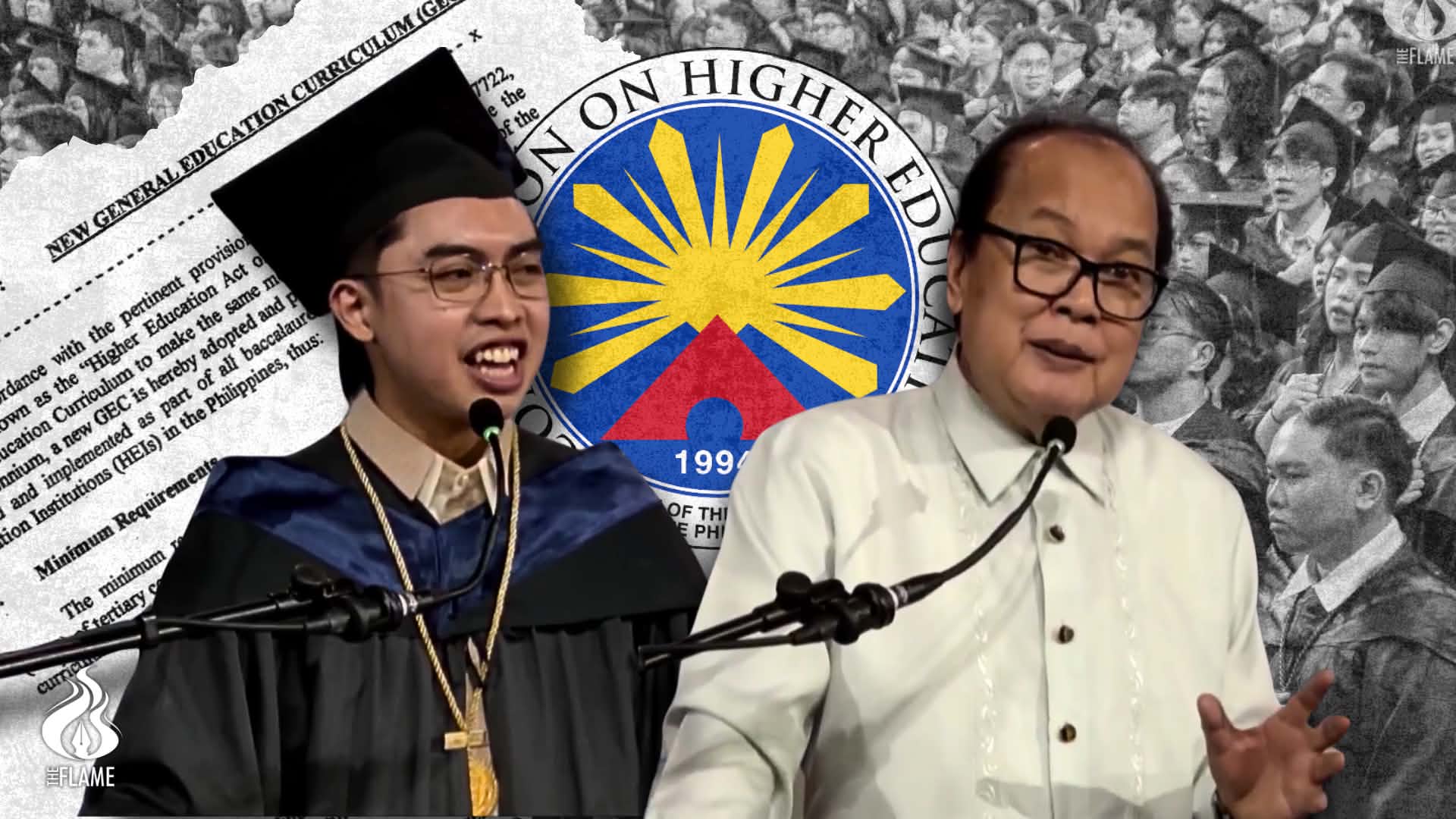
AT A time when humanities and social sciences are often dismissed as “impractical,” the valedictorian of the Faculty of Arts and Letters (AB) Class of 2026 reminded fellow graduates that the world needs people who are willing to become “human” more than ever.
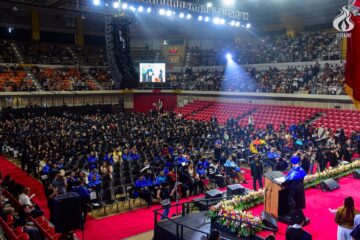
In his valedictory address during the AB solemn investiture rites on June 8, Capiña urged Artlets to uphold empathy and compassion beyond their years at the University, saying these values remain among the most important lessons taught by the faculty.
“To the young people listening, the world will rub it in your faces that the humanities and social sciences are worthless. Ignore them,” Capiña said.
“If there’s anything the world needs right now, it’s people who are willing to be human for others. And AB is where you can learn that best,” he added.
Growing up, Capiña believed fulfillment meant moving farther and accumulating achievements. He said studying in Manila was part of that pursuit because it represented opportunity.
Yet, after his four-year stay in UST, the valedictorian said the moments that mattered most were not the awards he received but the relationships he built.
“I realized I was leaving happy, not because I won more, but because I met more people. Maybe that’s the point of all this, for us to find each other,” Capiña said.
Henry Tenedero, president of the Philets and Artlets Alumni Association, Inc., shared similar sentiments, saying the faculty remains committed to teaching philosophy and ethics to help students better understand social issues that are “ailing” society.
“Dear parents, this is a day when hopes and dreams come to life. Thank you for entrusting your children to AB. AB continues to embrace the importance of general education subjects,” Tenedero said before the induction of graduates as members of the alumni group.
“[I]n real life, your grades and honors will not define you as a human person…What we need now in a society are people with compassionate, kind, understanding hearts,” he added.
On May 1, the Commission on Higher Education (CHED) released a draft memorandum order to downsize the minimum units of the curriculum from 36 to 18 and remove “duplication” in the college general education and Senior High School subjects.
The draft memorandum sought to replace the current requirement of 33 units and a Rizal course with an 18-unit structure comprising five mandatory core subjects and one institutional course, in which humanities are no longer standalone subjects.
However, groups including the UST Arts and Letters Faculty Association (ALFA) criticized CHED’s proposal, saying that removing humanities subjects turns tertiary education into a “mere job training” and sidelines crucial disciplines such as philosophy and the arts.
CHED later on announced that it would defer the proposal to 2028 for further evaluation and stakeholder consultation.
The revised curriculum was supposed to undergo pilot implementation during the academic year 2026-2027. F