
THE ILLUSION that accompanies the feeling of being in love is a dangerous spell that can lead to regrets.
When desire and desperation trigger the impulse to turn a wish into a reality, one can only revel in the immediate euphoria it brings for so long until it goes awry.
Obsession takes on the classic horror trope of a wish gone wrong and incorporates themes of control and possessiveness.
The film is written and directed by independent filmmaker and comedian Curry Barker, who began creating horror films and comedy sketches on YouTube under the channel that’s a bad idea.
Since its premiere, Obsession has earned over $297 million worldwide against its $750,000 production budget, making it the highest-grossing horror film this year.
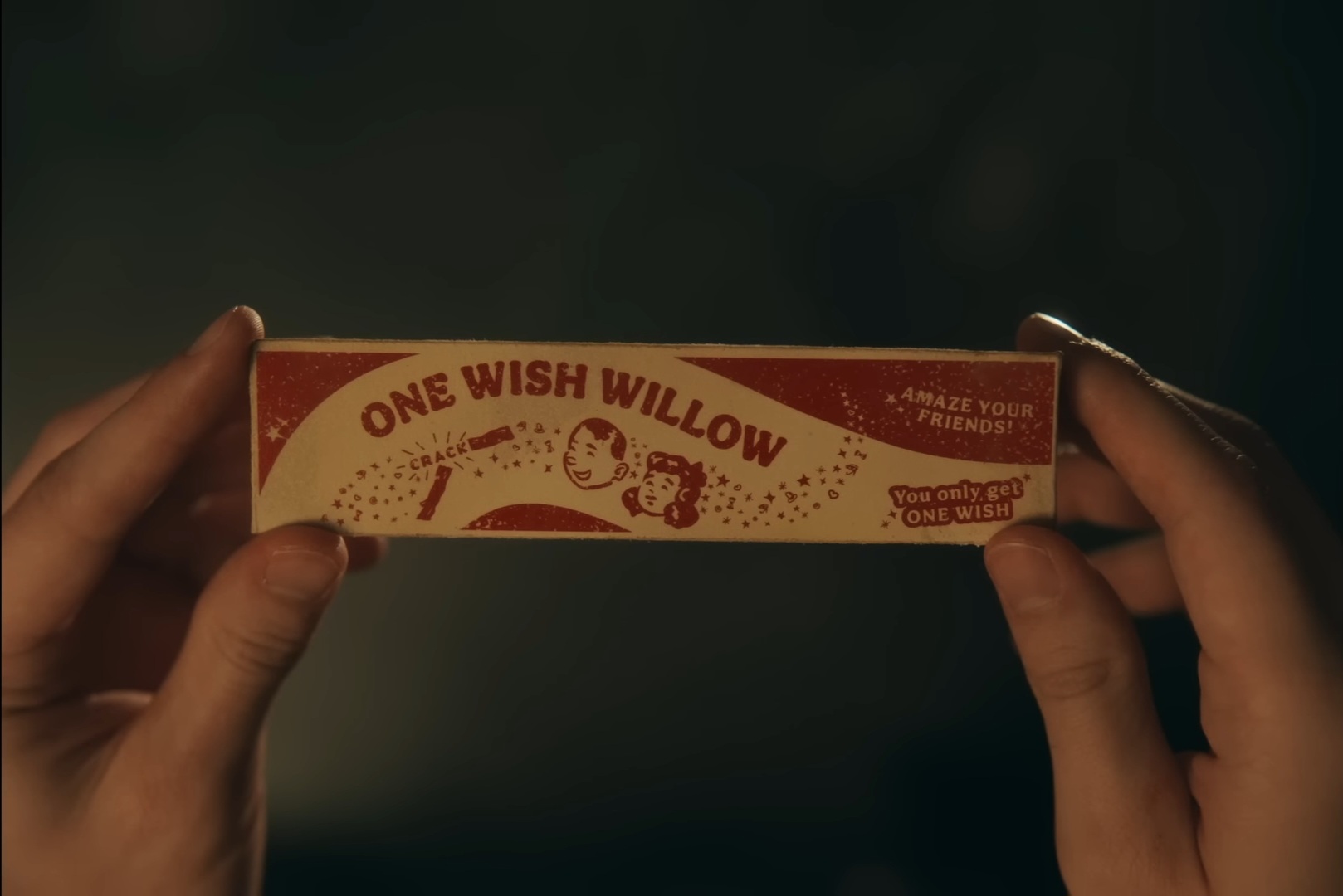
The film revolves around a novelty toy called a One Wish Willow, which is believed to grant anyone’s wish when snapped. Fearing that he has lost his chance to confess his feelings, Bear (Michael Johnston) uses it to wish for his long-time friend and crush Nikki (Inde Navarrette) to love him “more than anything in the world.”
The immediate aftermath of the wish plays out like a dream: shared mornings, movie nights and non-stop affection from a whole new Nikki.
However, this dream is shattered by Nikki’s increasingly erratic and obsessive behavior. Bear is suddenly faced with a grim reality: he got exactly what he wished for, but was not prepared for Nikki’s total devotion. As the wish takes hold, their relationship eventually deteriorates into something destructive and unnerving.
Obsession is an exhibition of incredible horror anchored in Barker’s strong vision for the film and a screenplay that is unrelenting in turning characters from bad to worse.
The film portrays Bear as its main subject of pity as he deals with the consequences of a mistake spurred by desperation. Although cast in an empathetic light, Bear’s role becomes the subject of critique. This exposes how he is responsible not just for his own suffering, but also Nikki’s, who is suspected to be conscious of but is unable to consent to what is happening.
Barker explores this dehumanization of women through Bear’s unwillingness to set Nikki free, despite realizing that her behavior was influenced by his wish. What once seemed like an innocent desire to be with the woman he loves turns into a selfish need to preserve his view of their “relationship.”
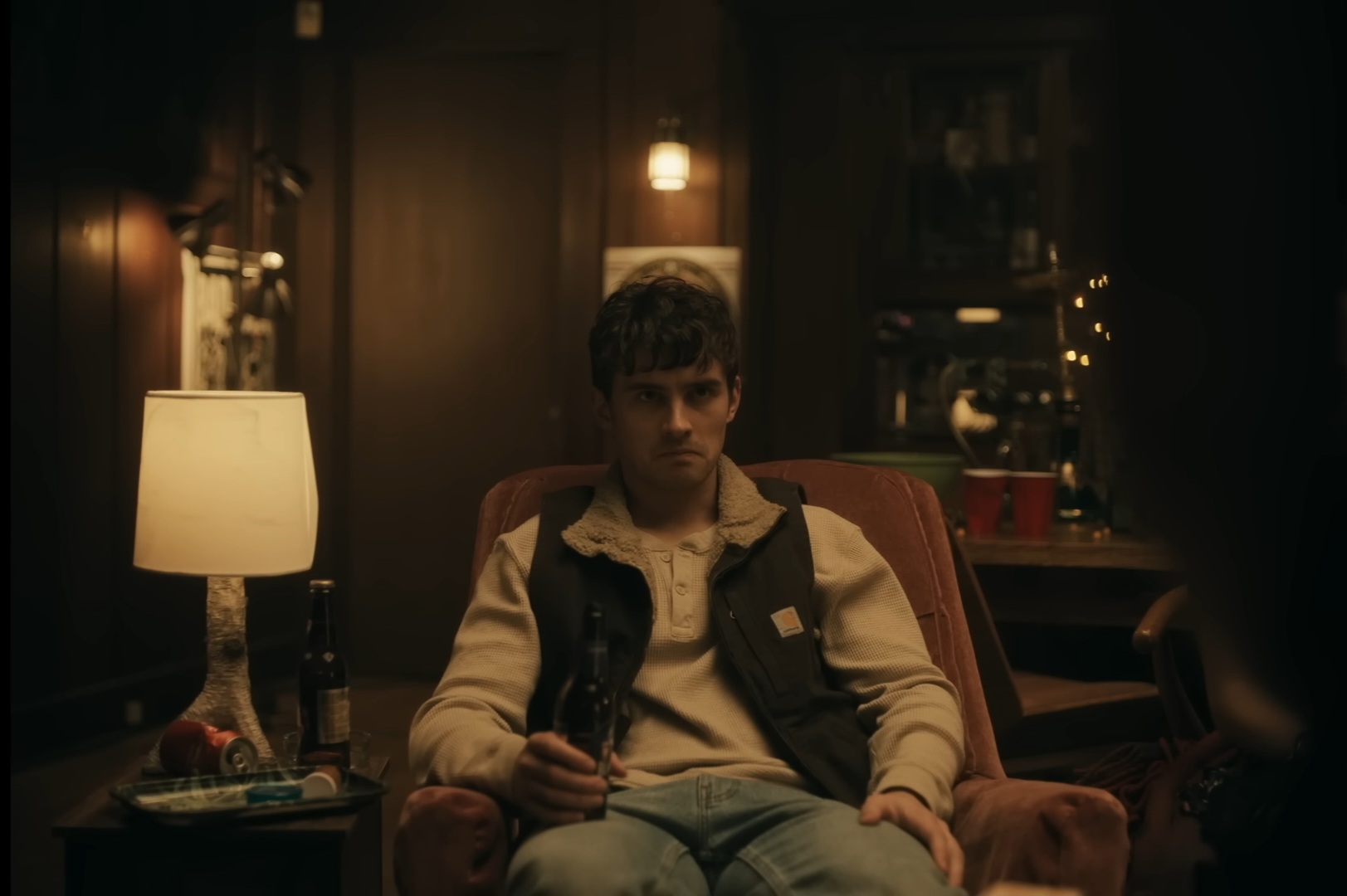
Bear’s persistence is also the source of the film’s subtle horror, which can be seen in his refusal to set Nikki free, even if it means trapping her in the pain of being fully awake inside a body that no longer belongs to her. His choice signifies how his perception of love has warped. Instead of loving Nikki, he was driven to obsessively preserve their relationship at all costs. This brilliantly subverts Nikki’s titular obsession and demonstrates that her reckless infatuation was merely a mirror of Bear’s initial, toxic fixation.
The film begs the question of whose obsession it was about—Nikki, who confronted jealousy with increasing violence, or Bear, who took advantage of her enchanted state against her will.
Obsession features knockout performances from its two lead actors, Johnston and Navarrette, whose harrowing performance became the foundation of the film’s horror.

Navarrette’s portrayal of Nikki’s unpredictability allows her character to serve just the right amount of fright. Her exceptional facial acting was evident in scenes where Nikki maintained static facial expressions for long stretches, from her creepy smile to her recently viral frown. The American actress’s vocal performance was also exceptional, ranging from off-putting baby talk to blood-curdling screams, often executed in quick succession.
Johnston delivered an excellent performance as Bear. His character, while primarily seen in self-inflicted distress, is never exempt from wrongdoings. Through his delivery, Johnston made Bear easy to empathize with despite making him inherently pathetic.
Obsession gains narrative depth through its scriptwriting.Though Bear is initially perceived as a nice, awkward guy, his true character is revealed by his decisions that can be seen as dehumanizing and controlling.
The film’s effective horror hinges on eerie composition and lighting. By using depth of field to trap the characters in the foreground and background, the cinematography creates a suffocating sense of constant surveillance, making the sudden bursts of violence feel inevitable.

Nikki’s face is often obscured in darkness, which contributes to the bewilderment of her madness. This is best shown when she came to Bear’s apartment uninvited in the middle of the night, the subtle glint from her eyes being the only distinguishable feature in her silhouette. Her face is also subtly distorted with an uncanny look in scenes of total darkness, giving a disturbing sense that something is not quite right.
The film also intensifies the mental strain by zooming in on certain shots, forcing the viewers to focus on the characters’ reactions as they become increasingly uncomfortable, thus heightening the tension already built by the anticipated horror.
Scenes of great tension linger longer than expected, but they never overstay their welcome. Instead of feeling dragged out, the anxiety intensifies because of the build-up after every scare.
Composer Rock Burwell’s musical score also enhances the emotion of each scene. The score swells with tension in moments of anxiety and provides a deceptive sense of triumph in scenes of emotional catharsis, like when Bear is presented with a potential escape from his situation only for it to be soiled by his prior decisions.
In the end, Obsession successfully examines the destructive nature of desire and meditates on the tendency to be selfish. It analyzes victimhood and control, forcing the audience to contemplate their preconceived notions of relationship dynamics. F