
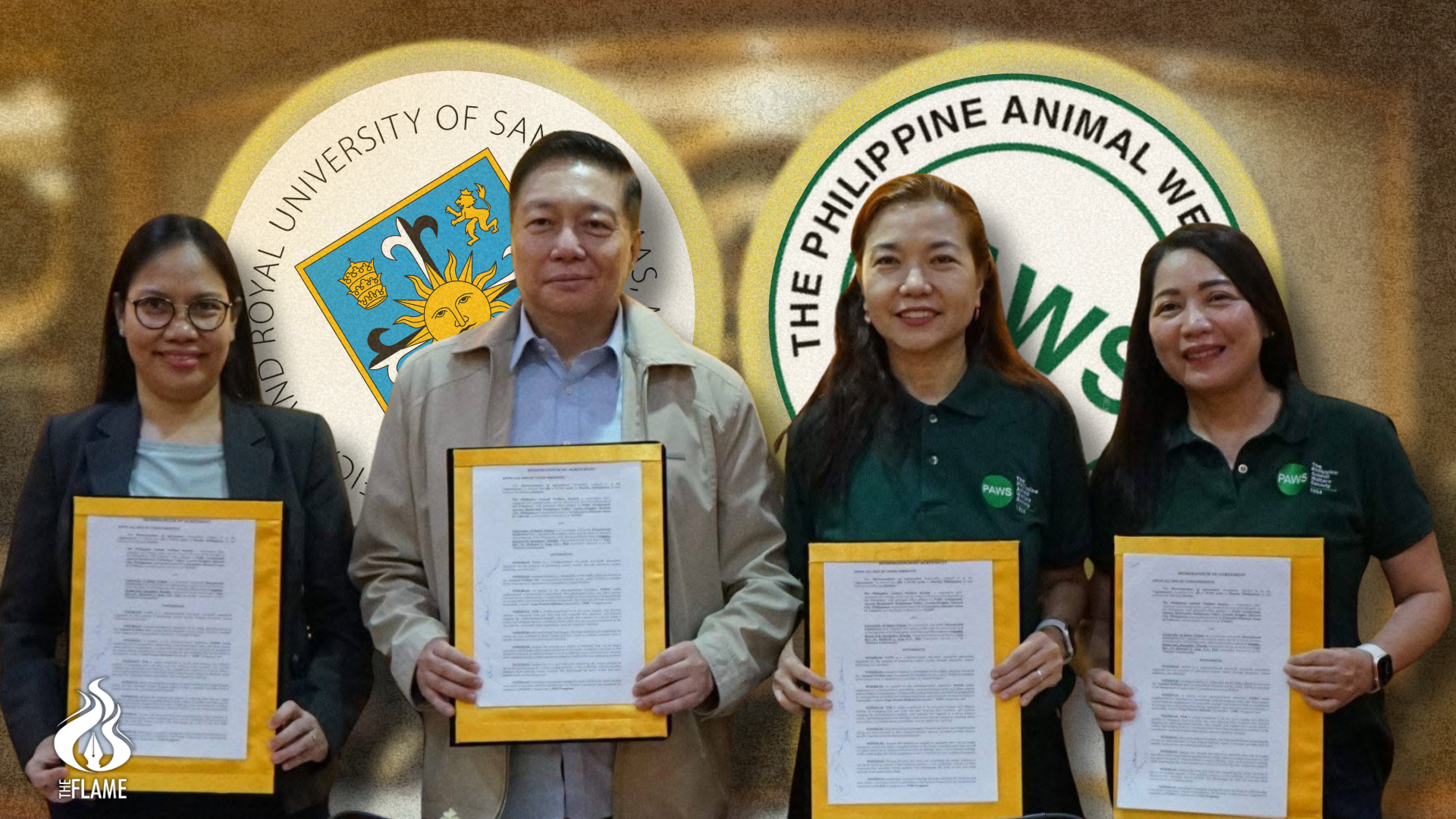
THE UNIVERSITY of Santo Tomas (UST) and the Philippine Animal Welfare Society (PAWS) have agreed to work together to implement an alternative approach to managing the population of cats living on campus.
Through the “Kabali-Cat program,” the University will use the Trap-Neuter-Vaccinate-Return (TNVR) method to control the stray population.
The process involves gathering stray cats, surgically spaying or neutering them, vaccinating them against diseases like rabies and feline distemper and returning them to their safe environment. Instead of sending stray cats to animal pounds, where they are often at risk of being put down, the TNVR program allows them to live safely on campus while preventing overpopulation.
The partnership was formalized through a memorandum of agreement forged on June 5, 2026. It was signed by UST rector Fr. Richard Ang, O.P., UST Health Service director Dr. Sheryl M. Dionisio and PAWS directors Anna Nieves Cabrera and Maria Cristina Martinez.
“This agreement with PAWS seeks to foster a school campus that is healthier, safer, and more sustainable,” Ang said.
Ang said campus cats offer comfort to the Thomasian community, emphasizing that these animals are living beings that deserve protection from cruelty.
With this move, UST becomes one of 30 PAWS partners nationwide committed to balancing animal welfare with a safe and healthy environment for students and staff.
PAWS is a non-profit organization dedicated to improving and promoting animal welfare in the country. F