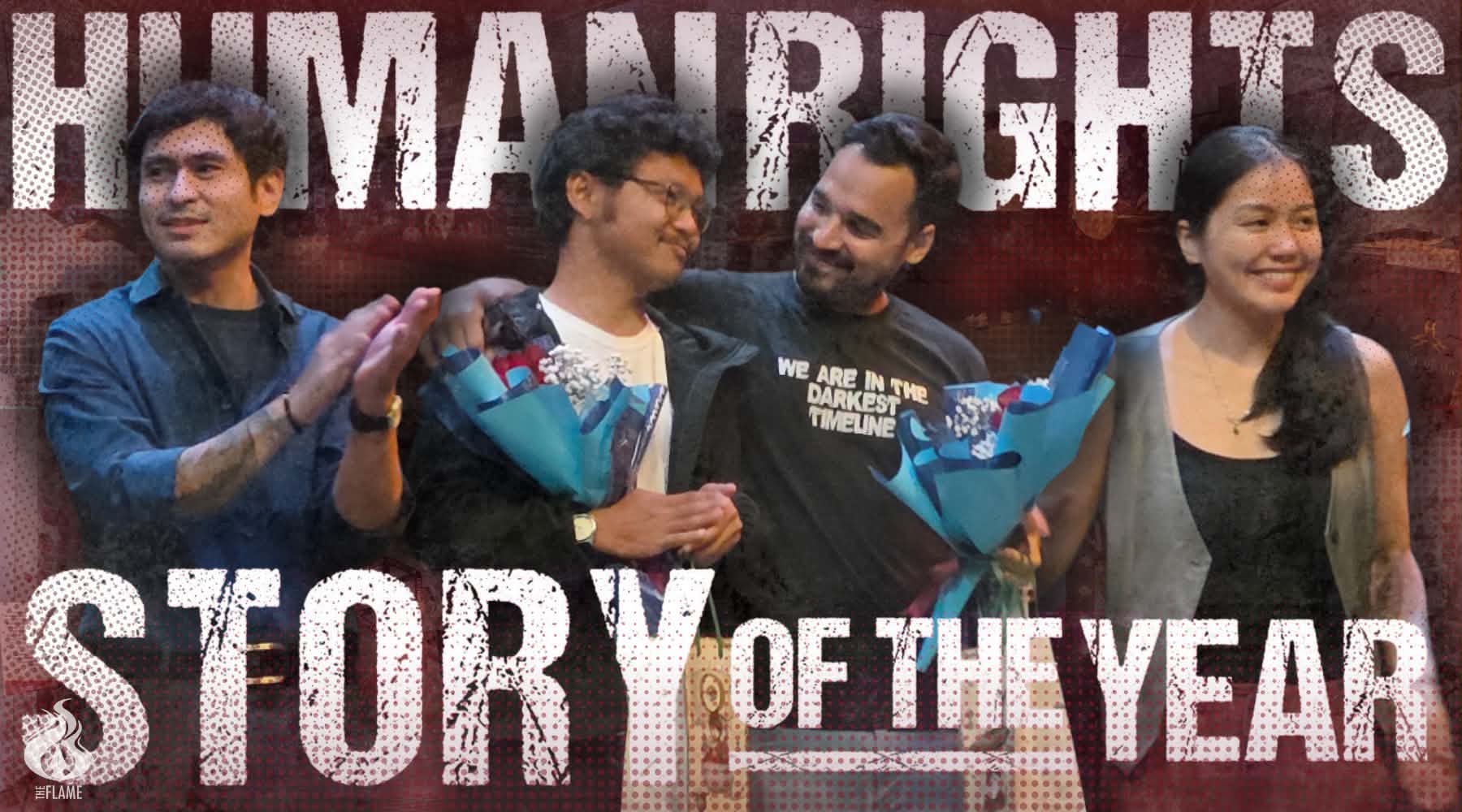
HOW SHOULD a journalist fulfill his mission to serve the disadvantaged in an industry that values both idealism and profit and highlights certain truths over others?
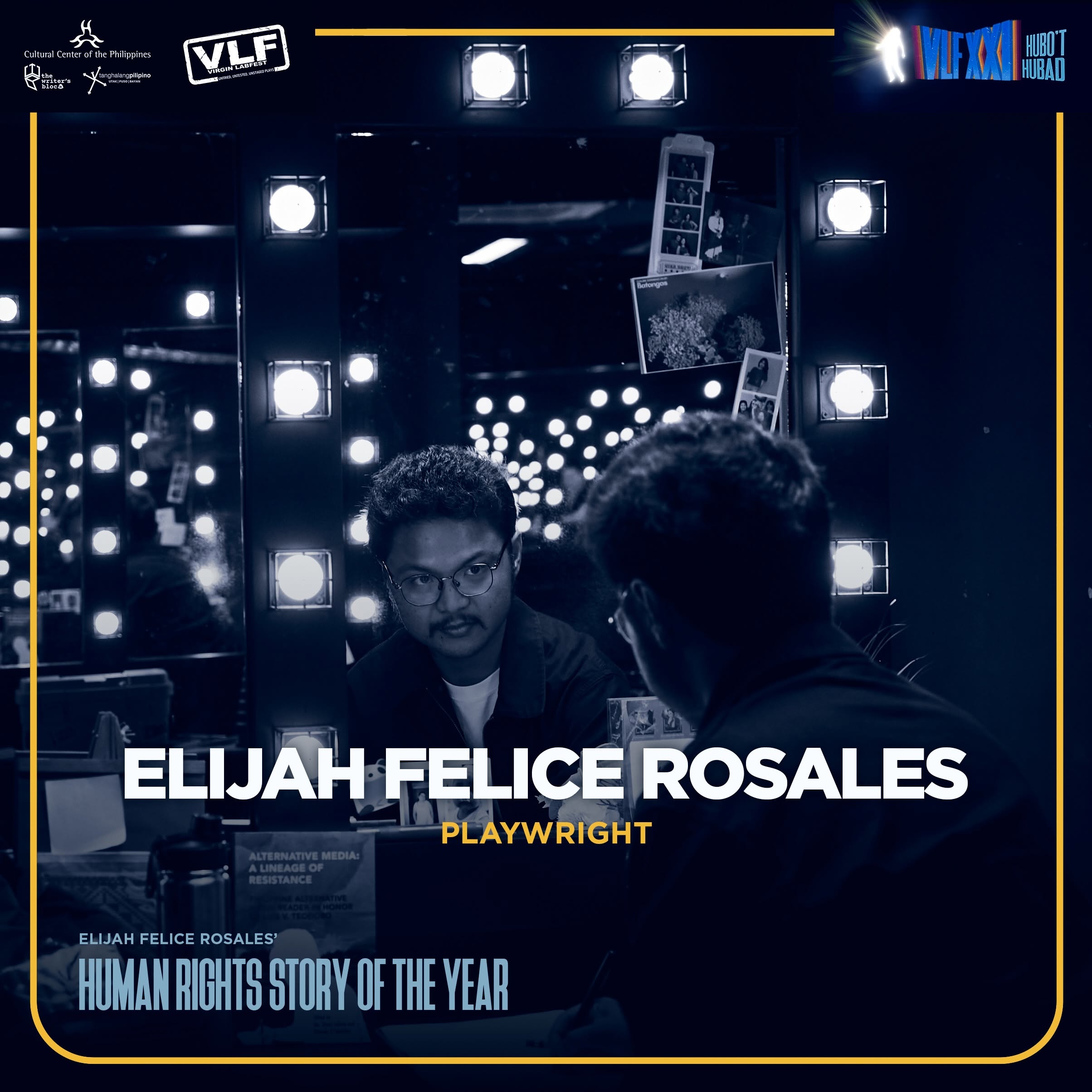
For The Philippine Star business reporter and Virgin Labfest newcomer Elijah Felice Rosales, finding an answer to the dilemma entailed stepping out of the newsroom and into the world of theater.
Directed by Nelsito Gomez, Human Rights Story of the Year is built on the inner conflict of a journalist who laments the limitations and shortcomings of his job. The production centers on the argument between Ish (Justine Peña) and Doy (CJ Navato) — two award-winning journalists whose recognition is built on their subject, Dolor.
Their dispute is about the content of their award-winning article, in which Ish intentionally omitted information on their subject — a victim of the Oplan Tokhang anti-drug operation — to come up with a narrative worthy of a distinction.
The one-act play was part of the 21st Virgin Labfest, which ran from June 3 to 28 at the Cultural Center of the Philippines’ Tanghalang Ignacio Gimenez. Themed ‘Hubo’t Hubad,’ the 12 selected productions for this year’s Virgin Labfest seek to peel back the layers and mystery of human vulnerability.
RELATED: Human Rights Story of the Year: When the truth is not enough
The limits of one’s vocation
When asked to describe its themes, Rosales explained that the play explores “the gray lines of media ethics,” where certain limitations can prevent journalists from fully pursuing their stories, such as economic constraints or the lack of proper avenues to share their work.
These observations were then translated into his script, in which his characters crossed ethical boundaries to achieve success in their field. From omitting crucial information to accepting bribes, Rosales illustrated how people like Ish and Doy would cave in to such acts for the sake of recognition.
“Kaya siguro ‘yung mas malaking tanong is, kung ganito na ngang may challenges and limitations, kaninong truths ‘yung nangingibabaw at kaninong truths ‘yung napapailalim?” Rosales told The Flame.
(“I guess the bigger question is, if there are challenges and limitations like this, whose truths end up mattering more and whose truths end up mattering less?”)
As a writer who traverses between journalism and literature, Rosales noted that a core similarity exists between the two fields despite focusing on hard facts and creative truths, respectively.
“At the end of the day, pareho naman ang kanilang objective. Sa ’kin, it’s to achieve a bigger world for humanity,” he said.
(“At the end of the day, they share the same objective. For me, it’s to achieve a bigger world for humanity.”)
Rosales wrote Human Rights Story of the Year in 2024 during his time at the Virgin Labfest fellowship program. He described the first iteration of the script as appearing more of a documentary rather than an investigative piece. Despite the changes, his intentions for the story’s thought experiment remained.
The power of perspectives
Aside from its heavy criticism of the media industry, Human Rights Story of the Year urged the audience to listen to the voices of society’s most vulnerable. Rosales likewise presented how the media may take advantage of the marginalized and how it may merely portray such persons as victims of their hardships.
Throughout the play, he highlighted how the practice cannot be reduced to a simple black-and-white understanding.
“Masama [para] sa ’kin kung nagiging one-dimensional ‘yung pagtingin natin sa mundo. Isa sa mga gusto kong maging hamon nitong dula ay ‘yung portrayal ng mga mahihirap na tao – ng mahihinang tao sa lipunan. Palaging ang nagiging portrayal ng media. . .poverty porn. Palaging one-dimensional ang pagtingin ng media when it comes to [their suffering],” he said.
(“It’s bad when we start seeing the world in one dimension. One of the things I want the play to challenge is the portrayal of poor people – vulnerable people in society. The media always portrays it as poverty porn. The media sees their suffering one-dimensionally.”)
The playwright encouraged the audience to look beyond a single perspective when talking about people in and out of the news cycle.
“‘Yun ‘yung gusto ko sanang maging hamon ng dula sa mga manonood, ang tumingin pa ng mas maraming anggulo sa buhay na [may] mas malawak na framing,” Rosales said.
(“That is what I want to challenge the audience with my play, to see more perspectives in life with a wider framing.”)
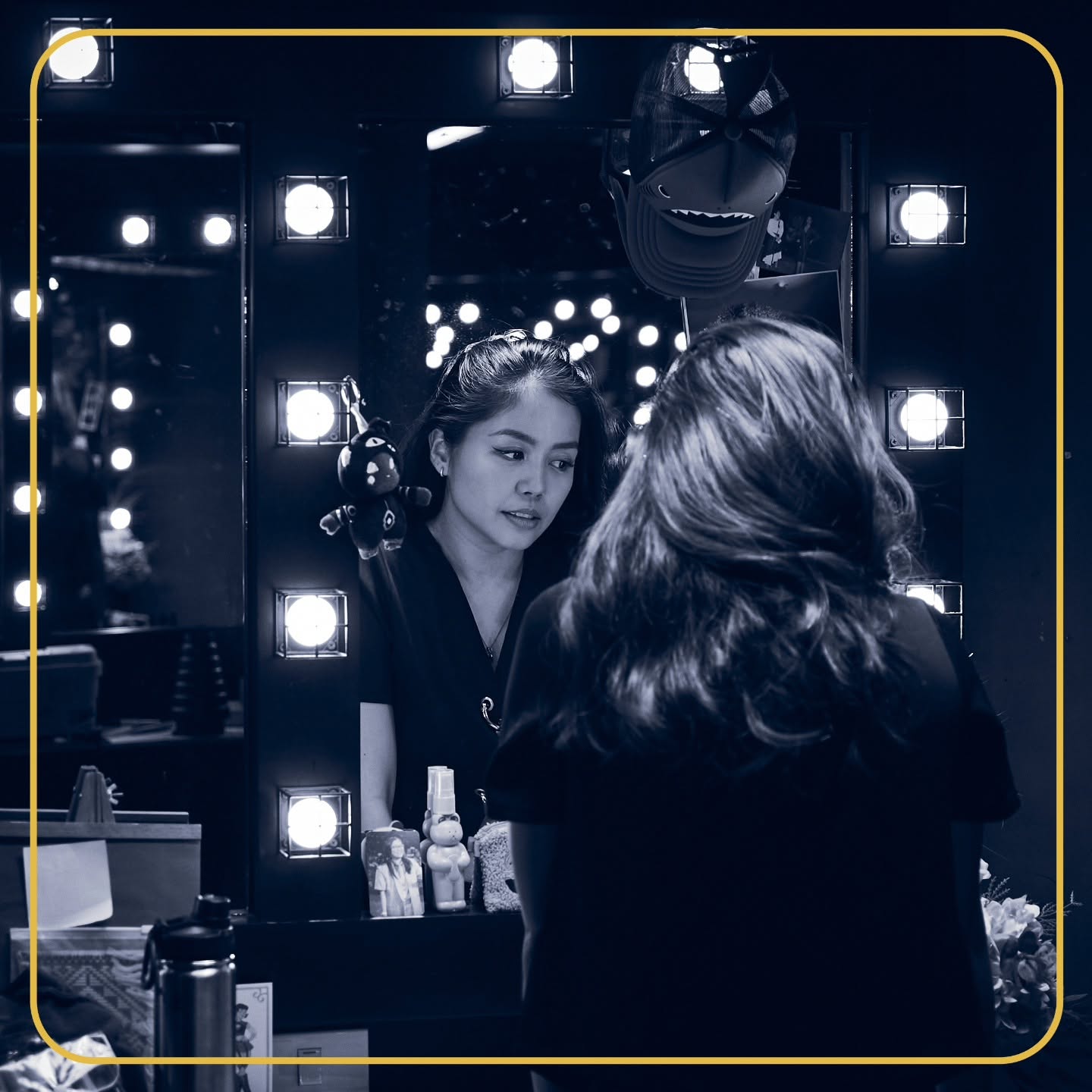
Justine Peña, who played Ish, commended the characters’ moral complexity. She described her experience as “challenging” because the characters do not fit a strict protagonist-antagonist stereotype.
“It’s rare that you find shows that champion the gray and champion the questionability of all their characters,” Peña told The Flame, lauding the play’s characters for being heavily flawed while still desiring to uphold a sense of morality.
Rosales added, “Ayokong idolohin mo ‘yung tao pero ayoko rin namang kamuhian mo siya. Gusto kong may pulutin ka sa kaniya kasi katulad mo siya.”
(“I don’t want you to idolize the character, but I don’t want you to despise them too. I want you to learn something from them because they’re just like you.”)
When the curtain falls
CJ Navato, who played Doy, said he became more vocal about social issues while taking part of the play’s production.
“I’m really grateful for this opportunity kasi it gave more depth sa pagkatao ko. Bakit nga ba ‘di ako nagsalita about this or bakit ‘di ako masyadong [naging] passionate about these things?” he said.
(“I’m really grateful for this opportunity because it gave me more depth as a person. Why didn’t I speak up about this or why wasn’t I as passionate as I should be about these things?”)
Alternatively, Peña reaffirmed her outspokenness, moved by the play’s commentary on the consequences of truth.
“I’ve always been a relatively outspoken person with my beliefs and things, but this show sort of became a reminder that sometimes there is a cost to truth. Napakahalaga na magsabi ng totoo, pero minsan ‘yung totoo, ‘di naman ‘yun ‘yung nakakabuti,” she said.
(“I’ve always been a relatively outspoken person with my beliefs and things, but this show sort of became a reminder that sometimes there is a cost to truth. Telling the truth is very important, but sometimes, it may not even be the right thing to do.”)
Not the type to be didactic about his work, Rosales said he wants the audience to be more critical of the industry that produces and dictates one’s truths. According to him, people should become more wary of what they consume instead of blindly accepting what is being released.
“Maybe, just maybe, paglabas natin ng entablado we treat our idols like that. We treat our celebrities like that. We treat our journalists like that,” he said.
(“Maybe, just maybe, when we leave the performance we treat our idols like that. We treat our celebrities like that. We treat our journalists like that.”)
“We [should] check them, we [should] look into their biases. Huwag natin silang itrato na parang celebrity. They’re journalists, for God’s sake.”
(“We [should] check them, we [should] look into their biases. Let’s not treat them as if they’re a celebrity. They’re journalists, for God’s sake.”) F