
THE FURY of the gods is no match for the backlash endured by Christopher Nolan’s adaptation of Homer’s ancient epic.
Yet, like its titular hero, The Odyssey defies the odds and comes home triumphant, proving to be a necessary admonition for a society that seems to be desensitized towards violence.
The Odyssey is the modern theatrical adaptation of the classical epic attributed to the ancient Greek poet Homer. It was written and directed by award-winning filmmaker Christopher Nolan, who is also known for his critically acclaimed blockbusters Interstellar (2014) and Oppenheimer (2023).
Much like the source material, the film follows Odysseus (Matt Damon) after his 10-year battle for the city of Troy. After being away from his kingdom, Ithaca, he and his soldiers encounter a myriad of monsters and misfortune as they head back to its shores.
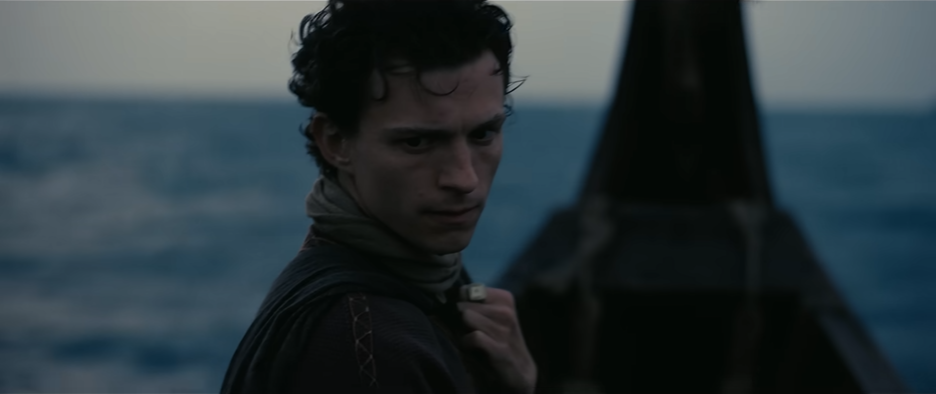
The lost king must return home to stop his realm from deteriorating further into chaos, with suitors vying to marry his wife, Queen Penelope (Anne Hathaway), and killing his son, Prince Telemachus (Tom Holland) to steal his throne.
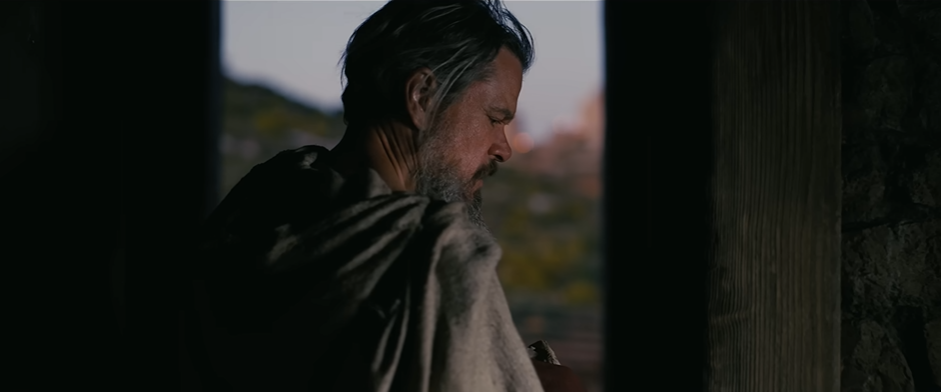
The film opens with an ominous recounting of Odysseus’ tale, delivered by a bard played by the American rapper Travis Scott. While the casting seems atypical, Nolan makes it clear up front that his adaptation is a fresh take on the epic, highlighting the resilience and evolution of oral traditions through rap.
In order to adapt the epic for a modern audience, Nolan turned to the 2017 translation by Classical Antiquity expert Emily Wilson, the first woman to interpret the text in English. Wilson’s rendition was praised as an accessible version that preserves the poetic writing of the original text through its own metric line and musicality.
However, Wilson also drew flak from critics who claimed that her feminist and progressive interpretation had oversimplified and strayed away from the material.
In an article for The New Yorker, Wilson explained that in most American English translations, the female slaves in Penelope’s court were labeled as “whores” and “sluts,” terms that were not in Homer’s version, but were used to justify the punishment for betraying their queen. In her interpretation, she referred to them as “girls” to evoke empathy for the slaves and to present the grisly act for what it truly was.
Still, Nolan pursued his adaptation while using Wilson’s translation, following in its steps to make the classic more approachable.
Deviating from its material, The Odyssey modified the inner turmoil of its titular hero to support its central theme: the condemnation of war.
As Nolan showcased his modern take on an enduring material, people questioned his retelling of the story, deeming it an “unfit” portrayal of the original source. However, this temporal mismatch is precisely why The Odyssey is effective at presenting its core message.
Nolan lifts Homer’s depiction of brutality and its enduring consequences. He continued his depiction of an inventor’s guilt, showing how his characters deal with the consequences of creating weapons for mass destruction.
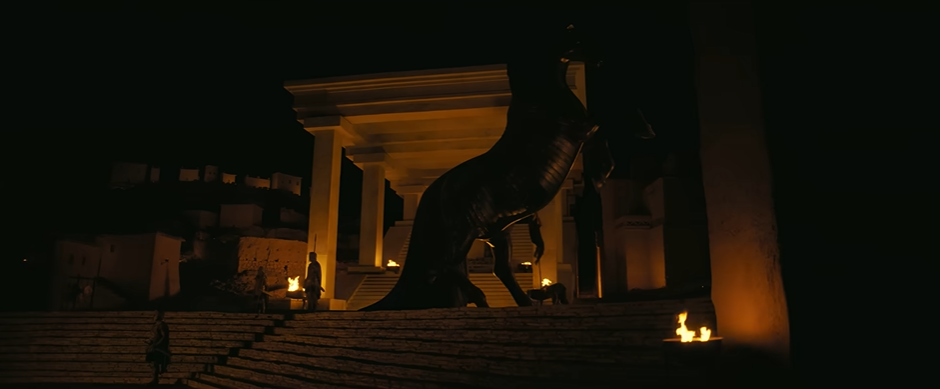
As it is famously known, the Trojan Horse was a clever and glorious scheme by Odysseus that allowed the Greeks to snatch their long-awaited victory in the Trojan War. In the film, however, it is portrayed unapologetically as a cowardly deception.
In a similar vein to Oppenheimer (2023), the protagonist, Odysseus, ruminates on the aftermath of his conquest of Troy, regretting the bloodshed he caused as the person behind the scheme.
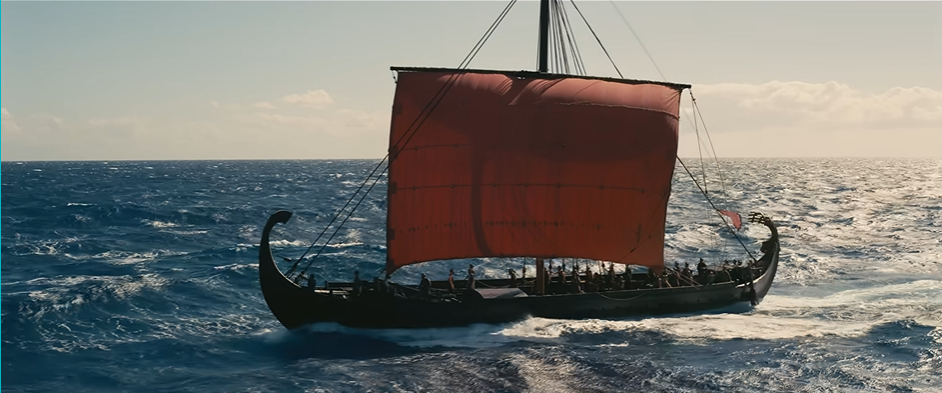
In Nolan’s interpretation, the episodic structure of Homer’s epic was also altered, shifting the tone of his adventures from obstacles to his homecoming to punishments for his role in the Trojan War.
One of the major changes spawned by this alteration was seen in the character of Circe (Samantha Morton). Originally known as the seductive and cunning sorceress on the island of Aeaea, Nolan takes the liberty of transforming her into a powerful witch, angered by the violations she has endured.
The film also omits Odysseus’s defining moment of poetic hubris — the “nobody” ruse against Polyphemus, the man-eating cyclops son of the god Poseidon. Odysseus and his men escaped from him in a cave full of other cyclops by piercing Polyphemus’ eyes.
In Homer’s version, Odysseus announced himself by the name “Nobody”, so when Polyphemus sought help from the other cyclops, he exclaimed, “Nobody is hurting me!”
Odysseus flaunted his name to claim credit for the monster’s defeat, causing the cyclops’ demise. This act of boastfulness caused Polyphemus to learn his maimer’s name, pray to his father for vengeance and incite Poseidon’s curse that hounded Odysseus throughout his journey.
In the film, this focus was shifted: Polyphemus simply prays for justice after being blinded, making violence itself the cause of the hero’s undoing rather than arrogance.
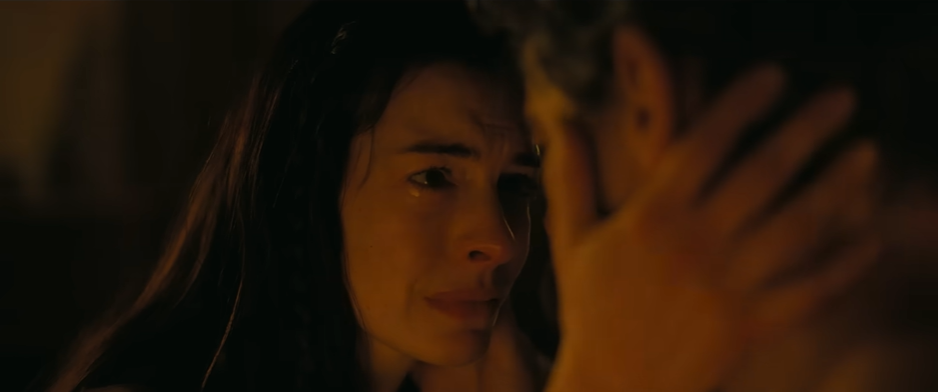
Only when Odysseus surrenders to the gods’ will and accepts the consequences of his violence is he finally allowed to return home to Penelope and Telemachus.
Katharsis
It may as well be a Herculean task to adapt an almost 3,000-year-old literary classic into a film for modern audiences, but The Odyssey crafts an exhilarating experience with almost every aspect hitting the mark — from the performances, score and production.
Damon delivered a strong performance as the jaded hero, balancing despair and grit, ashamed of his most glorious victory. Hathaway also deserves recognition for her portrayal of Penelope, clever and resilient through her burdens.
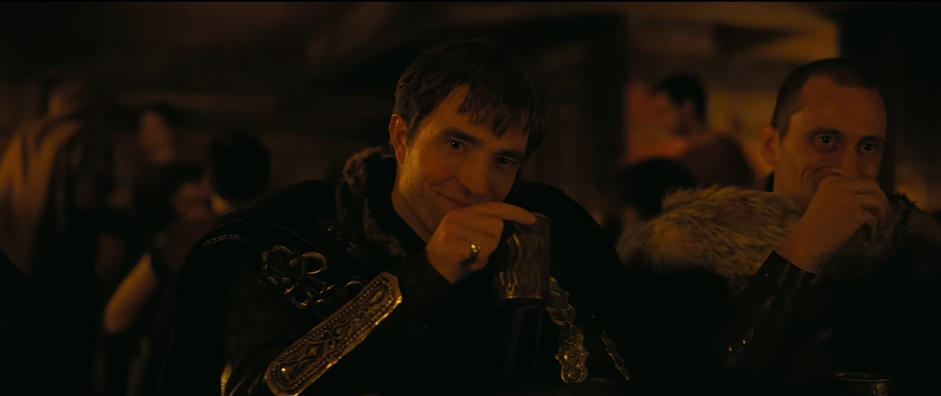
Pattinson’s performance as Antinous turned his inherent charm into a tool to mask his character’s spineless cowardice, agitating the audience with his bold arrogance and satisfying them with his pathetic sniveling.
African actress Lupita Nyong’o, who played Helen of Troy, faced online outrage prior to the film’s release as some commented that her casting was insensitive to the character’s Greek heritage. Others also described her as an “antithesis” to Helen’s mythical beauty.
Likewise, the casting of transgender actor Elliot Page as Sinon was also met with mockery.
According to critics, Page was not “masculine” enough for the role.
Regardless of the online ridicule, Nyong’o and Page gave memorable performances through important supporting roles in the protagonists’ emotional journey despite their limited screen time.
Zendaya, who also drew flak for her multiracial background, delivered an emotionally moving performance as the Greek goddess Athena, shining in the film’s most vulnerable scene alongside industry mainstays.
Still, the standout performance belonged to Morton. Although brief, the Golden Globe awardee’s appearance stole the show with her understated portrayal of Circe, cementing her status as a force of nature.
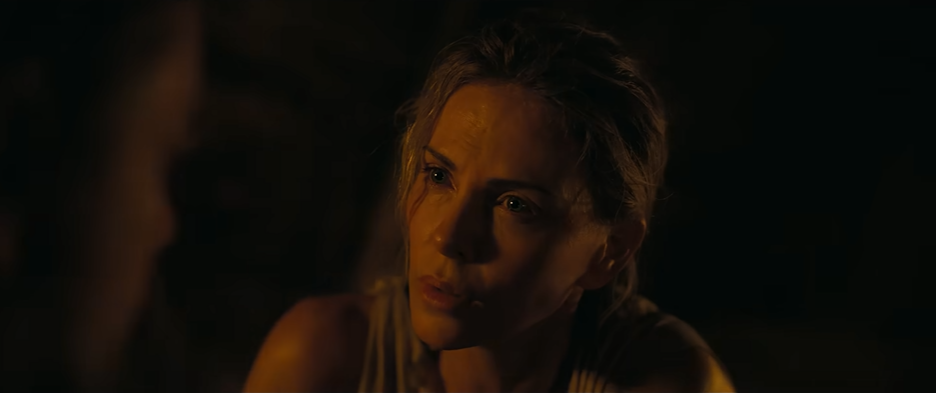
Aside from its impressive cast, The Odyssey excelled as a grand spectacle, offering a grounded yet visceral take on Greek mythology’s magic and monsters.
Hoyte van Hoytema’s cinematography captured the intrinsic beauty of the film’s on-location sets. The hundreds of background actors turned barren lands into thumping landscapes full of movement and life.
Nolan, known for his strict adherence to realism in his work, extensively incorporated practical effects in the film to enhance its sense of wonder. This decision gave a realistic visualization of mythology that computer-generated graphics would have failed to meet.
The Odyssey proudly boasts its practical techniques: from the giant Laestrygonians rendered mammoth through forced perspective, to the petrifying transformation scene, akin to clay being sculpted on Circe’s island.
The film’s dismissal of CGI sets was also possible through production designer Ruth De Jong’s leadership. Her vision gave birth to monumental set pieces that significantly enhanced the film’s awe-inducing action scenes, such as the towers destroyed during the Siege of Troy and the life-sized Trojan Horse.
Accompanying the visual spectacle is Ludwig Göransson’s omnipresent score, which soars during high-intensity sequences and mellows during moments of intimacy and allure.
A contemporary tragedy
Despite Nolan’s mastery, some aspects of the film still fell flat.
Given its three-hour runtime, presenting relevant information in one go aligns with Nolan’s vision for a more accessible adaptation, helping audiences fully immerse themselves in the plot.
But the exhaustive explanations felt patronizing at times. In some scenes, Nolan gave details in one swoop rather than letting the tale unfold as the film goes on.
The film’s anachronistic staging, with actors maintaining their natural accents while performing a modernized script, also breaks the illusion. Jon Bernthal’s heavy Baltimore-accented Menelaus and Telemachus’ casual use of the word ‘dad’ instead of the more traditional ‘father’ were noticeably out of place in the Ancient Greek setting.
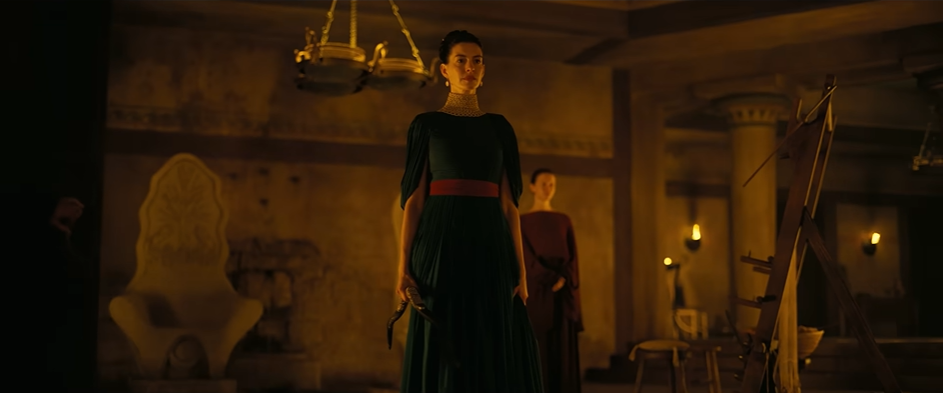
Editing also became one of The Odyssey’s low-lights. While there to establish a quick pace, the inconsistent, unrhythmic editing detracted from the film’s overall quality.
For instance, during the first act, scenes would cut erratically in quick succession. This choice made it difficult for the film to settle. In its most baffling moments, scenes of two characters talking would include a split-second cut of another character listening in, an odd intrusion that dazes rather than improves the film’s tempo.
Furthermore, the choice of costumes was contemporary and uninteresting, especially in the men’s clothing and armor. Given the promised grandeur of Nolan’s caliber, demonstrated in his other award-winning films, accuracy and glamor were expected.
At the beginning of the film, Telemachus was dressed in dull, shoddy garb, making him look less like a prince and more like a medieval peasant seeking sanctuary. Similarly, Calypso (Charlize Theron) – clad in a minidress and fishnet stockings – projected an image of a modern woman rather than a heavenly nymph.
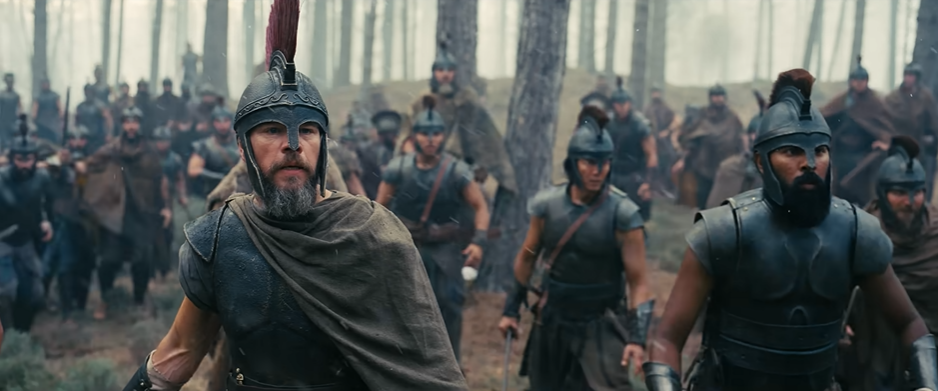
Classical antiquity experts and enthusiasts also noted how the film’s armor design was centuries off from the correct Bronze Age armor seen during Ancient Greece. The periodic mismatch also extended to contemporary aesthetics, with some comparing Agamemnon’s (Benny Safdie) sleek black armor to costumes from Nolan’s The Dark Knight (2008).
While the initial backlash of Agamemnon’s attire felt warranted, the film did a good job at showing its purpose. Unlike the rest of the costumes, his stiff, hulking attire felt like a deliberate choice — presenting a spineless coward hiding behind brutality in pursuit of false honor.
In addition, the design for the Laestrygonians, while simplistic, carried both visual and narrative weight. The image of giants clad in iron, juxtaposed with the bronze armor worn by Odysseus and his men, visually presented the end of the Bronze Age, ushered in by the sacking of Troy.
Heroism deconstructed
When asked about “competing” with the original text, Nolan shared on Good Hang with Amy Poehler that he applied the lessons he learned working on The Dark Trilogy to making The Odyssey.
From Batman to Odysseus, Nolan admitted that no adaptation could ever compete with the public’s idealized perception of beloved stories and characters. With this in mind, he approached adapting the original works with sincerity and reverence while still affirming his own artistic vision.
Films have the power to reshape audiences’ perspectives on classic works, leading them to mistake directorial changes for facts and to treat them as analogous to the source material.
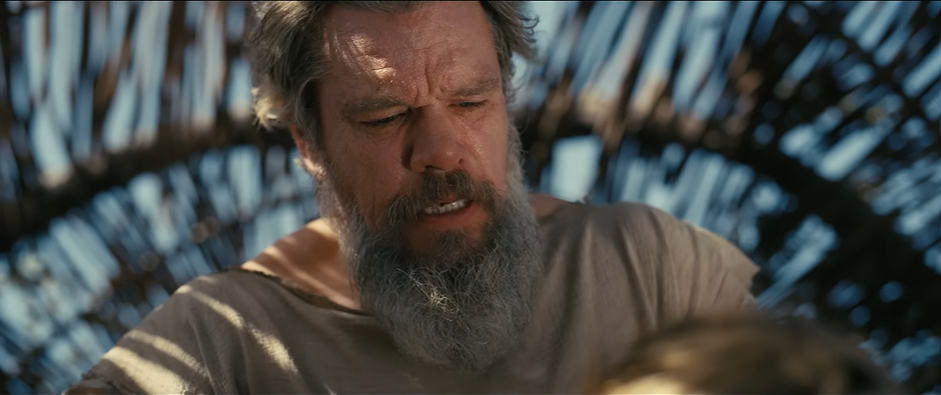
Behind the grandeur, Nolan’s The Odyssey deconstructs the horrors of heroism and the tragedy in glory. For the first time in its thousands of years of existence, the hero is no longer portrayed as cunning and adventurous, but rather as a fallible man atoning for his hubris.
Whether you are an avid fan of the original epic or a newcomer to Homer’s works, The Odyssey stands as a transcendent take on the beloved epic. It honors the classic while reinventing it for modern eyes, allowing people to view traditional text through stunning visuals and exhilarating action. F