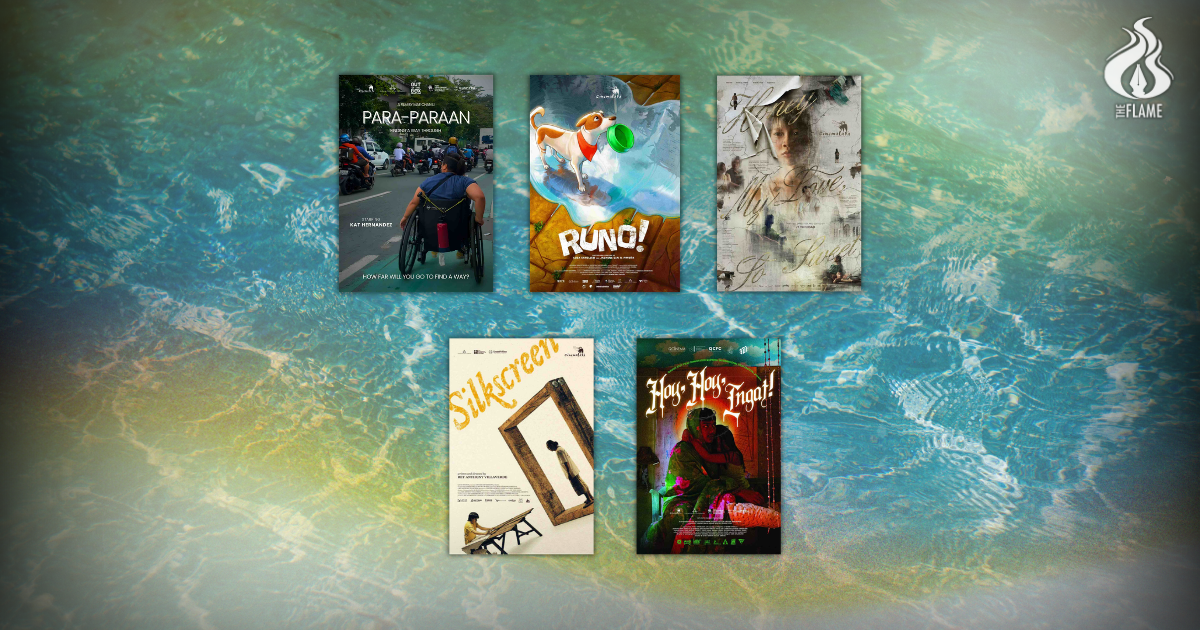
SPOTLIGHTING RELEVANT sociopolitical themes and giving exhibition to the nation’s finest filmmaking, this year’s Cinemalaya Shorts A demonstrated why local cinema remains vital as an authentic reflection of the country with subject matters ranging in gender, disability and poverty.
The Shorts A collection of the 22nd Cinemalaya Philippine Independent Film Festival debuted in August, offering a curated mix of genres and mediums ranging from observational documentaries to vibrant animation within a twenty-minute timeframe.
Para-Paraan
Directed by Mae Chan Li, the documentary short film Para-Paraan features Kat Hernandez, a disability advocate and competitive paralifter, as she navigates the largely inaccessible Metro Manila in her wheelchair, attempting to complete her three everyday tasks: withdrawing money, buying medicine and purchasing groceries.
The film gave up the typical audio commentary found in most documentaries and instead focused on Hernandez as she encountered many physical obstacles, including steep ramps and dilapidated sidewalks. This omission in commentary was a compelling technique showing the gravity of meticulous planning a person with disability has to go through simply to exist in a space not built for them.
The camera was always in close proximity to Kat as she treks through public spaces with varying difficulties. It staged her and her obstacles in the same frame, giving the audience a sufficient scope in understanding her struggles in the physical space.
Although the film left untapped potential to further showcase its advocacy due to its short runtime, Para-Paraan remained an eye-opening look at the daily struggles of disabled Filipinos that society often fails to recognize.
Para-Paraan was awarded the Special Jury Award in the Short Film Category during the Awards Night of Cinemalaya 2026 on Aug. 17 at the Shangri-La Plaza.
Runo!
The animated short Runo! tells the story of the titular aspin searching for her owner, Aimee (Nour Hooshmand), in a post-apocalyptic Metro Manila. Written and directed by Lysa Catolico and Jazmine Gin Pateña, the film relied on a team of animators to bring each frame to life.
Runo scours an urban cityscape infested with the undead, looking for food until she successfully reunites with her owner despite the risks concerning life and death.
The short was visually delightful, utilizing chalky line art and stylized textures that made its art direction stand out. It wove familiar aspects of Filipino culture, such as zombie intestines resembling knots of longganisa that Runo tried to gnaw on.
Jaw-dropping renditions of famous landmarks like the Epifanio de los Santos Avenue (EDSA) Shrine and Manila Bay served as the backdrop for Runo’s journey. While its narrative beats are simplistic, the story is charming enough to be endlessly endearing to the audience.
In a society that relegates aspins as the lesser breed, Runo! proved that dogs, no matter the pedigree, are loyal companions that will trek the callousness of the city to be with their beloved owner. The short film gleams with color and culture, and stands as a vivid testament to the potential of Filipino animation.
Runo! went on to win the Best Screenplay in the Short Film Category of the festival.
Honey, My Love, So Sweet
JT Trinidad’s Honey, My Love, So Sweet explores the discovery of sexuality through Life (Kian Co), a young child who, together with his mother (Mina Cruz), temporarily seeks shelter in a decrepit cinema house. Life undergoes self-realization with a newfound friend in Gab (Marcus Timbas), the son of the cinema’s protectionist (Manuel Tinio), while his father develops a relationship with Life’s mother.
Visually stunning, the film exhibited finely tuned cinematography enhanced by deliberate blocking and set design. Staged scenes with minimal cuts and slow camera movement fully conveyed the beauty of each frame. Thematically, the film used mirrors as a central motif that reflected characters’ inner sentiments, whether it be frustration with one’s predicament or the joy of exploration.
When combined with the idea that cameras use internal mirrors to function, the film served as an ode to self-realization and an inspiration to pursue one’s true self.
However, trading a traditional narrative storytelling that smoothly builds up its story from one scene to the next for a loose collection of scenes made the plot challenging to follow at times. Despite its clear intention to show rather than tell, the abstract storytelling can be exhausting to fully navigate.
Silkscreen
Written and directed by Rey Villaverde, Silkscreen is staged in an old silkscreen t-shirt printing shop, where Roy (Justine Lopez) is prodded by his father, Rene (Nonoy Barbaso), to uphold traditional printing methods that renounced the more effortless and efficient ways to print shirts through modern machines. While the two go back and forth, somberly arguing about their methods throughout the film, the young Roy ultimately upholds the old ways of printing t-shirts. Roy’s final work in the film was a final ode to his father, creating a retrospective recollection of each scene as two men being too coy to show affection.
Directed at a simmering pace, the film reflects on rapidly changing times and the necessity of preserving traditional art practices. The camera is still, giving the audience a chance to soak in the father and son’s passive yet tactile emotions in each scene.
A loved one’s memory survives in the practices they passed down, just as culture’s history lives on through the descendants who remember it. Silkscreen kept the tradition of silkscreen printing alive for the audience through its pristine sound design, which evoked the beauty of the labor every time a wood block slid through fabric.
The unexpressed love Roy and his father share lingered in each still frame, brimming with a tender yet gloomy feeling that bled from one scene to the next. Although it felt too flat to truly rouse emotions further, its curveball ending ties the film together and pays off its emotional conflict well, thanks to the two characters’ saga of emotional push-and-pull, which was revealed to have ended in a bittersweet conclusion.
While the father is relentless in keeping the family heirloom alive, the film successfully shows the value of keeping tradition alive — regardless of the inescapable passage of time.
Silkscreen was awarded the highest distinction in the Short Film Category, winning the Best Film Award.
Hoy, Hoy, Ingat!
After spending years poverty-stricken in Manila, Bhing (Victor Relosa) discreetly repossesses his seized jeepney to return to his home in the province with his younger sister, Baby (Alycia Avila).
To pay their rent, the siblings decide to momentarily escape their landlady, who is pursuing them due to overdue rent, and look for money. When things finally seem to be getting better, an unexpected family tragedy strikes.
Written and directed by Norvin Delos Santos, the short navigates the struggle rural migrants face in the city, torn between the harsh realities of urban life and the undeniable longing for home.
Hoy, Hoy, Ingat! used comedy and heartfelt drama to build an authentic scene of a family trying to get by despite their lack of wealth. With its brisk pacing and location-diverse story, it took the audience on a touching ride through the characters’ odyssey back home—from the chaotic streets of a city in protest to the tranquil commuter voyage aboard Bhing’s jeepney.
The film’s color palette was vivid, visualizing the two’s undying optimism despite their horrid predicament.
While the film captured emotions through the genuine relationship between its leads, its bittersweet resolution felt somewhat contrived. It meant to give the film a heartbreaking ending but it ultimately felt like it was simply appended rather than being the natural, rightful conclusion to the story. Nevertheless, the humor and the characters’ physical journey made the short film a memorable and heartwarming entry in the lineup.
The wholesome charm of Hoy Hoy Ingat! netted the Audience Choice Award in Cinemalaya’s Short Film Category.
Guided by the theme “Reel Reflections,” the Shorts A collection of Cinemalaya 22 set perfectly showcased the many facets of Philippine society, providing a necessary platform for the nation’s diverse voices.
The country’s rich cultural landscape has been tastefully depicted by filmmakers who not only have the skill but also a masterful understanding of their respective themes and advocacies. F — Adam Joseph Bolante (Videos courtesy of the Cultural Center of the Philippines Communication Division)