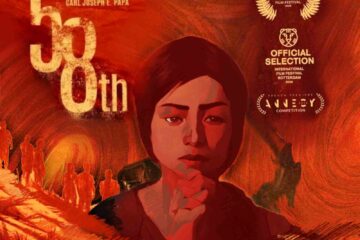
THREE children trapped in a state of oppression band together and find escape in the world of spider fighting, a game that unknowingly mirrors their town’s struggle with increasing military presence and its incessant red-baiting of the community.
The struggle, which is beyond the comprehension of young minds, constituted the theme of Ganggang (2026), the narrative feature that marked the return of UST Fine Arts alumnus JL Burgos to the Cinemalaya screen.
Burgos’ first narrative feature follows military officer Sarge Mendaro (Brian Arda), who is relocated to Sidhaya, a fictional village in Bulacan.
His son, Mel (Raine Dela Cruz), has no choice but to move with him. There, he meets Ilay (Kenneth Mendoza) and Ten-ten (Don Cerbito), who rope him into their favorite pastime: spider fighting.
Tormented by the school bully Anton (Prince España), the trio goes on a quest to find the strongest spider around town to beat him in a spider match, hoping their victory will finally ward off their tormentor for good.

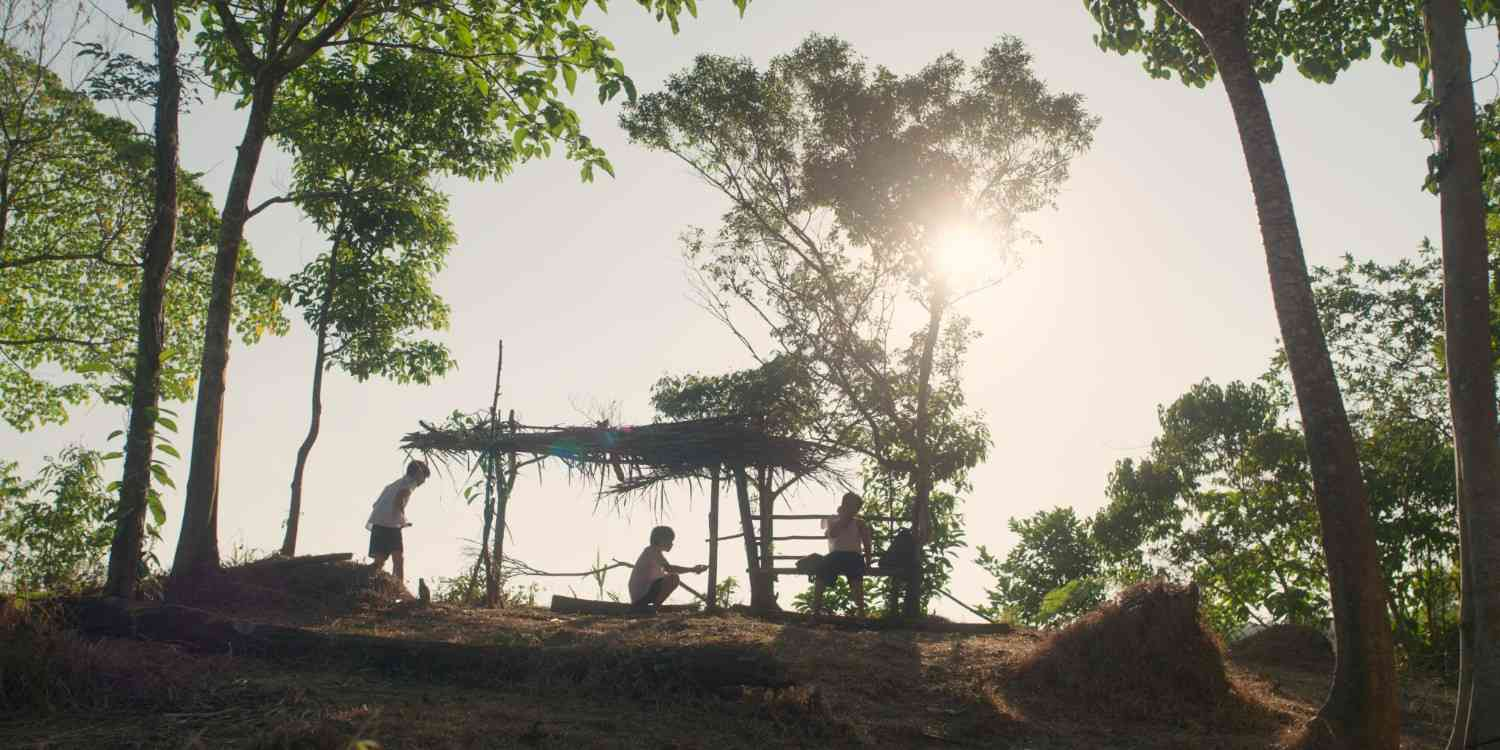
Ganggang presents violence as learned and continuous—a cycle that persists as long as it festers in young minds. The lead children view their surroundings through the lens of play, unaware of the terror that lies beyond their hideout.
Throughout the film, the townspeople are plagued and intimidated by the military presence, mirroring the threatening nature that Anton imposes on the trio. Through this parallel, Burgos highlights how violence and the search for justice become a never-ending loop.
For Mel, the physical abuse inflicted by his father feels right and earned. He braces for his father’s beatings and accepts them naturally, even defending his father to his friends who claim that no soldier can be trusted.
Ilay, who lives with his grandparents, lost his parents after they had been abducted for being accused of being a part of the New People’s Army—a trauma that makes him the target of bullying.
Meanwhile, Ten-Ten’s family was about to welcome his sister to the world when his father, a local farmer, is suspected of being an insurgent.
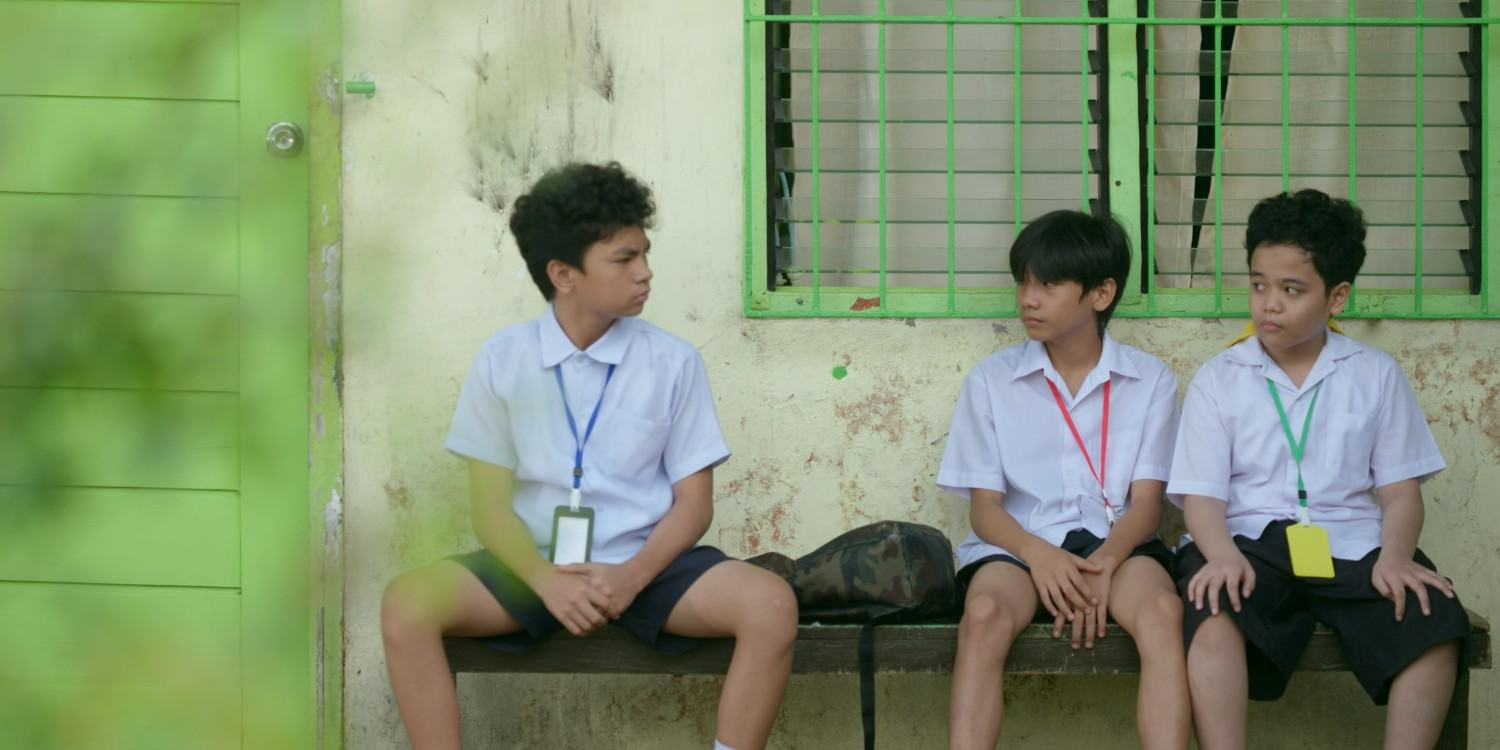
Despite being marketed as a coming-of-age story, that label barely scratched the film’s surface. Burgos spared no one in Sidhaya from grappling with violence—from corporal punishments, intimidation and forced abductions—narrating how the military’s wrongful accusation of innocent people as rebels affected an entire community.
Burgos touched on the same topic in his Cinemalaya entry two years ago, the documentary titled Alipato and Muog (2024), which took home the Special Jury Prize that year. The film centers on the disappearance of his brother, activist Jonas Burgos and attempts to make sense of his vanishing while demanding justice that has yet to be served.
READ: Alipato at Muog: Pagliligtas mula sa manliligtas
Today, the director makes his foray into narrative films with Ganggang, still bearing the heaviness of his previous documentary.
Burgos’ storytelling shines in his symbolic use of spiders to mirror the characters’ plight. The spider fights mirrored the boys’ clash with Anton and the town’s struggle against the military, framing the characters in a growing web of entrapment that only becomes more complex.

The film’s visual language use also shows the parallel between the spider matches and the town’s struggle.
A particular scene masterfully portrayed this after an unsettling, tense sequence at Ten-ten’s home. When Ten-ten’s father arrived at their home and found it a mess due to an unannounced search by the military, the fighting spider he had captured for his son fled from its matchbox, creeping into the darkest corners of their household. This served as an omen of the evil lurking behind the town, one that no one could have seen coming.
During the second act, Burgos also featured a shot of a web outside Ten-ten’s home. Within it was a captured prey, symbolizing how a dominating presence has successfully caught a victim in its elaborate trap.
In the film’s first act, the arachnids also mirrored the trio’s innocence. Mel, who was eager to get closer to Ilay and Ten-ten, captured a house spider, believing it was enough to defeat Anton’s fighters. When he learned that such spiders are only given to fighting spiders as food to get stronger, he got braver, willing to risk his safety in order to search for a worthy spider in the dead of night.
Burgos also visually contrasted violence by portraying the town of Sidhaya as idyllic through sprawling fields, nostalgic classrooms and familiar households despite the intimidating military presence looming over it.
In an interview with The Flame, Burgos said he wanted to shed light on the stories within the country’s rural areas that are overlooked by the media.
“Maraming stories kasi sa loob ng Ganggang (There are so many stories in Ganggang)… For me, the most important thing is the story of the people in the countryside. Because their stories are never heard,” the director said.
Burgos added that he aimed to highlight the humanity of his characters, who, in real life, are often reduced to statistics in the news despite their unfair circumstances.
Ganggang presented a solid and interesting plot that unraveled slowly yet surely, with terror hovering over its characters in every scene.
However, the script and dialogue compromised this, sometimes feeling heavy-handed and obvious. At times, the actors’ delivery of lines felt unnatural due to the script, breaking the immersion that the film is grounded in realistic circumstances.
Although it is understandable that direct, simplified dialogues could have made the film easier to digest, over-explaining and the incessant need to tell rather than show overshadowed the film’s powerful yet quiet moments.

One of the most impressive aspects of Ganggang was its humanized and fully fleshed-out characters. The people, despite facing oppression and struggle, were never reduced to mere victims but are rather portrayed as complex characters who lived through joy, love and understanding. Such characterization allows the audience to recognize them beyond their hurt.
Mel, Ilay and Ten-Ten carried the responsibility of unfolding Ganggang’s story, and the child actors have done a commendable job at doing so. Their natural charm comes off as nostalgic and relatable, and the film did a good job of highlighting how harsh realities break even the kindest souls.
Along with its ensemble cast, the inhabitants of Sidhaya were easy to root for, while the antagonists effectively elicited fear and vexation among them.
Imperfect as it may be, the film highlighted Burgos’ promising venture into narrative features and his courageous voice needed in Philippine cinema. This transition from his previous feature provided an avenue for Burgos to channel personal and communal grief over real-life injustices.
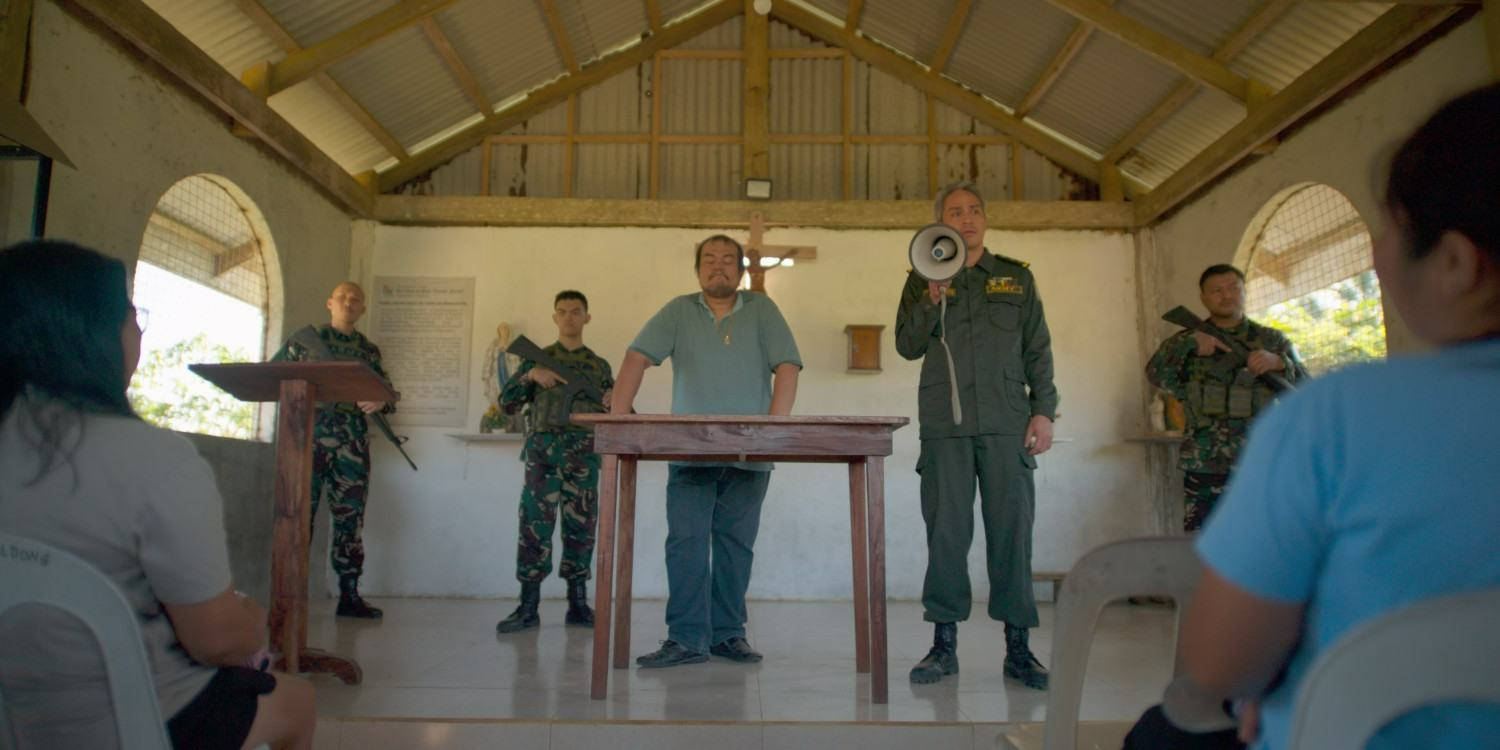
Navigating politically charged territory, Burgos does not sanitize state power. His antagonistic depiction of military authority and local government officials conditioned the audience to stay on guard alongside the people of Sidhaya.
This tension breaks with a sudden, unsettling ending. The title card crept up unexpectedly, before transitioning into an epilogue that revealed the military’s true motive in Sidhaya.
Aldus Santos’ emotional rendition of “Isang Minutong Katahimikan”—a poem by slain activist Ericson Acosta—played over the credits, letting the story’s emotional weight sink in further.
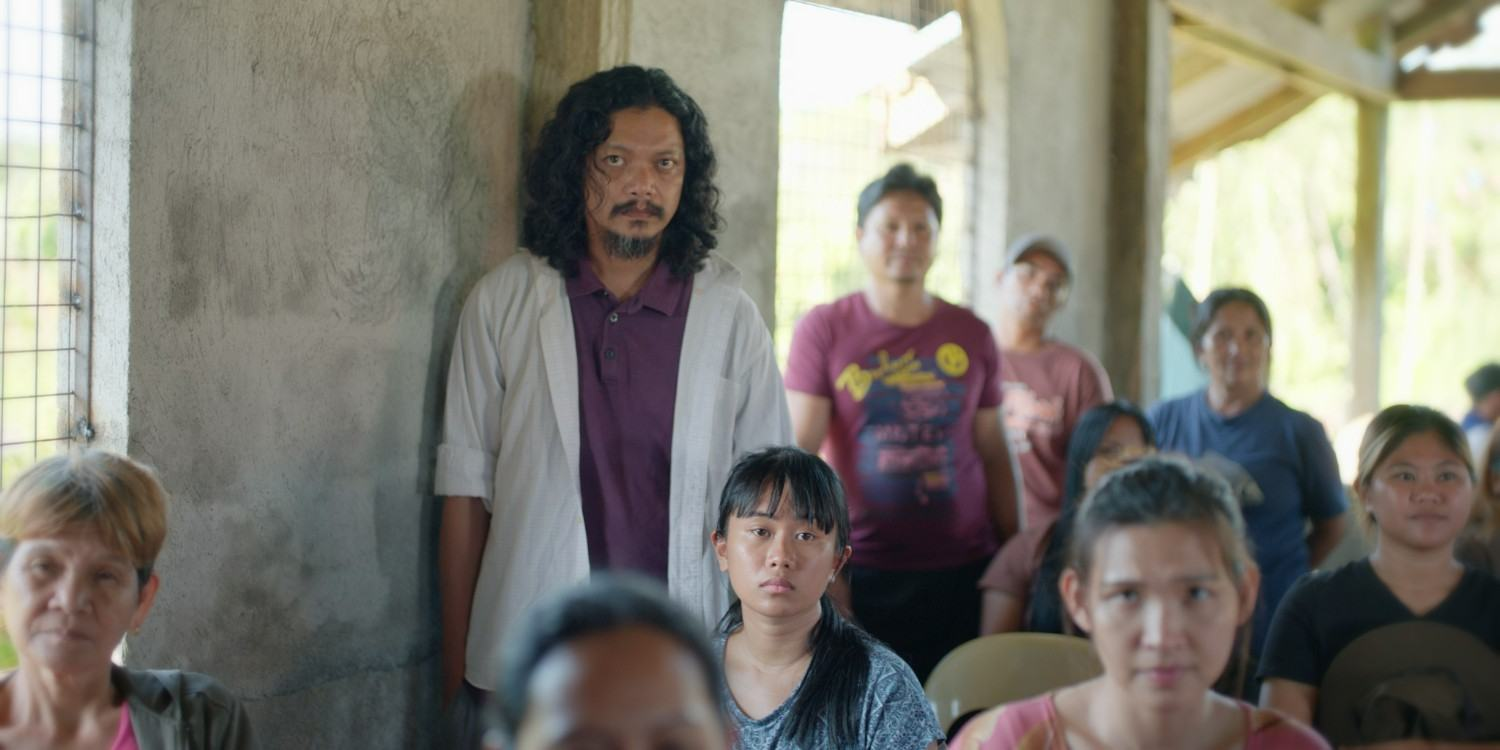
While abrupt endings can frustrate audiences, Burgos used it to dismantle expectations. As beacons of hope and innocence, viewers might root for the children of Ganggang to have a happy ending. However, he rejected this comfort for a devastating dose of reality.
Ganggang closed with the clamor and cries of the victims’ loved ones, asking the audience to stand by them in their fight.
In the end, justice remains a web left unfinished. Closure is a luxury to those who long for it most—one that cannot simply be bought by hope, innocence or the untainted bonds of childhood. F — Anthea Anika de Sales