TROOPS INVOLVED in the retrieval operation stopped digging at 57 bodies. As the police and excavators started to pack up, Reynafe (Glaiza de Castro) stood at the gloomy and empty massacre site. She realized that out of 58 victims, only one body had not been discovered: her father.
Directed by Carl Papa, 58th (2026) is an animated biographical drama that follows Reynafe, the daughter of the late photojournalist Reynold “Bebot” Momay (Ricky Davao), as she recalls her family’s experience during the Maguindanao Massacre on Nov. 23, 2009.
The massacre was caused by an intense political rivalry between the long-ruling Ampatuan clan and the Mangudadatu family, who were competing for the provincial governorship. In an attempt to prevent their rivals from filing a certificate of candidacy, the Ampatuans ambushed the Mangudadatu convoy.
Traveling with the convoy was a large group of media professionals who had arrived to cover the historic event. No certificates of candidacy were filed that day; instead, 58 lives were cut short, including 32 journalists in what became the single deadliest attack on the press in Philippine history.
Among that number was Reynafe’s father.

Papa revisits the case to demonstrate how Reynafe grapples with the loss of her father, whose remains she never even got to see again.
The film premiered during the 22nd Cinemalaya Philippine Independent Film Festival, but it already had its worldwide release at the International Film Festival Rotterdam earlier this year. Papa bagged the Best Director award and took home Best Picture in the documentary category. It also won the Shining a Light Award at the Manila International Film Festival in California, USA.
Since its release, 58th has also participated in the Annecy International Animation Film Festival and Doc Edge Festival and is set to be shown at the Busan Film Festival in October.

In between fiction and reality
One could deny the credibility and reality of the narrative because it is animated, but 58th proved its grittiness once it showed actual videos from the burial site — from the body retrieval process, the bullets, firearms, grieving family members and funeral homes full of decaying bodies.
De Castro’s performance also made it easy to empathize with Reynafe. The actress portrayed intense emotions without exaggeration, a subtle but effective way of showing the audience how powerless Reynafe was in the situation.
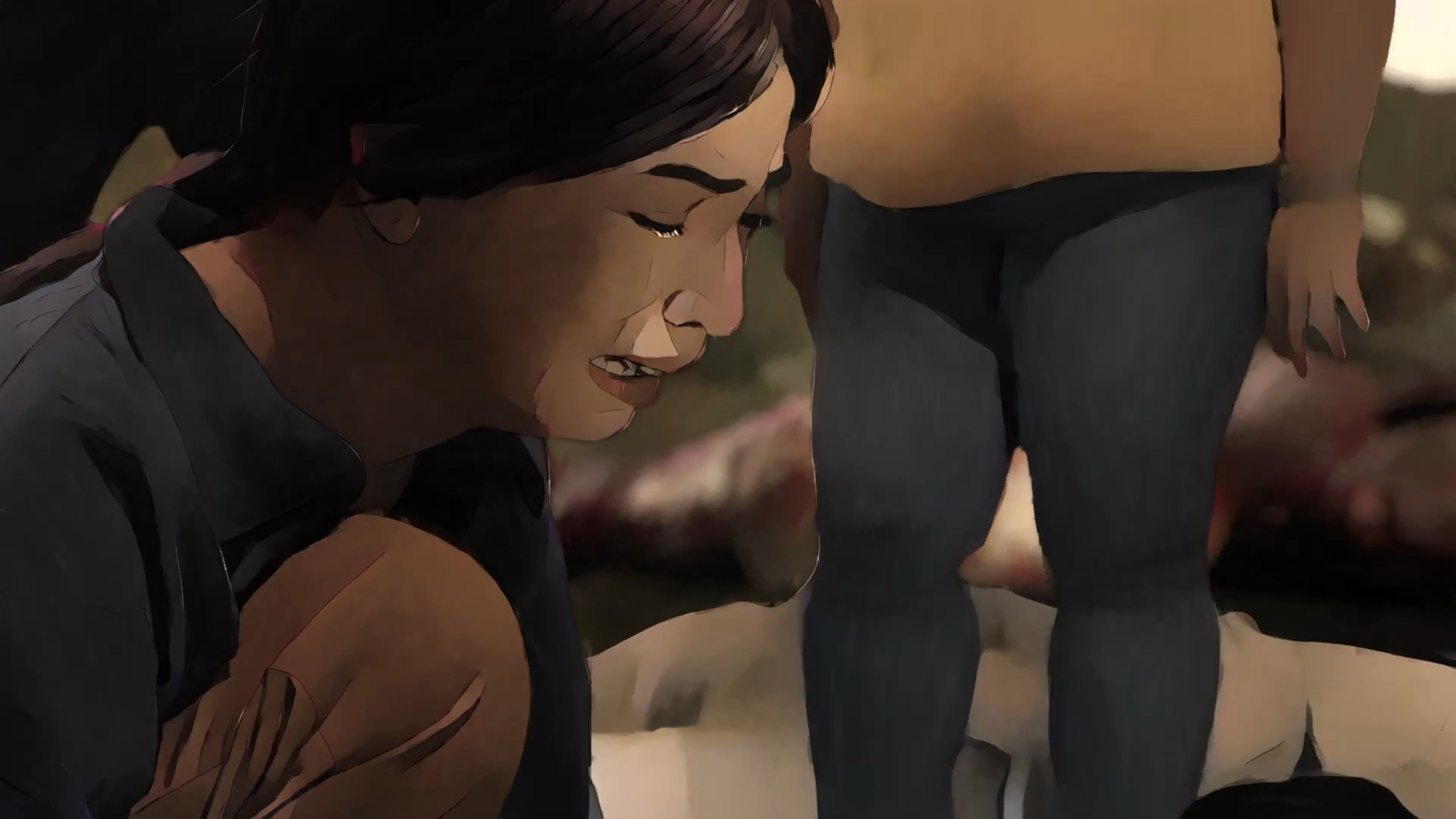
It was the way that she tried to be level-headed and move forward with her life and be strong for her children. However, the anger, fear and grief would creep up on her when she least expected it.
Her worry translated beyond spoken words, seen in her tireless wait for her father to come home, non-stop listening to the radio and constant watching of the news. She tried to compose herself for her children, always crossing the line between worrying and hoping that Bebot is doing okay.
When the killings were finally confirmed, Reynafe immediately went to the funeral home in search of Bebot, illustrating her determination to find closure in the face of grief. De Castro portrayed the tension between these emotions sophisticatedly, best shown in moments of hesitation before lifting the white cloth over the victims’ faces.
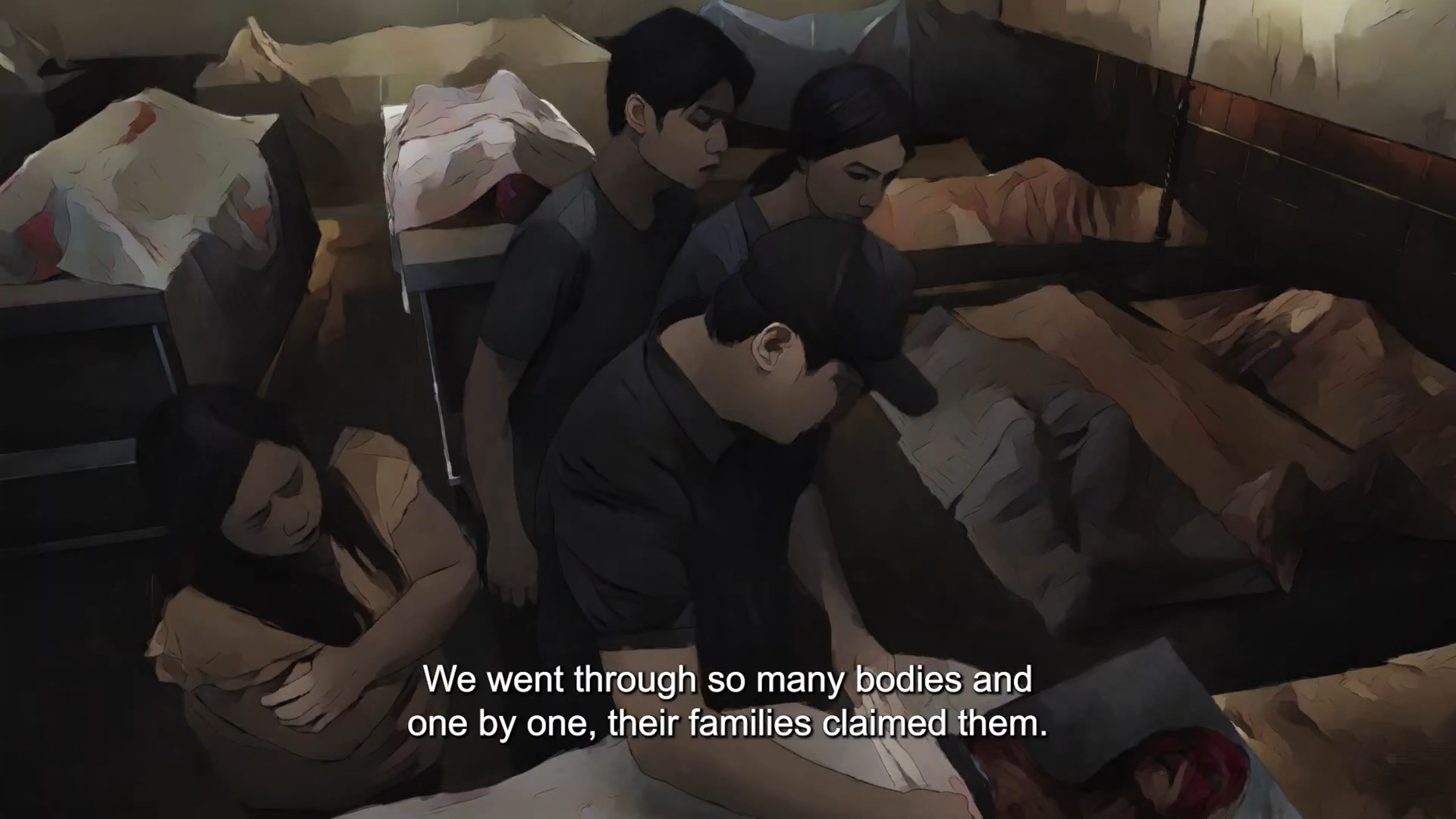
As she prepared to face the heartbreak of seeing Bebot under the cloth, she was also seen looking away for a moment before doing so, showing her last sparks of hope that it was not him. When Reynafe lifted the cloth to reveal a different person underneath, Papa extended this hope to the audience and allowed them to believe that there was still a chance for a reunion.
Knowing that the sequences in the film were lived experiences made it all the more chilling, a thought that becomes more difficult to shake off as the scenes unfolded.
According to producer Nessa Valdellon, since Reynafe’s experience of fear and grief was not recorded at the time, the production team used animation as a means to depict her reality. It used a sandwich method, alternating dreamy memory sequences with hard-hitting realities to draw audiences in and out of its fictional aspect.

“When Reynafe is relating her memories, there’s this dreamy quality to it. Tapos no’ng actual na nire-relate ‘yung nangyari during the massacre, he (Papa) used black and white,” said Valdellon during a talkback session at the Shangri-La Plaza on Sept. 16.
(When Reynafe is relating her memories, there’s this dreamy quality to it. Then when they related the actual things that happened during the massacre, he used black and white.)
The use of monochrome, she added, mirrors the same black-and-white court documents used in case proceedings to emphasize how the film is grounded in reality.
When asked about the use of animation for the project, Valdellon said, “To animate means to give life. And so, 58th wants to give life to something that has been long buried and forgotten.”
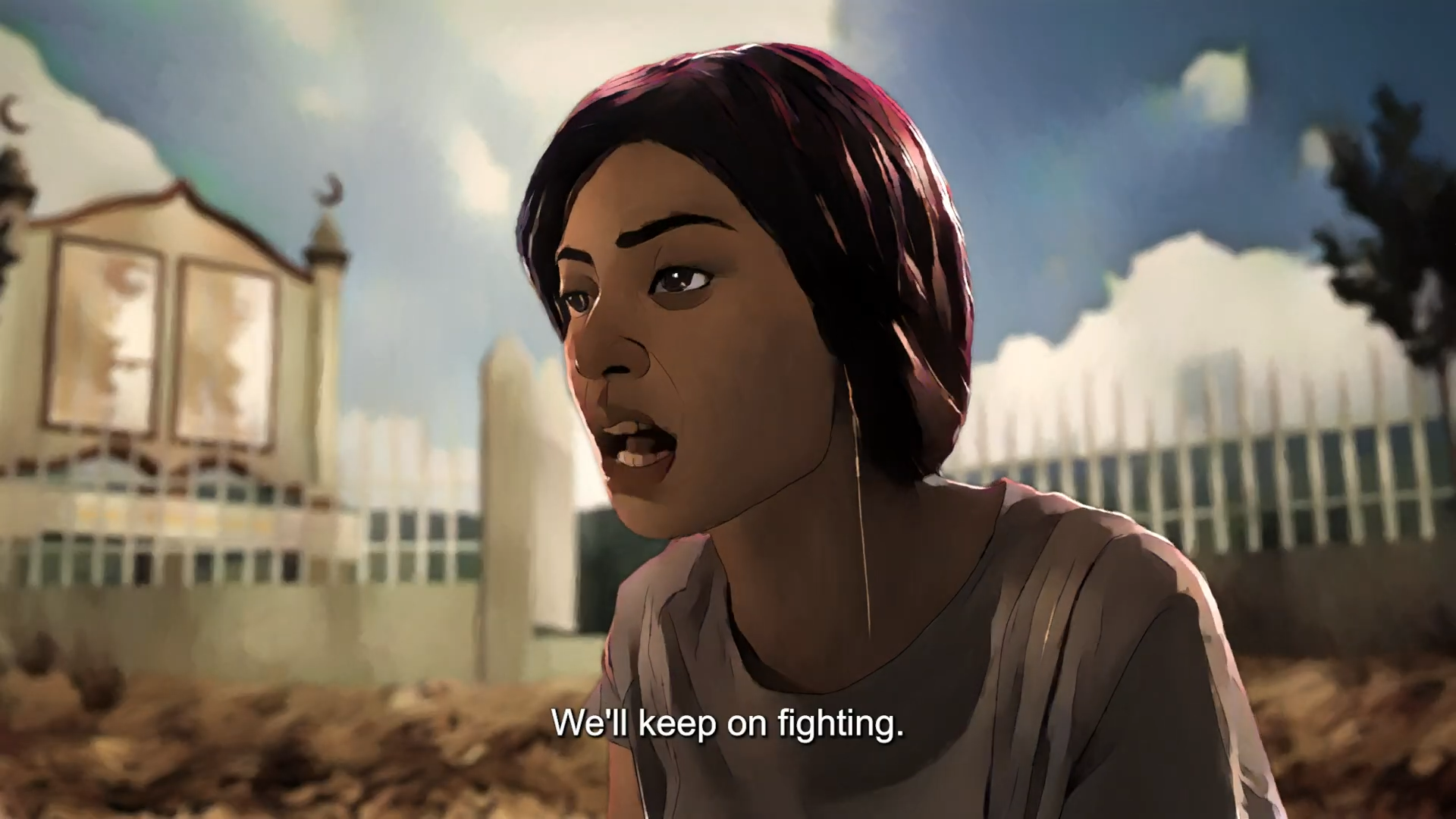
Seeing is believing
If the trauma and grief experienced by the victims’ families were not cruel enough, the film was not afraid to be gruesome and vulnerable in reenacting the actual massacre, making it even more gut-wrenching.
Morbidity was not just depicted through animation, it was shown through photos, videos and news headlines from the massacre site. The extremity of the case and the burial site were neither understated nor exaggerated. It was presented exactly how it happened, allowing the filmmakers to successfully get their message of injustice and systemic failure across without the need for sugar coating.
By the end, the animation faded to reveal the real Reynafe, the person who went through several injustices and the person whose story is worth keeping alive.
58th is a necessary, eye-opening discomfort. It captured every single emotion one could feel in all of its 86 minutes, save for the feeling of ease and relief. Papa leaves his audience with anger and a heavy feeling that cuts deep: the cry for justice and the thirst for truth. F — C. J. Villasis