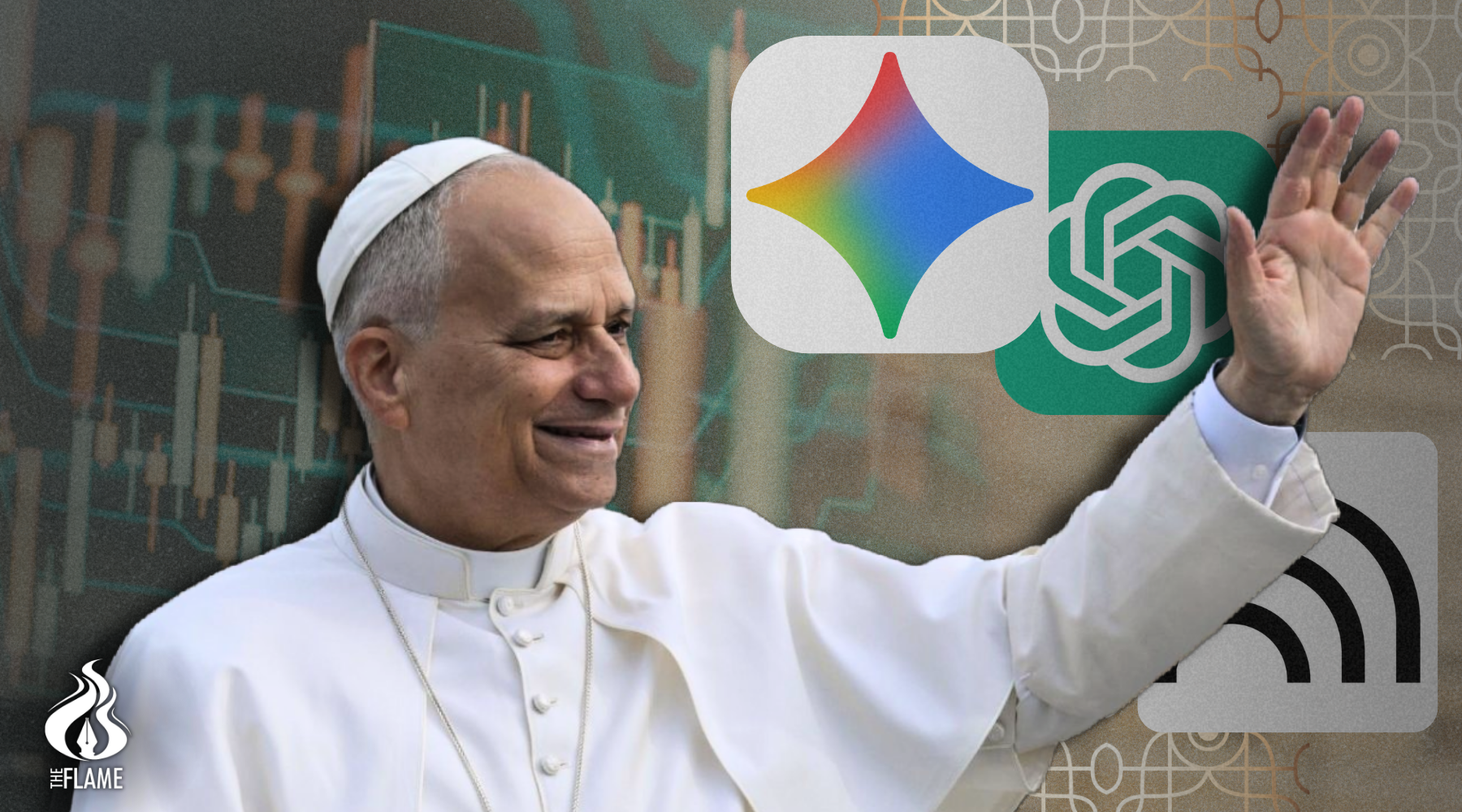
WITH ALGORITHMS, artificial intelligence (AI) and digital platforms increasingly influencing how people think, Pope Leo XIV warned that society now risks losing something sacred: the face and voice of the human person.
As the Church marked the 60th World Day of Social Communications on May 17, the pope urged the faithful to protect human dignity in an age where technology can now imitate, manipulate and even replace human expression.
“Faces and voices are sacred. God, who created us in his image and likeness, gave them to us when he called us to life through the Word he addressed to us,” he said.
The pope’s message was grounded on the theme, “Preserving Human Voices and Faces.”
Citing Saint Gregory of Nyssa, the pope explained that God had imprinted on human faces a reflection of divine love so that men and women may fully live their humanity through love.
“Preserving human faces and voices, therefore, means preserving this mark, this indelible reflection of God’s love,” he said.
The message came as several countries continue to integrate different digital innovations in their communication, education and governance systems.
Generative AI adoption, for one, reached 16.3% of the world’s population in the second half of 2025, according to Microsoft’s AI Economy Institute. This translates to about one in six people using AI to learn, work or solve problems.
DataReportal found that the Philippines ranked sixth worldwide in ChatGPT use in 2025, with 42.4% of Filipino internet users saying they used the platform in the past month. This was far above the global average of 26.5 percent.
Digital threat
For Pope Leo, digital innovation was changing not only how people communicate, but also how they understand reality, relate to one another and remember history, including that of the Church.
Artificial intelligence is no longer limited to assisting people in communication, as it has begun shaping the production of texts, music and videos. This has triggered concerns over the future of human creativity, the pontiff said.
Such developments, Leo warned, are accompanied by risks that people would be reduced into passive consumers of content made without human thought, ownership or love. The works of human genius in music, art and literature are also treated merely as materials for machines to learn from, he said.
“If we fail in this task of preservation, digital technology threatens to alter radically some of the fundamental pillars of human civilization,” the pope said.
He also added that AI systems are becoming more capable of simulating human voices and faces, wisdom and knowledge, consciousness and responsibility, empathy and friendship.
“Artificial intelligence not only interferes with information ecosystems, but also encroaches upon the deepest level of communication, that of human relationships,” he said.
“The task laid before us is not to stop digital innovation, but rather to guide it and to be aware of its ambivalent nature.”
Urgent mission
According to the pope, this task must be built on three pillars: responsibility, cooperation and education. However, he argued that such a responsibility does not fall on only one sector.
“No sector can tackle the challenge of steering digital innovation and AI governance alone,” Leo said, explaining that each person has a duty to use digital tools responsibly and to help ensure that innovation protects human dignity.
He urged online platforms, AI developers, legislators, regulators and media organizations to ensure that digital systems serve the common good rather than profit, manipulation or deception.
The pope also called for education in media, information and AI literacy, especially among young people, older adults and marginalized communities who may feel powerless before rapid technological change.
He added that such formation is necessary to help people think critically, verify sources and understand how algorithms shape what they see and believe.
The pope said this mission has become more urgent as technology now influences interactions, news feeds and even the creation of texts and conversations.
“We need to cherish the gift of communication as the deepest truth of humanity, to which all technological innovation should also be oriented,” the pope said.
World Communications Sunday was observed by Social Communications ministries as an opportunity to reflect on the Church’s mission in promoting truth, human dignity and responsible public discourse. F — F. M. Violeta