
THE HORROR of finding oneself in a strange and surreal place cannot compare to the hauntings of the past.
Kane Parson’s Backrooms forces its characters and viewers into a rabbit hole of questions, but only one echoes loudly in the yellow-wallpapered halls of this other dimension: Can you ever escape yourself?
Released in Philippine theatres in June 2026, Backrooms pushes the boundaries of what the popular ‘creepypasta’ and web series of the same name could be.
The concept of the Backrooms originated in a post known as a creepypasta on the site 4Chan. In 2019, an anonymous user posted an image of a hallway with endless open rooms, draped with patterned yellow wallpaper. The image was accompanied by a short write-up that described the possibility of ending up in such a place while hinting at a looming entity among the seemingly empty walls.
The post then gained wide traction, inspiring further additions to the lore and creating a growing community. In 2022, Kane Parsons, under the moniker Kane Pixels, uploaded his adaptation of the story on his YouTube account. His videos, presented as a found-footage horror series, explored the Backroom’s origins and the creatures inhabiting it. This project would then serve as the basis for the film, which Parsons would also direct.
With an already established community and “lore,” the buzz around the film created pressure to produce a faithful yet fresh adaptation of the well-known story. Knowing this, Parsons took a risk and slightly strayed from the original lore, adopting a different approach in unraveling what made the concept frightening in the first place. In his film, Parsons pivoted away from the typical survival-horror of his series to create a more complex psychological reading of the myth.
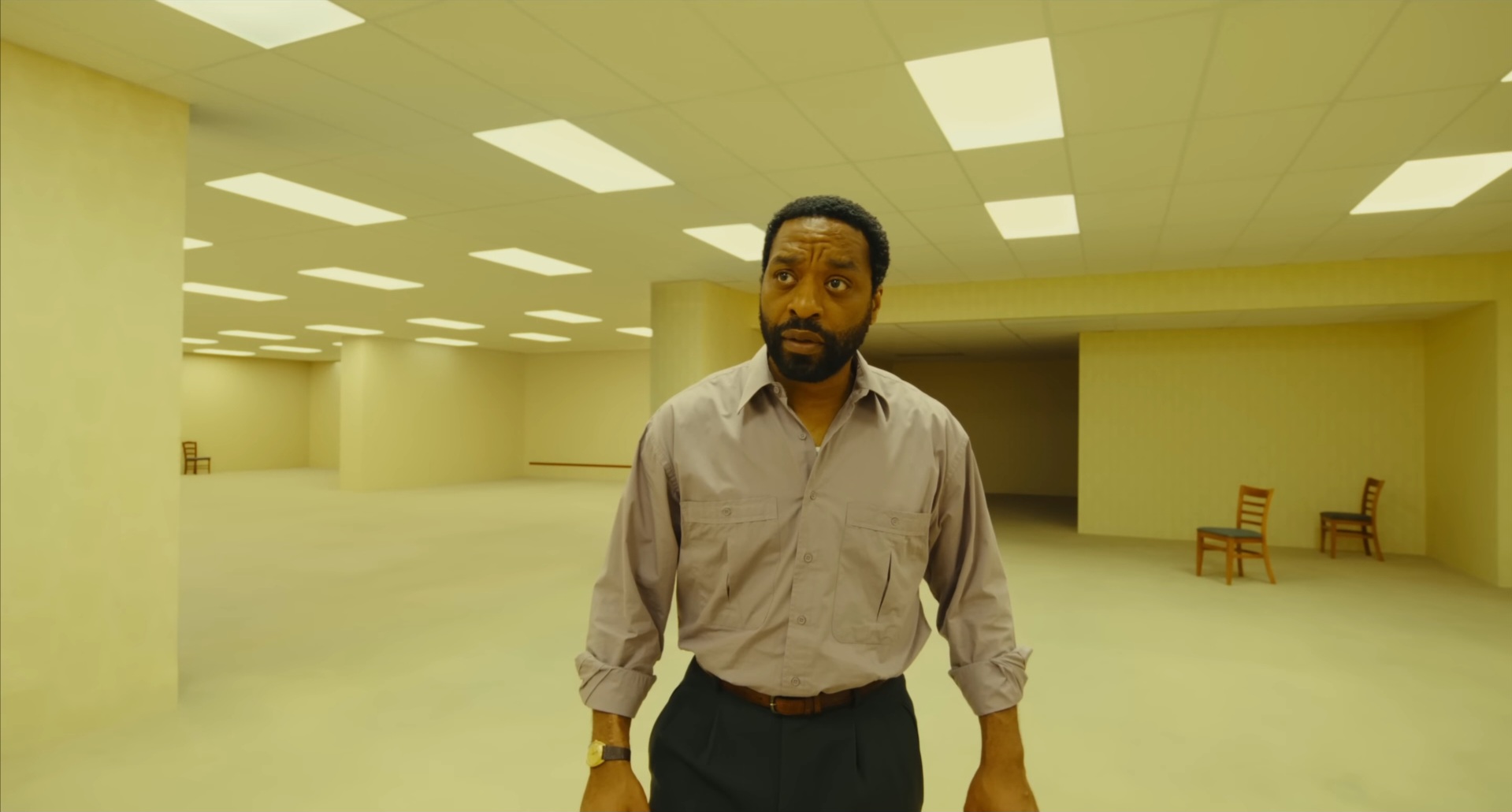
The film follows Clark (Chiwetel Ejiofor), a struggling furniture salesman and failed architect, as he discovers a strange world in the basement of his store’s showroom. Mary (Renate Reinsve), his therapist, carries her own trauma while simultaneously helping Clark through his own problems as he navigates the unknown space.
Backrooms honors the original series’ use of the found-footage format, balancing the cinematic and the analog to recreate the uncanny yet familiar appeal of the original photo. This masterful use of liminality gave the film its strength. Every shot is blocked beautifully, elevated by the meticulous production design that de the discomfort pulse through the screen.
The liminal space aesthetic arose from nostalgia-driven Gen Z and Millennials who long for their youth. This art movement began with a series of photographs capturing places of transition—like hallways and corridors—that evoke a sense of “in between.”
Backrooms indulged in the escapism the art movement offers from a fast-paced, consumerist society suspended between reality and make-believe. It presented the direct consequences of society’s alienation and the capitalist treatment of an ordinary individual.
The oddly comforting yet unsettling nature of liminal spaces shines through and was utilized well in the storytelling. These surreal spaces evoked nostalgia and longing for the past as seen in the imagery, yet the execution left an unnerving feeling due to certain misconstructions of reality.
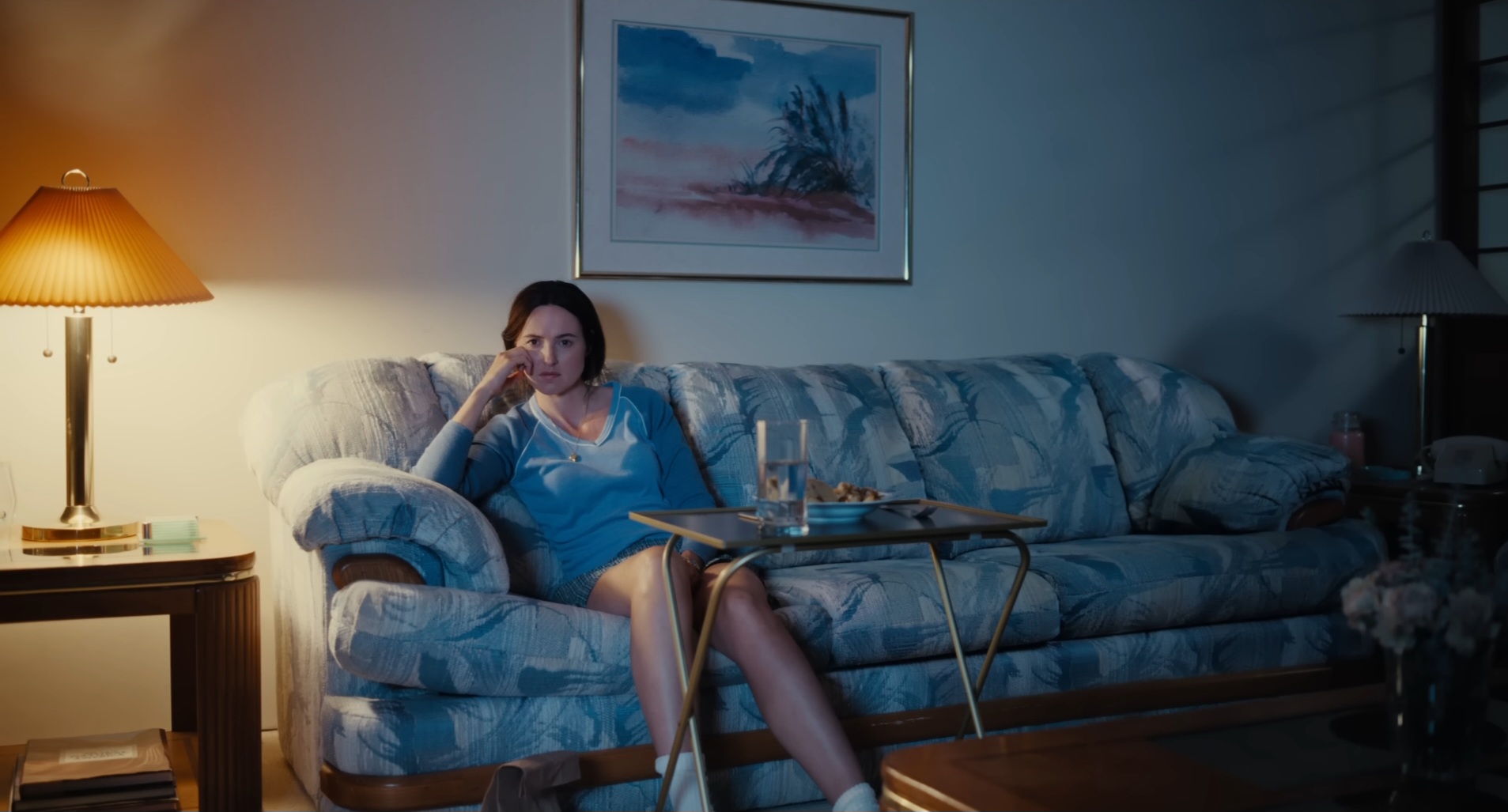
Through Clark and Mary, the creepypasta transforms into a manifestation of one’s worst memories and selves from being a terrifying, unknown world. The protagonists are both stuck and lost in their own personal issues, burdened and struck down by modern life. It’s the emptiness and loneliness of the Backrooms that allow them to confront themselves and their traumas, as dreadful as it is comforting.
Ejiofor and Reinsve delivered stellar performances, with both characters grappling with different sorts of trauma and responses to being in the Backrooms. They complemented each other, especially when the film reached its climax. Ejiofor presented a man visibly shattered by his past troubles, while Reinsve buried hers deep down. Though they began as polar opposites, they eventually found harmony in the end.
Parsons’ abstract take on the Backrooms is perhaps both the film’s strength and weakness. While cleverly interpreted, the film occasionally brought the weight down by seeking answers rather than immersing in the incomprehensible nature of the space.
Its source material, while masterful at eliciting fear through its worldbuilding, lacked in themes and messaging. The very nature and terror of the Backrooms lie in the fact that it is beyond the understanding of any human perception. By focusing more on explaining and uncovering the Backrooms, the horror of the phenomena is minimized.
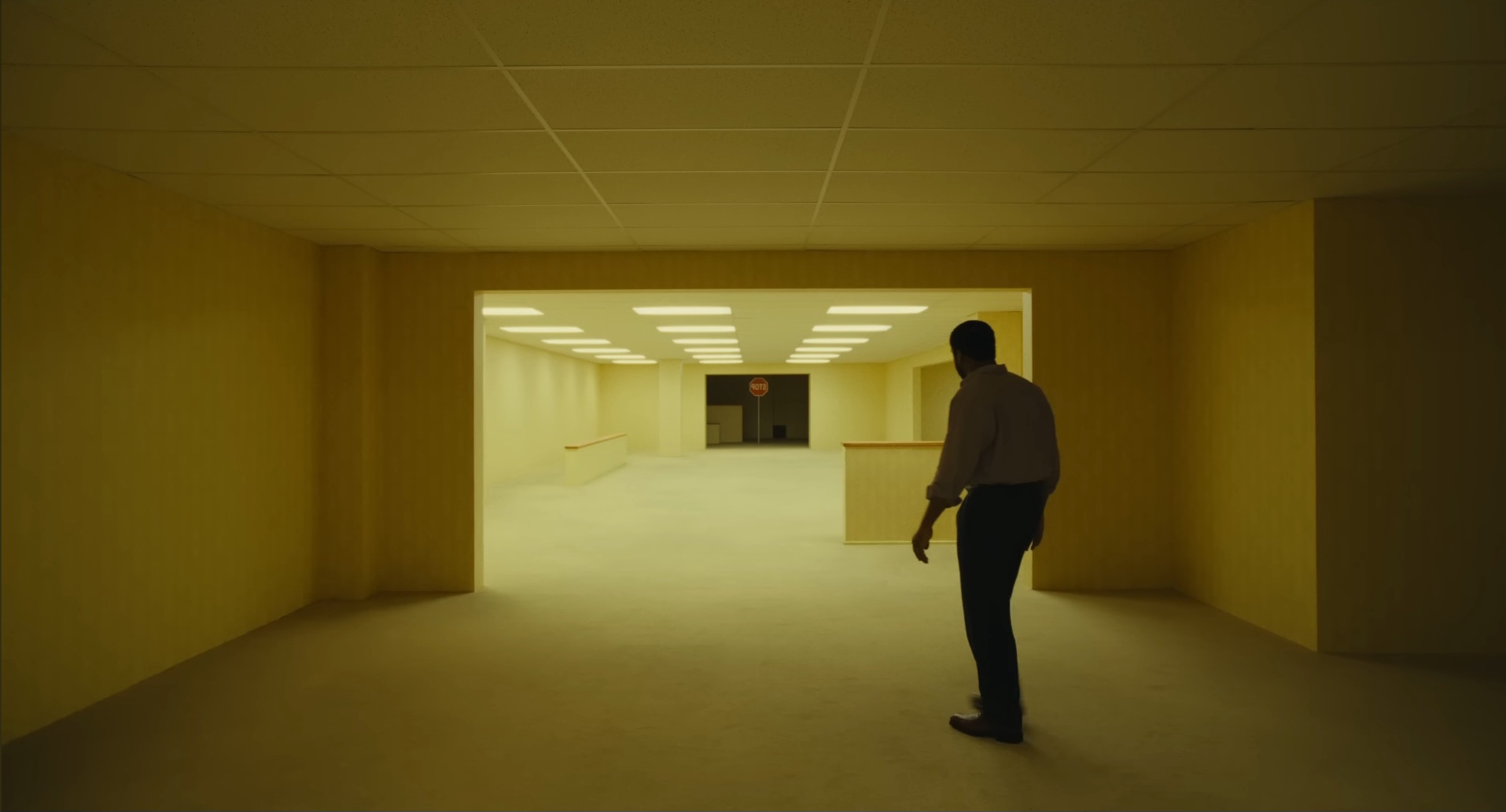
Nonetheless, Backrooms truly shone when it leaned into the fear of the unknown and there was nothing but the buzz of stillness being heard. Parsons’ depiction of the liminal space was a welcome take as it positioned such a place as an extension of our past, our memories and the darkest parts of man. The film presented the audience with a choice: do you stay, or do you find a way out of your maze? It is all up to interpretation, which is exactly what the Backrooms ought to be: an unsolvable puzzle.
The supernatural or cosmic is not the most frightening thing in the unknown universe; there is something more sinister that lurks within, and even in the corner of our eyes. When watching Backrooms, make sure to keep an eye out for the glowing exit sign—that is, if you do ever plan on leaving at all. F